I did some winter vegetable gardening today since it’s the last of this warm, sunny weather. I don’t know about you, but in the wintertime I crave fresh air and sunshine the way I crave water when I’m thirsty. It’s as essential to my well-being as vitamins and minerals and water and all that good stuff! And nothing is better than being outside on winter’s day in the crisp, clean pine-scented air, tackling some vegetable garden chores.
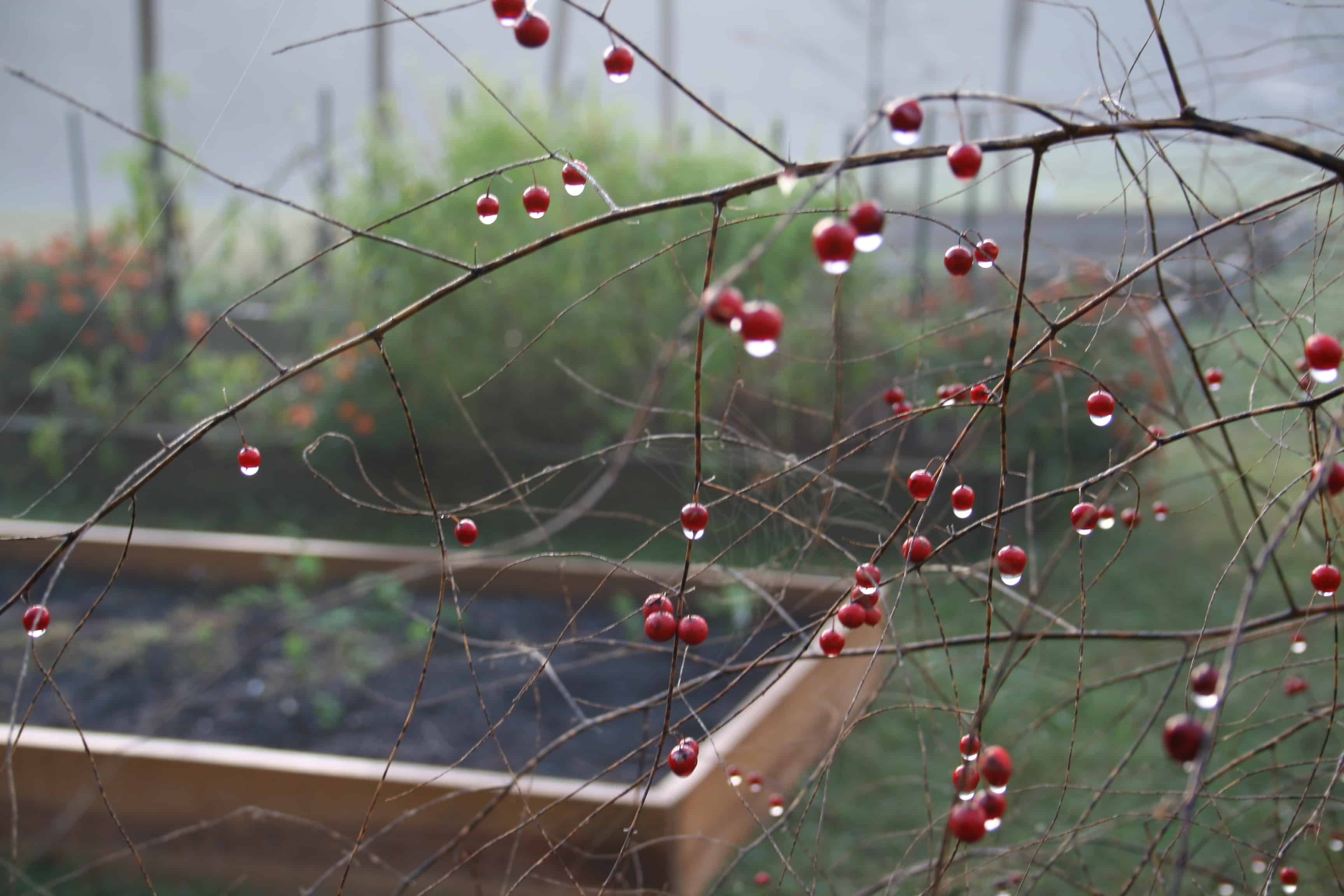
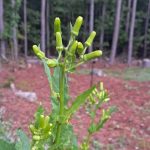
A closeup of the mature asparagus this fall.
Winter Vegetable Gardening
Today’s mission: clean out the asparagus bed and harvest the last of the turnips.
Well, the turnip harvest went okay. The freezing and thawing of the soil heaved the remaining turnips out of the ground, so they were quite easy to pick. I had five, but one was already turning to mush – I pressed a forefinger into the side and it went in, and felt all smushy and marshamallowy, which is not a good sign. Into the compost pile it went.
Also into the compost pile went all my stored parsnips, celeriac and previously harvested turnips. I felt annoyed and wasteful, but I had no one to blame but myself. Instead of cleaning and storing them properly, I just put them in cardboard boxes in the garage. Sure it’s been cool there – but it’s also been damp. And they rotted and composted on their own. Yuck! Into the compost pile they went…
The remaining four turnips are lovely purple and white globes the size of baseballs. I snipped off the roots and stems, rinsed them, and will store them properly in the refrigerator for use this winter.
After I pulled the last remaining turnips, I cut down the catnip plant. All of the cats were indoors today or else I would have had an audience for sure. The outdoors boys love snoozing under the catnip plant. Most cats like their nip dried rather than fresh, and my boys also prefer their nip dried. But they will hang out under the catnip plant on a sunny day. I had to cut it back as it was threatening to take over the vegetable garden bed. Catnip will do that!
Lastly, it was time to tackle the asparagus bed. Asparagus grows tall, weedy and lanky, and it has to be cut back before the spring, so I took my long-blade pruners out to the asparagus bed and lopped away at the thick stalks. Grass and weeds had also grown up and around the plants, creating a mat that on the one hand was good for preventing soil erosion, and on the other hand wasn’t great for the soil. I pulled some weeds, but figure that when spring come around the whole bed will need to be hoed. It certainly needs more compost, since the soil level is drastically depleted by the plants themselves.
It felt wonderful to take a brief half hour break from writing today to do a few winter vegetable gardening chores. There’s not much else to do at this time of year. I’ve started planning my spring and summer garden, and will be mapping out the garden beds and going through my stored seeds to see what is still viable.This weekend, a Nor ‘Easter is supposed to blow through, bringing heavy rain Friday and Saturday, so I’ll be cleaning the kitchen, doing laundry, and going over my garden plans. Taking some time today, however, when the weather was in the low 50s and the sun was shining was the absolutely best thing I could do. My mind is clear, my spirits lifted, and my asparagus bed, pruned.
What could be better than that?

New Book on Raised Bed Vegetable Gardening Coming Soon!
Ooh! Big news
Coming soon – Plan and Build a Raised Bed Vegetable Garden. It’s a short book, about 6,000 – 7,000 words, giving you all you need to know to plan and build your very own raised bed for vegetable gardening. I finished the manuscript this morning and sent it off to the editor. If all goes well, I should have it available for sale in February. Stay tuned for details and a potential give-away to celebrate the newe book!