
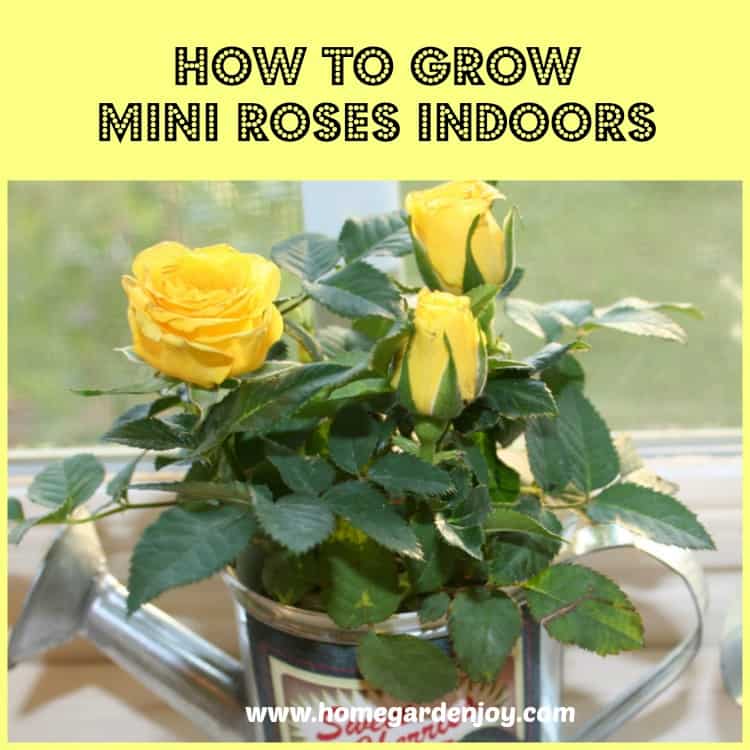
Valentine’s Day is just a few days away and the stores are filled with miniatures roses, little potted rose bushes that are just to adorable they fly off the shelves this time of year. Before your sweetie gives you a miniature roses, learn how to grow mini roses indoors successfully. Show a little love to your new plant this year by understanding what it needs to be happy and healthy.
Miniature roses are ‘true’ roses in that they are actual floribunda roses hybridized into petite forms. The definition is a rose with blooms that are 1 1/2 inches across or smaller. Mini roses themselves were developed from Rosa chinensis “Minima”, with smaller and smaller versions hybridized from the parent plants until we have the diminutive rose bushes you see today. They come in a wide range of colors including white, pink, lavender, yellow and red, and are often sold as house plants. They can be grown indoors and outside successfully.
How to Grow Mini Roses Indoors
Like the “big guys” or full-sized rose bushes, mini roses need plenty of direct sunlight. It’s best to grow them indoors with a bright south-facing window. Even with such bright sunlight, you might need to add a full-spectrum plant light to supplement the sunlight, especially during the winter months when the sun’s rays are lower.
Mini roses also need high humidity, and this is where most homeowners make mistakes when caring for mini roses indoors. The average air inside a home lacks humidity; mini roses need 50-60% average humidity. To add much-needed humidity to your rose growing area indoors, take a deep saucer, fill it with fish tank gravel or pebbles, and fill it with water, then set the rose’s pot on top of the saucer. As the water evaporates, it will increase the humidity around the mini rose plant. Be sure to keep the pebble tray or saucer filled with water and clean or change it to prevent mold and mildew from forming.
Mini roses should be watered when the soil feels dry to the touch. The timing will vary according to the type of container your roses are potted in, the potting mix used, the amount of drainage and more, so the “touch test” is the best way to determine when your mini rose needs to be watered. Fertilize your plants with a balanced time-release fertilizer. The American Rose Society recommends Osmocote 14-14-14 scratched into the soil.
Spider mites are the worst pest that afflicts mini roses grown indoors. When you bring home a new mini rose, keep it well away from your house plant collection for 1-2 weeks until you’re absolutely sure it’s not carrying those darned things or else be prepared for a battle to the end with spider mites. (I never win). Spider mites are tiny insects about the size of grains a pepper. They spin webs between the leaves and suck the juices from the leaves, killing the plant. They are voracious, tenacious, and a total pain in the plant, so do all you can to avoid buying plants with them and spreading them to your other plants. The American Rose Society says that a strong spray of water can knock the mites off the roses. Once they’re off the roses, they can’t feed. A kitchen sink spray hose may be just the right thing to knock spider mites into oblivion.
Growing Mini Roses Outdoors
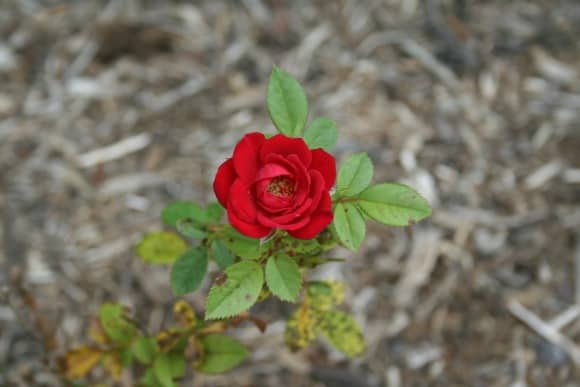
For my birthday a few years ago, my eldest sister sent me an adorable florist’s gift of three mini plants in tiny watering cans. One of the plants was a miniature rose. I moved it outdoors into my rose garden and planted it as a shrub; it’s about as healthy as my other roses. I’ve also picked up a few miniature roses after Mother’s Day at the home store in town. Once the mini roses stop blooming, they tend to be placed on the discount rack, and you can pick them up for a song. I’ve added several red mini roses to my rose garden by waiting and watching the discount racks until they’re marked down. They make adorable little garden roses, perfect for fairy gardens and small spaces.
This Valentine’s Day, ask your sweetie for a living gift instead of a dozen red roses. A miniature rose plant will live for several months at least unless your black thumb gets the best of you. In the meantime, it will provide you with plenty of beautiful roses to enjoy and remember the holiday.
Happy Valentine’s Day!

What great info!! I used to always love seeing these at my Grandma’s house and never knew that I could grow them!! Living in the mountains, they won’t grow outside very well, so this will be great! Pinning this! #HomeMattersParty
Thanks Jamie!!!
Glad I could be of help, Jamie! They should do well inside for you.