
Growing sweet peas brings spring a little closer each year. They aren’t difficult to grow as long as you have cool weather.
Growing Sweet Peas for Spring Flowers and Fragrance
The History and Allure of the Sweet Pea
Sweet peas (Lathyrus odorata) are an old-fashioned garden favorite, beloved by the Victorians and much heralded for their sweet scent and dainty flowers. Native to the Mediterranean region, the sweet pea is a climbing spring vine. Both annual and perennial sweet peas are available, but most gardeners in North America plant annual-flowering sweet peas. Wild sweet peas have the same strong fragrance as the cultivated kinds found in today’s modern gardens. Wild sweet peas are typically a bright fuchsia-pink color.
Wild sweet peas were planted throughout England from seeds obtained in the Mediterranean and enjoyed for their strong, sweet fragrance. It wasn’t until the late 1800s, however, that new colors were developed.
The modern sweet pea was developed from the wild type by Henry Eckford. In 1882, Eckford introduced a bronze variety of sweet pea to the Royal Horticultural Society, marking the start of the Victorian-era fascination with the sweet pea. By 1901, Eckford had introduced an astonishing total of 115 new sweet pea cultivars and won a medal for his work.
Eckford’s association with the sweet pea has been kept alive in the town of Wem where a square is named after him and street signs bear a sweet pea flower emblem. The town also hosts an annual Sweet Pea Show and Exposition.
How to Grow Sweet Peas
Start sweet peas from seeds sown directly into the ground. In warm climates such as the Deep South of the United States, sow seeds in the fall. The plants emerge in very late winter or early spring to grow and flower. Sweet pea seeds should be planted in temperate gardening zones in early spring. All sweet peas require cool temperatures and adequate moisture to grow and flower.
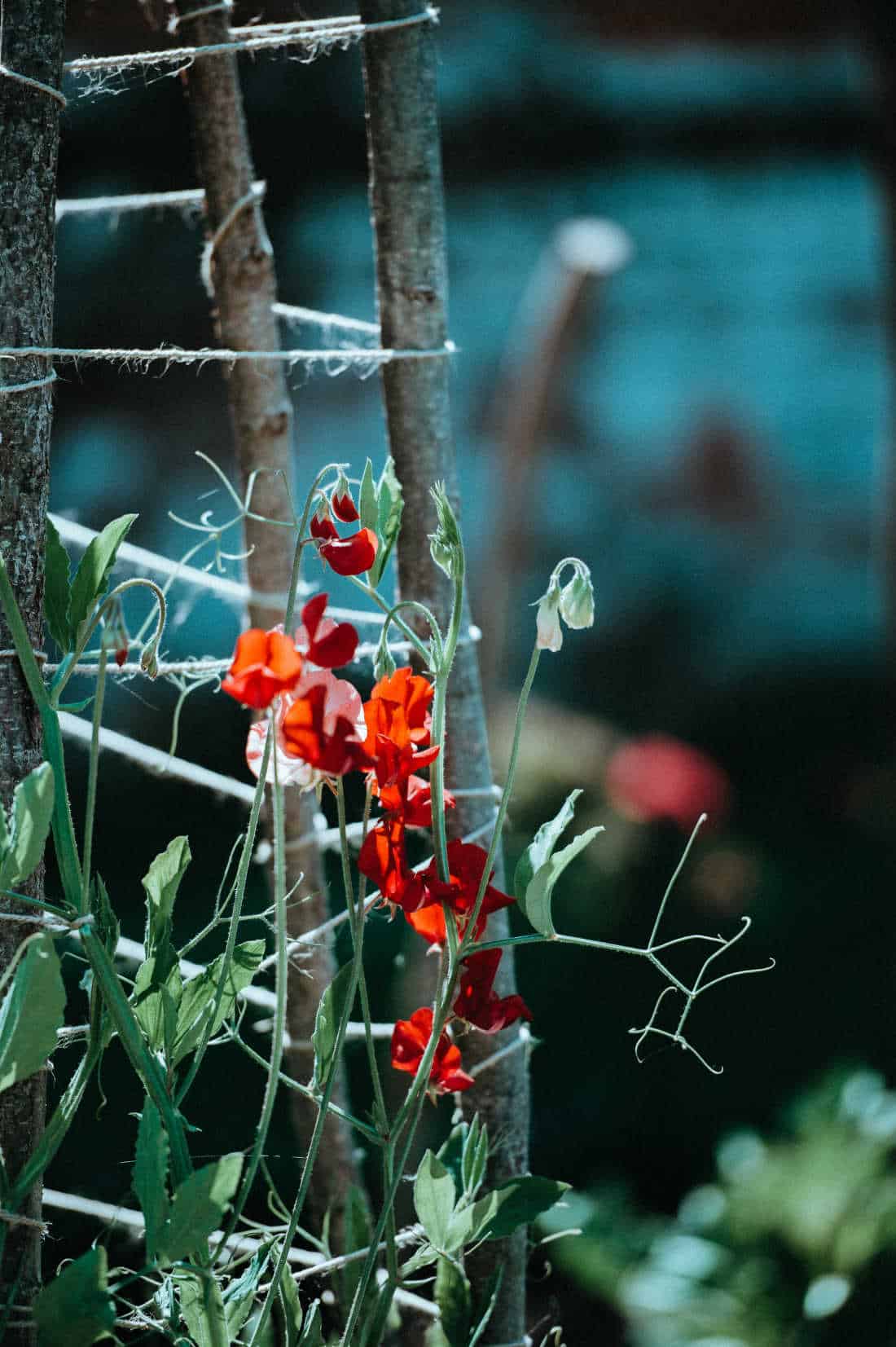
Sweet peas like to climb and can attain heights of six feet or more. Be sure to plant the seeds next to a fence, trellis or some type of support. If you don’t have a trellis or support, a temporary frame can be constructed and covered with chicken wire or wire mesh to provide the sweet pea’s tendrils with something to grab and climb.
Planting Sweet Peas
To sow sweet peas, follow these steps:
- Soak the seeds for six hours in lukewarm water.
- Dig a shallow channel or trench where you wish to plant the sweet peas.
- Plant seeds 2 to 3 inches apart.
- Smooth the soil back over the trench and pat it down.
- Water daily until the seedlings emerge.
Sweet Pea Pests and Diseases
Sweet peas cannot tolerate heat, so once the springtime temperatures warm up to the 70s and 80s, the vines will begin to wither. Heat stresses the plants, and they will stop flowering in extreme heat. Keeping the roots cool with a thick layer of mulch often helps to extend the flowering season.
Diseases
Sweet peas are susceptible to mosaic virus. The mosaic virus causes leaves to yellow and wilt. New shoots emerge but they are disfigured, and the plant stops flower. Mosaic virus spreads through the greenfly, a flying insect that alights upon the sweet pea and sucks the sap from the plant. Unfortunately, there is no cure for Mosaic virus and green fly is difficult to prevent.
Good organic gardening practices may prevent green flies or reduce their impact. Nitrogen-based fertilizer tends to attract more insect pests than organic fertilizers, perhaps because synthetic sources of nitrogen create a richer concentration in the plant’s sap, making them very attractive to insects.
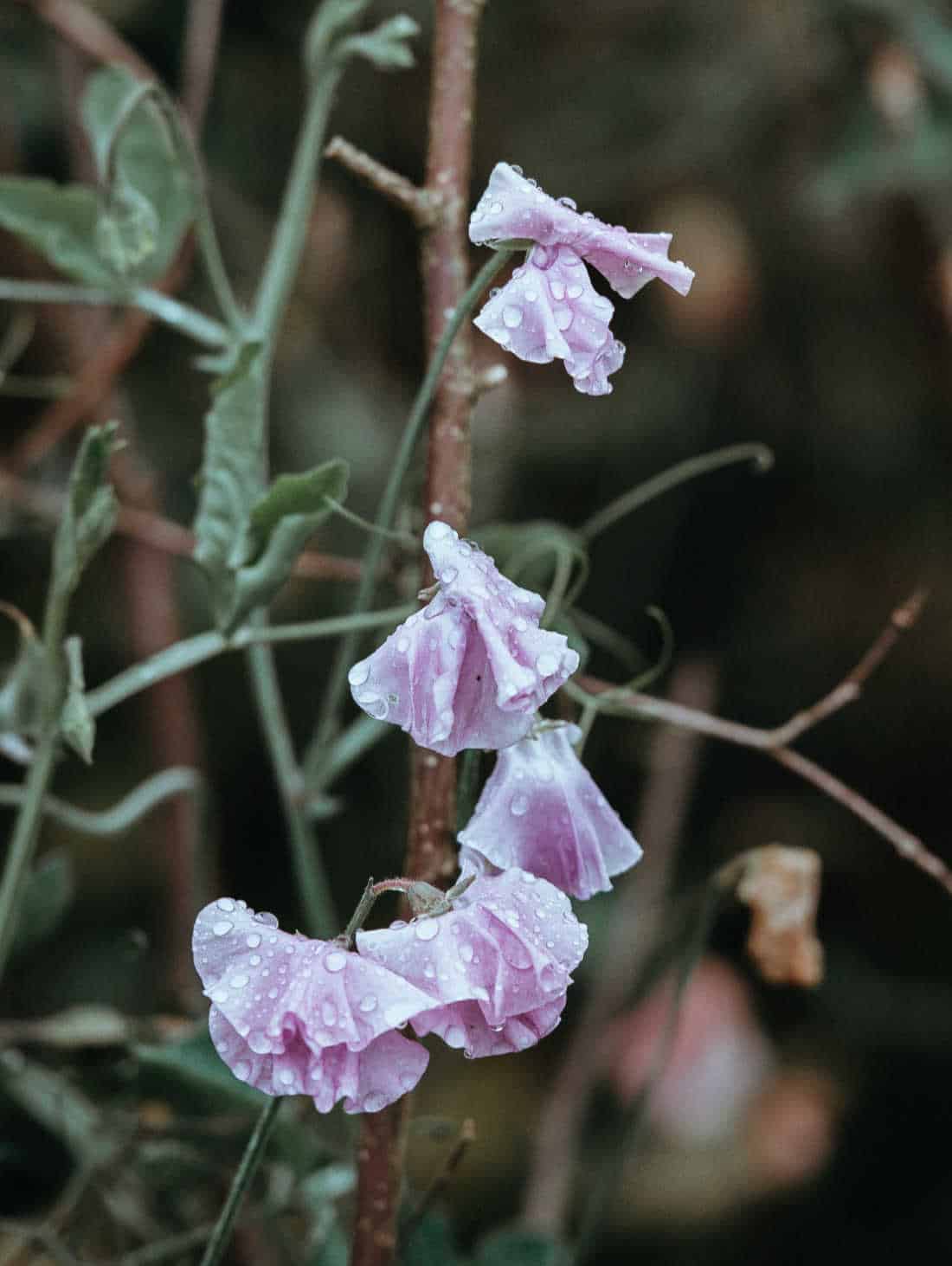
Sweet peas are also susceptible to powdery mildew; good air circulation around the plants can prevent mildew problems.
Scientific Uses of Sweet Peas
Sweets peas have the unusual distinction of aiding scientists in genetic research. Gregor Mendel, the founder of modern genetics, used edible pea plants for his experiments, but the sweet pea flowering plant is closely related to edible peas (although poisonous, and should not be ingested.) Geneticist Reginald Punnett used the sweet peas to study trait linkage and how color traits are passed from parent to offspring.
As you can see, growing sweet peas isn’t difficult. Most gardeners find that it’s easy and quite rewarding.

I’m hoping to grow some in a container this year providing a teepee of bamboo poles for them to climb. I hope they like it there becase last year, not one sprouted in my new bed.
I have tried Sweetpeas twice with no luck! I think the spots I chose are not sunny enough plus too far for the water to reach when hooked to the sprinkler. I need to find a sunny spot for them and closer to the house. We had a row of them growing along side our driveway when I was a kid. I loved the sweetpeas and so did the bees!
Did you plant your sweet peas last fall the way your article suggests? I failed to plant mine, for the first time in years. I’ll miss them.
Thanks Skeeter, Nell Jeanne & Sherlock Street for your comments. I did not plant my sweet peas in the fall; I only found that bit of advice now when I was researching the article. It’s interesting to me that most of the southern gardeners I talk to have trouble growing sweet peas. I’m going to try them in a location at the back of the house that gets afternoon shade. I’m hoping that little bit of a break in the heat will help them. Share your success with sweet peas with us here!