What’s the most important fall gardening task? Is it pruning? Lawn care? Cutting back the perennials, or mulching?
It’s none of these things. It’s actually a lot more important than these tasks…
The Most Important Fall Gardening Task
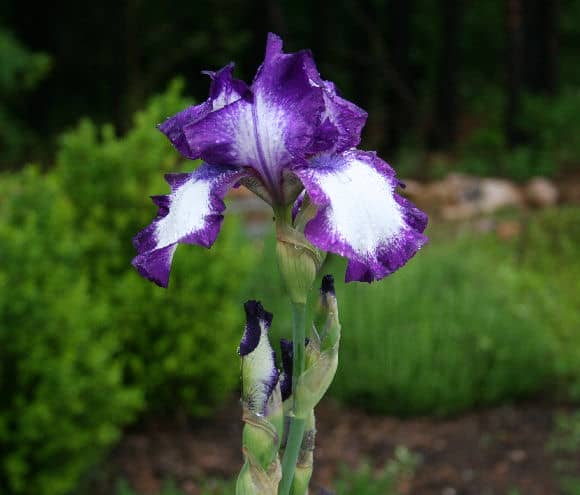
How did your garden grow this year? Mine was hit or miss. Some things were great; the spring iris display was fantastic. And to my surprise, the clary sage I planted from seeds this spring and transplanted as seedlings flourished in the island garden bed farthest from the house. It received the least amount of water and the clary sage is the healthiest. Go figure!
All of this is fine and notable, of course. As a gardener, I am always thinking about what worked well and what did not work well. Now that it’s fall, it’s time for the real planning work together.
The most important fall gardening task: taking stock of what worked and what did not work, and making plans for changes next spring.
The Perennial Garden: Hot, Dry, Poor Rocky Soil
I have a section in the perennial garden that never grows the way I want it to, and it looks terrible. I’ve ignored it for years.
This year with the drought and the heat, I did not weed as much as I have in previous years. The result is that the wire grass has completely taken over half of the bed. Between the wire grass which is extremely difficult to eradicate by pulling and the Missouri primrose that keeps invading the Black-Eyed Susan, I’ve just about had it with that entire bed.
This weekend after Hubby and I mulched the flower garden, we discussed what to do with the weedy area. It’s hot. It’s dry. We have no way of watering it; no hoses reach the area.
The soil is also extremely poor. It surrounds the area where the water well was dug for our house along with a trench for pipes and electricity. For those unaccustomed to water wells, they are dug quite deep, and I believe ours is something like 300 feet or deeper below the soil surface. When the machines dig the hole for the well and pump, they go deep into the subsoil where there is no life. The soil must have been spread around the well along with chunks of limestone and whatever else the well digging machine coughed up. The result is nutrient-poor, dry, hot soil.
No wonder only wire grass and Missouri primrose thrive there!
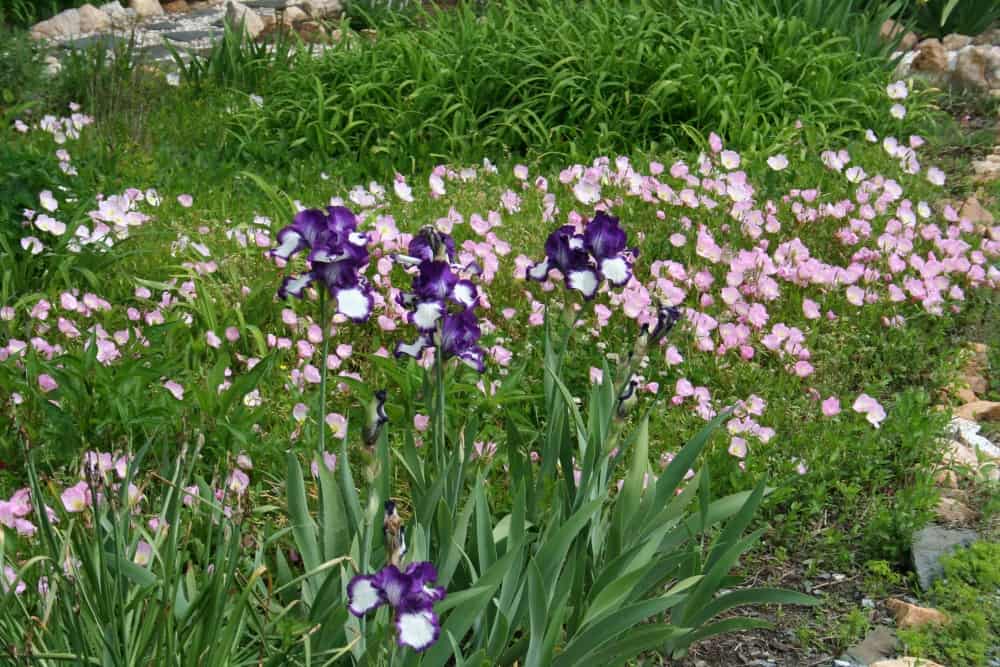
Well, I am exaggerating. The lavender loves it there, and the Black-Eyed Susan is no slouch, either. The iris and daylilies created a lush clump on the farther side away from the well; it’s probably where the soil is least damaged.
I have a mess there. I like to clean up my messes. It’s time for something new.
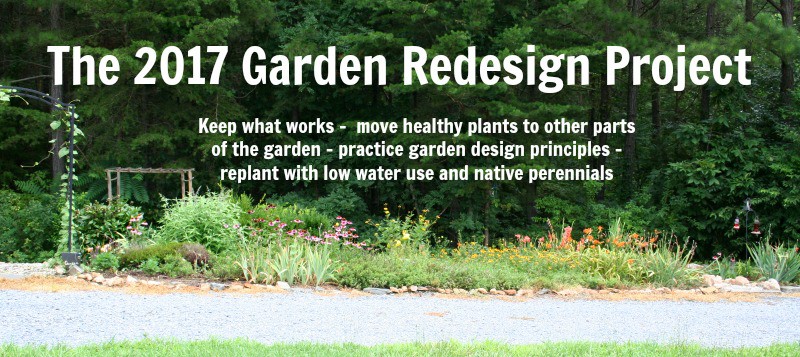
Garden Redesign Project
I’ve decided I’ve had enough of it. This fall, winter, and spring, I plan to do the following and blog about it here to use it as a teachable moment so that you can see the project from start to finish:
- Create a site plan, or a map to show what we intend to keep and what will be dug out of the ground and rehomed elsewhere in the garden.
- Dig up the plants we are keeping and plant them in their new areas before winter arrives.
- Spray an herbicide on the wire grass. Yes, I know it is not organic. Yes, I know it’s an ugly, evil chemical. I also know from long experience that there is probably nothing else that will kill wire grass. We also found some poison ivy creeping into the area. That must be killed.
- Mulch the area to cover it and prevent future weeds from germinating.
In the spring, I will shop for my new perennials. I am not sure what to plant, but I just ordered Pam Pennick’s book, The Water-Saving Garden, and I hope to conduct plenty of research into native perennials that can withstand tough conditions online during the winter.
Follow the Garden’s Transition on Home Garden Joy
Through it all, I will blog the transition, with plenty of pictures to show you what I am doing. I welcome suggestions, too, so feel free to pop them into the comments of each post. Let’s make this an interactive, community event, okay?
Winter is the time for gardeners and gardens to rest. It is also the time for reflection and planning. Before winter arrives, take the time to complete the most important gardening task of all: reviewing your garden, taking stock of what isn’t working (and what is), and making plans for the coming season.
Happy gardening. Keep growing!