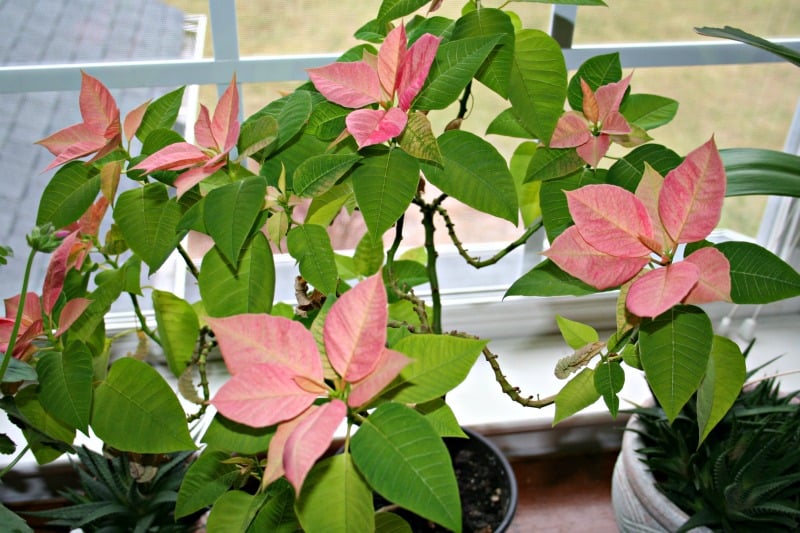
I was able to get a poinsettia to bloom!
Well, it’s not technically a flower…but it still looks a lot like Christmas here in my office.
Poinsettias are ‘ditch weeds’ in their native Mexico, wild native plants that thrive in ditches, along roadways and meadows. They can grow up to 16 feet tall in their natural environment Thank goodness our Christmas plants don’t get that big!
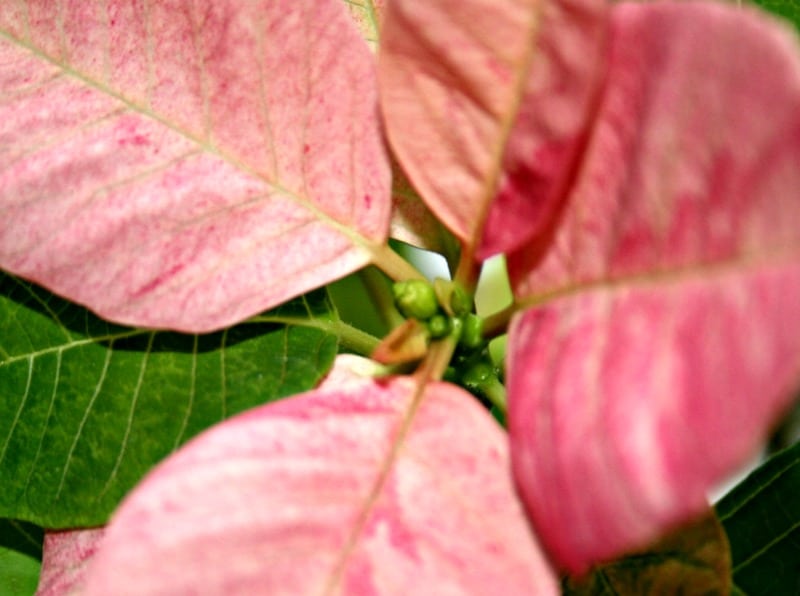
Many people obtain a poinsettia at Christmas time, either as a gift or for holiday decorations. Look for poinsettia that has dark green leaves and colorful center leaves still intact. If there’s a little yellow dust on the leaves near the center, it’s a sign that the plant isn’t fresh – that’s the pollen emitted from the true flowers, those small yellow centers.
Your poinsettia will need six hours or more of bright, indirect sunlight a day. Place them in areas that avoid drafts – they hate sudden changes in temperature. Steady 65- 70 degree temperatures, common indoors in most homes during the winter months, are fine for the poinsettia. Water frequently since the plants love moist, although not soggy, soil.
Get a Poinsettia to Bloom
Now, how do you get a poinsettia to bloom again?
From October 1 to December 1, poinsettia need a strict routine of darkness and light in order for the bracts to turn colors again. At dusk, cover the plant, or put it in a room that has complete darkness for 13 to 16 hours a night. You can cover the plant with a cardboard box or move it to a little-used room in your house where there are no artificial lights to disrupt the cycle. By December 1, the poinsettia should show its colorful leaves again.
Caring for Poinsettia
After Christmas, your plant should retain its colorful modified leaves, called bracts, for several weeks. These will gradually shrivel up and drop off when the plant puts its energy into growth.
Keep your poinsettia in a brightly lit room and water when soil becomes dry. In the springtime, when night temperatures remain steadily above 55 degrees F, move your plant outside. I keep mine on the porch where it receives bright but indirect light and daily water.
You can cut back the plant in March or April if you wish to keep it small. Pinch the plant back in June, July, and August to keep it nice and compact. To pinch, use your fingertips and gently “pinch” the tiny new leaves off of the plant. Cutting it back and pinching help it retain a bushy shape. I forgot to do that this year and mine looks a bit straggly.
I don’t fertilize my poinsettia, but a light application of water-soluble 20-20-20 once a month should be fine. Stop fertilizing around October 1 to encourage those pretty flowers.
Poinsettia became the flowers of Christmas early in the 20th century thanks to clever California growers. Today, it’s one of the best-known symbols of the holidays. Merry Christmas!