Growing ginger is fun. I was surprised to learn that I could grow ginger in Zone 7B, central Virginia. I attended a lecture by Ann Codrington of Nisani Farms several years ago. She discussed growing both ginger and turmeric. Her farm is in Maryland, but I discovered that both plants can be grown in both Maryland and Virginia. The trick is to treat them like the tropical plants that they are and to take the tubers inside in the fall.
Ginger Plant Profile
Botanical name: Zingiber officinale
Light requirements: Ginger grows best in bright, indirect light. It tolerates partial shade and can even thrive in dappled light outdoors. Direct, intense sun may scorch the leaves, especially in hot climates.
Soil requirements: Ginger prefers loose, well‑draining soil rich in organic matter. A loamy mix with good moisture retention works well. Soil pH should be slightly acidic to neutral, generally between 5.5 and 7.0.
Water requirements: Keep the soil consistently moist but never waterlogged. Ginger needs regular watering during active growth, especially in warm weather. Reduce watering during dormancy when the foliage dies back.
Fertilizer requirements:
Feed ginger with a balanced, slow‑release fertilizer or a liquid fertilizer high in potassium. Apply every four to six weeks during the growing season. Avoid heavy nitrogen, which can encourage foliage at the expense of rhizome development.
How I’m Growing Ginger
Ann’s lecture was fascinating! I screwed up my courage and bought a new ginger plant.
Here is my newly potted ginger plant, with my cat (also a ginger) in front of it.
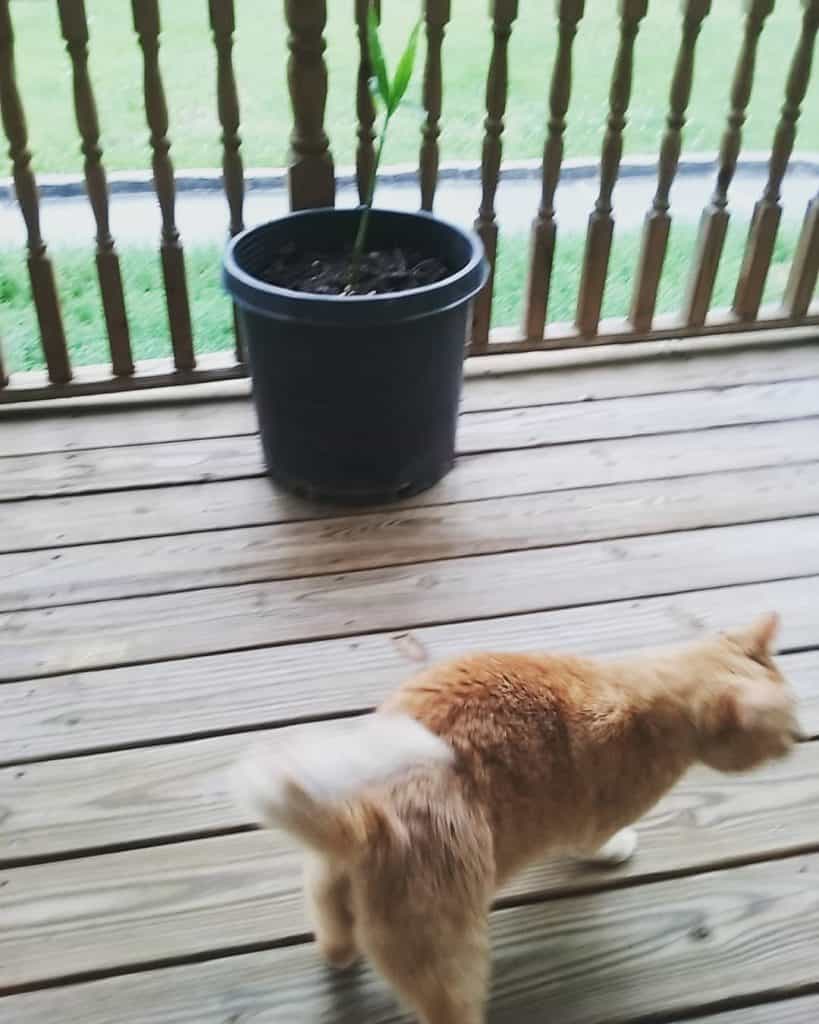
Ann recommended growing ginger in 100% compost, which was great, because we were emptying our compost bin this weekend, too. Ginger needs lots of moisture and partial shade to shade. I think of it like a tropical understory plant, growing under the big palms and other jungle plants in Hawaii and other exotic places.
The tubers are planted very similarly to iris. Like iris, you can’t plant them too deeply or they will sulk, rot, and refuse to grow. I bought an already started plant from Ann’s booth at the fair, and the tuber itself sort of sloughed off once we planted it. She mentioned this might happen so I was prepared for it.
At first, the plant looked like corn, but now I’m starting to see the large leaves, like the old snake plant we used to have as a houseplant in the 1970s, unfurling from the central stem. As it grew, it developed more foliage. I transferred it to a larger pot.
Harvesting Ginger Root
Ginger is ready to harvest when the plant signals that its energy has shifted back into the rhizomes. Young ginger, also called baby ginger, can be harvested about four to five months after planting, when the rhizomes are pale, smooth, and mild in flavor. For mature ginger with a stronger taste and a thicker skin, wait until the leaves begin to yellow and die back, usually eight to ten months after planting. This natural decline tells you the plant has finished growing and the rhizomes have reached full size.
To harvest, loosen the soil around the plant with your hands or a small garden fork, taking care not to damage the rhizomes. Lift the entire clump if you want a full harvest, or break off a section and replant the rest to keep it growing. After lifting the rhizomes, rinse them gently under cool water to remove soil. Avoid scrubbing too hard, as the skin is delicate when freshly dug. Let the ginger air dry until the surface is no longer damp.
Storing Your Homegrown Ginger
For storage, you have several options depending on how long you want the ginger to last. Fresh, unpeeled ginger keeps well in the refrigerator for two to three weeks if stored in a breathable bag or wrapped in a paper towel. For longer storage, freeze whole pieces or slices; frozen ginger grates easily and keeps its flavor for months. You can also dry or dehydrate thin slices for shelf‑stable storage, or store peeled ginger submerged in vinegar for culinary use.