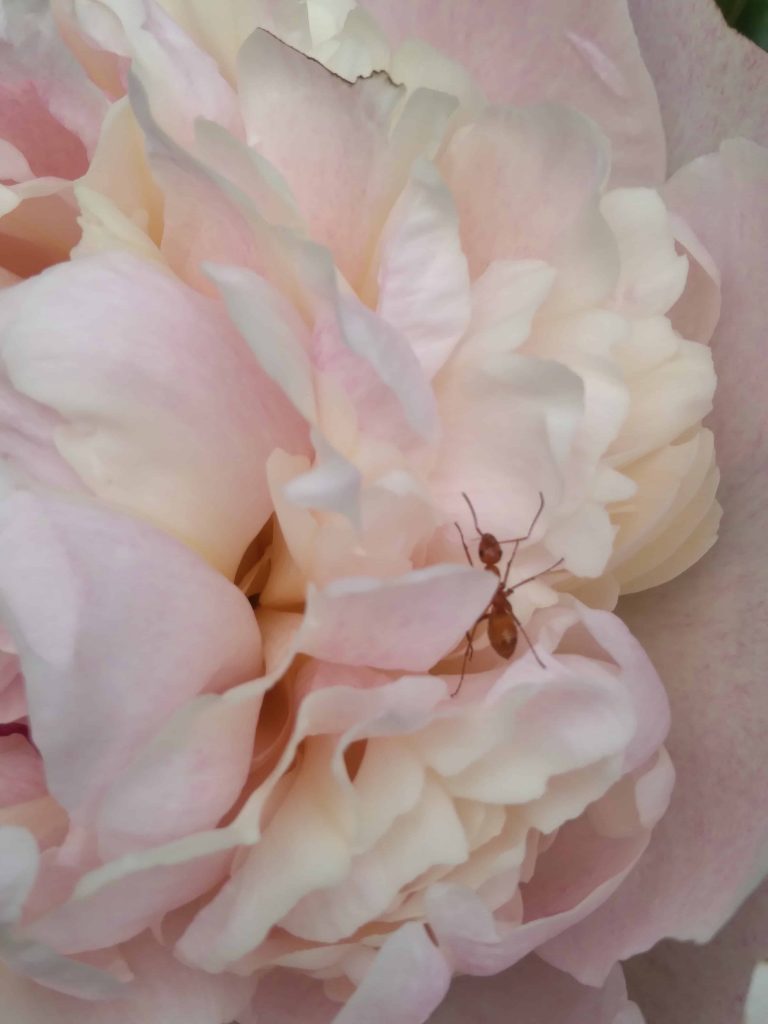
Ants on peonies are normal, but many gardeners have reached for the insecticide. That’s a shame, because the relationship between peonies and ants is harmless.
Ants on Peonies: Why?
Like most flowers, peonies produce nectar – a sweet liquid that many insects crave. Butterflies sip nectar from flowers, and by doing so, may help pollinate them. Ants love sweet things too, and once one ant finds a source of sugar-rich food, it produces a scent trail to lead other ants from its home colony to the food source.
Ants on your peony bush simply mean that your peony buds and flowers are producing natural, sweet nectar, and the ants have found the peonies. Once one ant climbs the stalk to the bud or flower, others follow their trail. The result looks like an army of ants marching over your flowers but they do no harm to peonies.
Peonies Do Not Need Ants – and Ants Don’t Hurt Peonies
There’s an old wives’ tale that says that peonies need ants in order to bloom (or reproduce or live, or whatever.) It’s absolutely false. Peonies don’t need ants at all.
According to the Heartland Peony Society, the ants probably aren’t doing anything for the peony – just taking what they need in order to live. In other words, the ants are feeding on the nectar produced by the flowers, but they’re not harming the peony bush, nor is the peony helped by the presence of the ants.
Do Ants Hurt Peony Flowers or Leaves?
No, they don’t. They sip the liquid and leave. If you see spots on the leaves or chewed up flowers, another insect may be responsible.
Don’t Use Insecticide
Some gardeners reach for the insecticide in the mistaken belief that any insect on a peony plant is bad. It’s better to just let nature take care of itself rather than use a harsh insecticide on peonies.
Any insecticide you use will not only affect the plants sprayed and the insects on the plant but may eventually end up in the soil and water. One of the reasons why bee colonies are collapsing worldwide is the rampant use of insecticides, which kill bees and other pollinating insects just as easily as they do harmful insects.
How Do I Get Rid of Ants on Peonies?
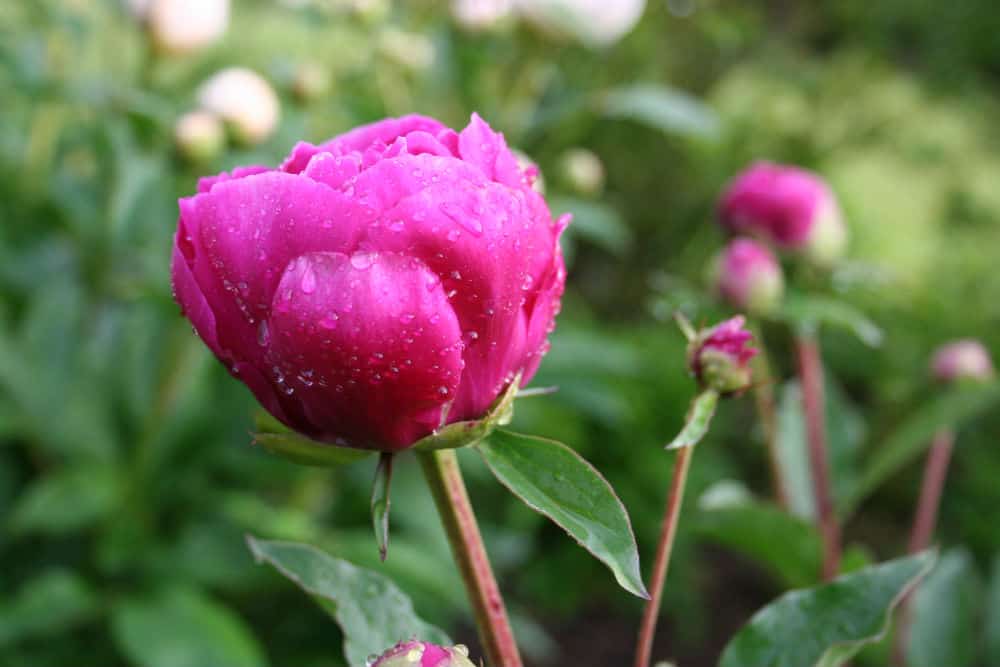
Eventually, when the blossoms open fully, most ants will depart as quickly as they arrived, leaving your beautiful flowers for you to enjoy.
If you want to cut some peony flowers for an arrangement, you can spray the flowers with the garden hose to dislodge the ants. Cut the flowers and use the hose on the lowest setting so as not to damage the buds and flowers. Gently spray water on the peony until the ants are swept off and back onto the ground. When you’re sure all the ants are off the flowers, bring it into the house.
Another way to keep the ants from coming into your house is to fill a bucket with water. Cut the peony flowers you want to use in a bouquet and hold them by the stem with the flowers and buds facing down. Dunk the flowers and buds in the water to remove the ants, shake off the extra water, and enjoy the flowers indoors.
Peony Bushes
Don’t let a few ants on peony bushes scare you away from growing them. If you want to cut some flowers to bring inside, a good spritz of water from a simple garden hose can dislodge those pesky ants without adding harmful chemicals to your garden.
First published May 2019. Updated on May 18, 2021 with new photos and updated information.