• Skip to primary navigation
  • Skip to main content
  • Skip to footer
Home Garden Joy
  • Home
  • Gardening Basics
    • Home Garden Tips
    • Month-by-Month Gardening Tips
    • Seed Starting
    • Compost and Fertilizer
    • Butterfly Gardens
    • Tools & Equipment
  • Raised Bed Gardens
  • Plants
    • Plant Profiles
    • Herbs
    • Fruit
    • Vegetables
    • Flowers
    • House Plants
    • Trees and Shrubs
  • Pests, Weed & Problems
    • Plant Diseases
    • Weeds & Invasive Plants
  • Birds and Wildlife
  • About
    • Books & Classes
      • Books for Christian Herbalists
      • Herbalism Classes
      • Books by Jeanne Grunert
    • Privacy Policy

Self Seeding Tough Plants: Coreopsis Tinctoria

April 13, 2009 by Jeanne

Growing self-seeding plants is great for areas where many things do not grow.
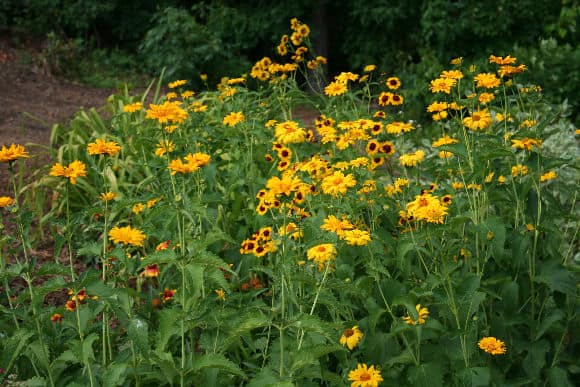
Self-Seeding Plants: Coreopsis

Gardening this weekend focused on plant rescue. Specifically, rescuing dozens upon dozens of plants that self-seeded throughout the perennial garden last fall and are now producing seedlings in unwelcome spots. After digging up my third bucketful of plants, I thought that self-seeding plants would be great topics this week since not many people know about them. Today’s focus is on the toughest sunny plant I’ve found: Coreopsis tinctoria.

Coreopsis tinctoria (Golden Tickseed)

Looking at the USDA map of North America, it’s amazing that Coreopsis tinctoria grows wild in all states except for Alaska, Nevada, New Mexico, and New Hampshire. How New Hampshire escaped I cannot fathom since the weather conditions are so similar to Vermont and the nearby states. I can understand Alaska, for the winters may be too cold, and Nevada and New Mexico have such hot, dry climates that it’s possible the little tickseed doesn’t like it.

In Texas, according to the Wild Plants of Friendswood blog, Coreopsis tinctoria grows wild by the roadside.
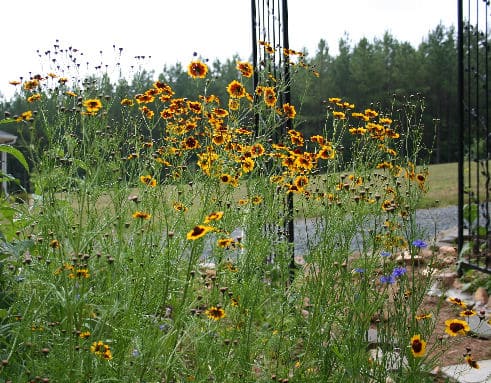
The plants like firm, dry seedbeds, but not too dry. They flower more with fertilization, but be warned – they also produce more seeds. The plants grow wispy stalks one to four feet tall and produce small, sunflower-like blossoms. They do need full sun – the more sun, the better.

The seeds will spread out around the Coreopsis plant, but be warned; they can be terribly invasive.

In my garden, for example, I not only have new Coreopsis plants coming up around the circumference of where last year’s mother plant was growing, but I have Coreopsis coming up in the driveway (I’m not kidding – in fact, these plants look the healthiest!) and among many of the other perennials. These have to be dug out since I don’t want coreopsis overshadowing the Echinacea, gaillardia, and yarrow.

Too much Coreopsis? Try moving these tough plants to areas where they can naturalize. If they get too invasive, you’ll have to weed them out.

For novice gardeners, Coreopsis is super-easy to grow from seed. Seeds are available from Parks, Burpee, and the other major gardening catalogs.
Filed Under: Growing Flowers

Previous Post: « Wildflowers in Virginia
Next Post: Garden Volunteers or Self Seeding Annuals »

Reader Interactions

Trackbacks

  1. Garden Volunteers or Self Seeding Annuals - Home Garden Joy says:
    June 20, 2019 at

    […] with the coreopsis, the Bachelor’s Buttons did a great job self-sowing throughout the garden, so much so that […]

Footer

A close up of American burnweed flowers about to bloom.

American Burnweed, the Weed That Signals Fall Is Here

I was walking my dog along the wood’s edge right near where we cleared land to build our greenhouse when I did a double take. There, like Jack’s magical beanstalk, had grown overnight this gem: American burnweed. Also known as fireweed or American burn weed, it grows rapidly – and I mean, rapidly. Like I…

Read More

Summer squash

What Can You Make with Summer Squash?

It’s that time of year when everyon asks, “What can I make with summer squash?”. The time when neighbors sneak bags of summer squash onto porches. When farmer’s markets are brimming with yellow and green squash, zucchini, and all manner of Cucurbitaceae, the plant family that gives, and gives, until it can’t give anymore. If…

Read More

A closeup of marshmallow plant flower.

Growing Marshmallow Plant

Growing marshmallow plant has been on my gardening to-do list for quite some time. I’ve read about it in herbal books and grown its cousins in the Malvaceae family from seed. The dark purple mallow plant I have thrives in my little garden by the shed, so I thought, “Why not grow marshmallow there?” I…

Read More

watering can with plants

August in the Garden: Late Summer Delight

August in the Garden: Tasks, Tips, and a Look Ahead to Fall Here in South Central Virginia, August has always felt like “back to school” season. By mid-month, the local schools are back in session, and with two universities in our small town, the stores fill up with dorm supplies and school gear. What a…

Read More

  • About
  • Plant a Row for the Hungry
  • Awards
  • Privacy Policy

Let’s Connect!

  • Facebook
  • Instagram
  • Pinterest
  • Substack
  • YouTube

Copyright © 2026 Home Garden Joy on the Foodie Pro Theme