• Skip to primary navigation
  • Skip to main content
  • Skip to footer
Home Garden Joy
  • Home
  • The Cultivated Garden
    • Butterfly Gardens
    • Home Garden Tips
    • Seed Starting
    • Compost and Fertilizer
    • Raised Bed Gardening
    • Tools & Equipment
    • Pests & Problems
  • Garden Diary
    • Plant Profiles
    • House Plants
    • Vegetables
    • Fruit
    • Herbs
    • Growing Flowers
  • Garden to Table
    • Easy Recipes
    • Canning and Food Preservation
  • Seasonal Living
    • Home for the Holidays
    • Birds and Wildlife
    • Vintage Finds
  • Shop
    • Books for Christian Herbalists
    • Herbalism Classes
    • Books by Jeanne Grunert
  • About
    • Privacy Policy

Celebrating the Eastern Tiger Swallow Tail Butterfly

May 8, 2013 by Jeanne

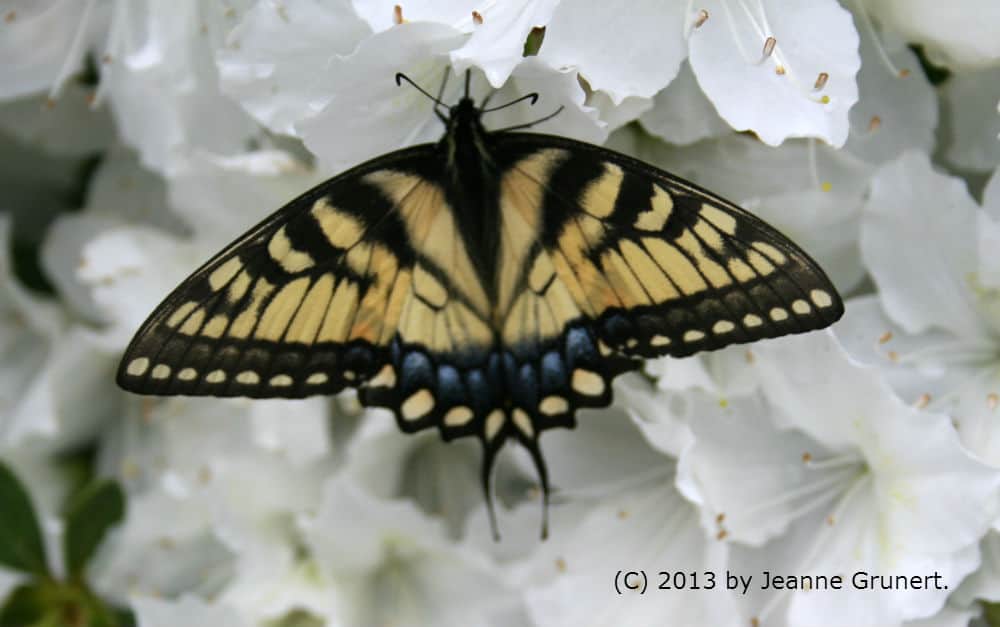
Each year, we seem to have even more Eastern tiger swallow tail butterflies in the garden at Seven Oaks. They’re the predominant butterfly, and no wonder- they are also the Virginia state insect.

The first known record of the Eastern Tiger Swallow Tail comes to us from Sir Walter Raleigh’s third expedition to Virginia. In 1587, a fellow by the name of John White drew a picture of the Eastern Tiger Swallow Tail. It seems I’m in good company; I love to photograph them, and it was the first North American butterfly recorded by a European.

Papilio glaucus, as this butterfly should be properly called, inhabits the United States all along the East coast to the Rocky Mountain areas. It prefers wooded habitats, fields bordering woodlands, and gardens. Like mine. It really is plentiful here!

The caterpillars produce up to three broods per year. One interesting fact is that the first brood is the smallest. I wonder if that’s because food isn’t as plentiful for the first brood?

Caterpillars start life dark brown, but later turn green, with large green, black and blue eye spots. They return to a brown color before the chrysalis form. Chrysalis of the Eastern tiger swallow tail winter over, with butterflies emerging in February in the deep south.  Around here, they appear March through April, depending on the weather.

The males are always yellow, like the one above, with black stripes and spots, but females can either be yellow, dark brown or black with blue spots, like this one below:
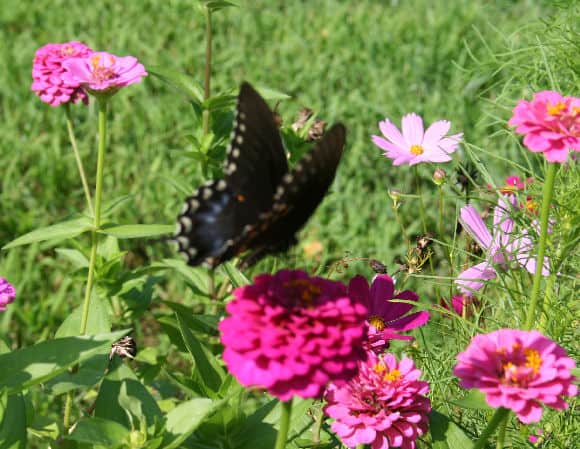
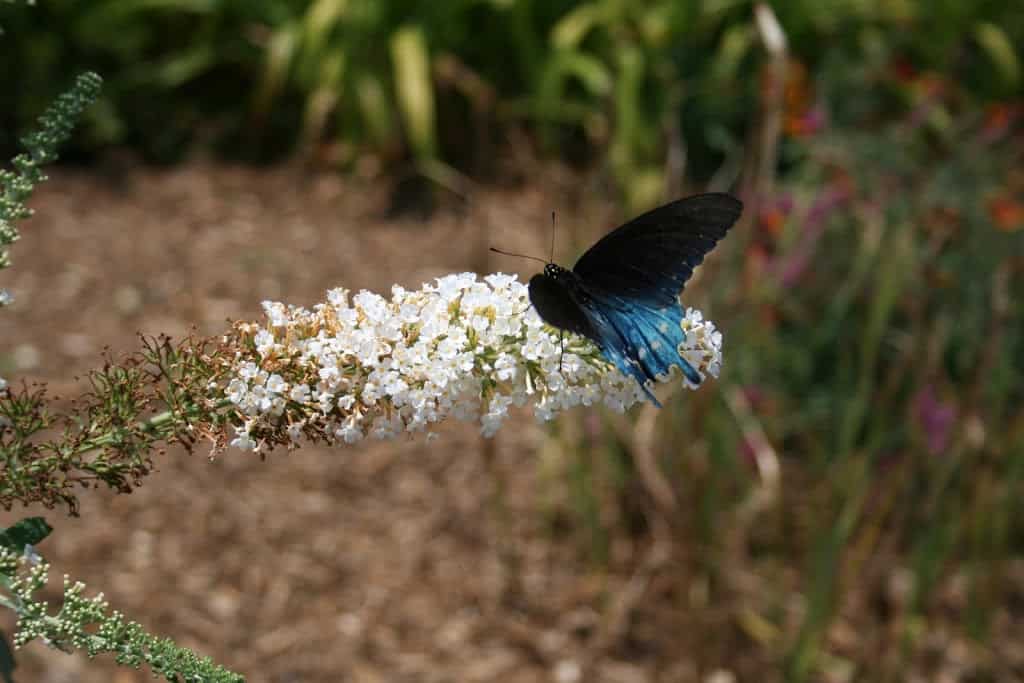


Do you plant flowers for butterflies? I love butterfly gardens and they are so easy to grow.  See my presentation on Slideshare or on the resources page here on the blog for a free and brief guide to butterfly gardens.
Filed Under: Butterfly Gardens

Previous Post: « Columbine Flowers
Next Post: How to Grow and Care for Iris Plants »

Footer

Sunfinity sunflowers in pots

Sunfinity Sunflowers: A Long-Lasting Burst of Summer Color

I love sunflowers, so when the National Gardening Bureau reached out with the news of Sunfinity® Sunflowers, I had to check them out. This new sunflower variety keeps blooming long after traditional sunflowers call it quits. While many common varieties offer only a few weeks of color and stop producing flowers once cut, this series…

Read More

bamboo fountain

Buy vs. Build Your Own Garden Fountain

Are you trying to decide whether to buy or build your own garden fountain? I’ve done both, and each approach has pros and cons. I’ll unpack them for you, below, plus include links to some of my favorite products. Home Garden Joy participates in the Amazon affiliate program. We earn a small commission on product…

Read More

a wheelbarrow with bag of soil, trowel, pots and plants

Understanding Fertilizer: A Complete Guide for Home Gardeners

Understanding fertilizer is an important skill for beginning gardeners. In this guide, I’ll walk you through the basics. By the end of this article, you’ll understand fertilizer, what it is and what it does, and how to use it appropriately in the garden. Introduction: Why We Use Fertilizer in the Garden . Plants absorb nutrients…

Read More

red lettuce, mexican tarragon, and chard

The Best Organic Fertilizers

If you’ve been looking for ways to help your garden truly thrive — not just survive — organic fertilizers might just become your new best friend. They’ve become a cornerstone of sustainable gardening and farming, and for good reason: they don’t just feed your plants, they actually improve the health of your soil over time….

Read More

  • About
  • Plant a Row for the Hungry
  • Awards
  • Privacy Policy

Let’s Connect!

  • Facebook
  • Instagram
  • Pinterest
  • Substack
  • YouTube

Copyright © 2026 Home Garden Joy on the Foodie Pro Theme