• Skip to primary navigation
  • Skip to main content
  • Skip to footer
Home Garden Joy
  • Home
  • How to Garden
    • Garden Pests
    • Plant Diseases
    • Raised Bed Gardening
    • Seed Starting
    • Tools & Equipment
  • Plants
    • Plant Profiles
    • Vegetables
    • Fruit
    • Herbs
  • Recipes
    • Canning and Food Preservation
  • Books & Classes
    • Herbalism Classes
    • Books for Christian Herbalists
  • About
    • Privacy Policy

Designing a Raised Bed Vegetable Garden

February 27, 2014 by Jeanne

 
Yesterday, we talked about how to plan a raised bed vegetable garden. I shared with you some basic tips for choosing a location for your new garden. Today, let’s talk about the overall design of a raised bed garden.

Raised Beds and Paths

Most raised bed gardens consist of rectangular or square-shaped raised bed with access pathways running in between the beds. How many garden beds you include in your raised bed vegetable garden plan depends on many factors.
How much time do you want to devote to your garden? What vegetables do you want to grow?
Take a few minutes to jot down a list of everything you’ve dreamed of growing to get an idea of how much space you might need. Keep in mind that some crops, such as cucumbers, squash, peas and beans, can be grown up rather than across the ground, thus saving space. Trellises, staked netting and other supports can be placed over a raised bed to provide vines with ample space to climb vertically rather than trail across the ground. Other crops, such as pumpkins, watermelon and other large melons do need space to spread out, not to mention plenty of water. Once you know what you’d like to grow, you can better plan the space requirements.


Constructing Raised Beds

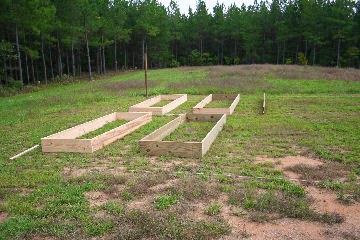
This is a picture of my own vegetable garden raised beds during construction. We used untreated lumber for three of the beds and treated on the remainder of the beds. What’s the difference? 


Pressure Treated Wood for Gardens
Pressure-treated wood is lumber that has been treated with chemical preservatives to help it resist rot and insect damage. It last longer, but organic gardeners tend to shun it because of the fear that chemicals leach from the lumber into the soil over time. Although opinion varies about its use in an organic garden, a true certified organic garden cannot use pressure-treated wood. My own research shows that the risk of chemicals leaking into the soil is minimal, and that root crops grown near the edges of such beds are more susceptible to taking up any chemicals than other types of crops. From my research, I decided that the beds used to grow root crops would be made from untreated lumber; treated lumber was fashioned into the other beds. Overall, this was a sound decision for me. For more on the subject, Fine Gardening offers an insightful look at the differences between the two types of lumber and the choice to use one or the other.


Measurements for Raised Beds
We made our garden beds from three 8′ long boards approximately 8″ high by 2″ wide. One board was cut into two sections to form the short ends of the rectangles. My husband used the power drill to insert screws into the ends, and we stapled landscape fabric over the bottom of the frame.  We then flipped the frame over so that the landscape fabric covered the grass, preventing it from growing. A mixture of rich, organic soil and compost from the local paper mill was added to each bed, along with composted cow manure, peat moss and lime.
The treated lumber beds are now on year six in the garden and are fine. The untreated beds began decaying last year.  We’ve replaced one and have another to replace. The lumber along the sides rots, splits, and eventually splinters into sawdust and chips as nature’s scavengers – mold, rot and insects – devour it. My husband is looking into protective paint for the untreated beds to seal the wood and make it less permeable.


Planning the Pathways
When you’re planning a raised bed vegetable garden, leave at least three feet between the beds. This gives you enough room to maneuver a wheelbarrow or other equipment in and out of the garden.  
I have also written a book on raised bed gardens. Click the link below to read excerpts, reviews and to order from Amazon.
Plan and Build a Raised Bed Vegetable Garden walks you through site selection, building a simple raised bed, soil for raised bed gardens, pathway construction and more.

Filed Under: Raised Bed Gardening

Previous Post: « How to Plan a Raised Bed Vegetable Garden
Next Post: Pathways for a Raised Bed Vegetable Garden »

Reader Interactions

Trackbacks

  1. How to Plant Tomatoes | Home and Garden Joy says:
    August 12, 2014 at

    […] helps prevent a lot of problems before they start. They’ll grow just fine in containers, raised bed gardens, or garden beds. Add plenty of compost and well-aged manure to the soil and mix it in before […]

  2. How to Build a Vegetable Garden Using Raised Beds - Home and Garden Joy says:
    December 4, 2014 at

    […] Designing a Vegetable Garden […]

  3. How to Plan a Raised Bed Vegetable Garden - Home and Garden Joy says:
    December 4, 2014 at

    […] Designing a Raised Bed Garden […]

  4. Steps to Build a Raised Vegetable Garden Bed - Home and Garden Joy says:
    February 3, 2016 at

    […] in the vegetable garden that collapsed over the winter.  You may recall from my previous posts on raised bed vegetable gardening that our garden contains three beds built from untreated lumber, and the remaining beds built from […]

  5. 18 Raised Garden Bed Ideas & Inspirations * My Stay At Home Adventures says:
    May 3, 2017 at

    […] There are so many great tips at Home Garden Joy on the best way to design your raised garden beds. […]

  6. Raised Bed Vegetable Garden | Ecoskin.co says:
    August 21, 2017 at

    […] source – Designing A Raised Bed Vegetable Garden Home Garden Joy Elegant Raised Bed Vegetable Garden […]
Footer

a blue borage herb flower

How to Start Herb Seeds the Right Way: Free Course

Learn how to start herb seeds the right way with The Herbal Academy’s new, FREE online course! Home Garden Joy is an Herbal Academy affiliate. We love their ebooks and courses. I’ve taken many of them and found them to be very helpful. They get to the heart of herbalism without introducing spiritual aspects in…

Read More

raised bed garden

How to Prepare Raised Beds for Spring Planting

The snow and ice have finally melted. In the mornings when I walk my dog through our farm, I can hear a rooster crowing on a neighboring farm. Cardinals have begun singing in the dawn. It’s spring, folks. And while the calendar reminds me we can still feel winter’s icy breath, spring planting is just…

Read More

two loaves of bread in the oven

Swedish Tea Bread

I first made Swedish tea bread for my 50th birthday. Three of my friends have birthdays in the same month and invited me to their family group birthday celebration (they are all relatives). I shaped the bread into braided rings and decorated it with sliced almonds. It was a hit, and I have made it…

Read More

a shovel with compost on it

How to Start Composting in Winter

Have you thought about starting a compost pile, but you’re wondering how to start composting in winter? I mean, after all, here in Virginia we just had three solid weeks of absolutely tundra-like temperatures. I had a sheet of ice for a lawn, and the raised bed garden was completely covered in a thick layer…

Read More

  • About
  • Plant a Row for the Hungry
  • My Books on Amazon
  • Awards
  • Privacy Policy

Let’s Connect!

  • Facebook
  • Instagram
  • Pinterest
  • Threads
  • YouTube

Copyright © 2026 Home Garden Joy on the Foodie Pro Theme