• Skip to primary navigation
  • Skip to main content
  • Skip to footer
Home Garden Joy
  • Home
  • How to Garden
    • Garden Pests
    • Plant Diseases
    • Raised Bed Gardening
    • Seed Starting
    • Tools & Equipment
  • Plants
    • Plant Profiles
    • Vegetables
    • Fruit
    • Herbs
  • Recipes
    • Canning and Food Preservation
  • Books & Classes
    • Books by Jeanne Grunert
    • Books for Christian Herbalists
    • Herbalism Classes
  • About
    • Privacy Policy

Strawberry Season

May 28, 2014 by Jeanne

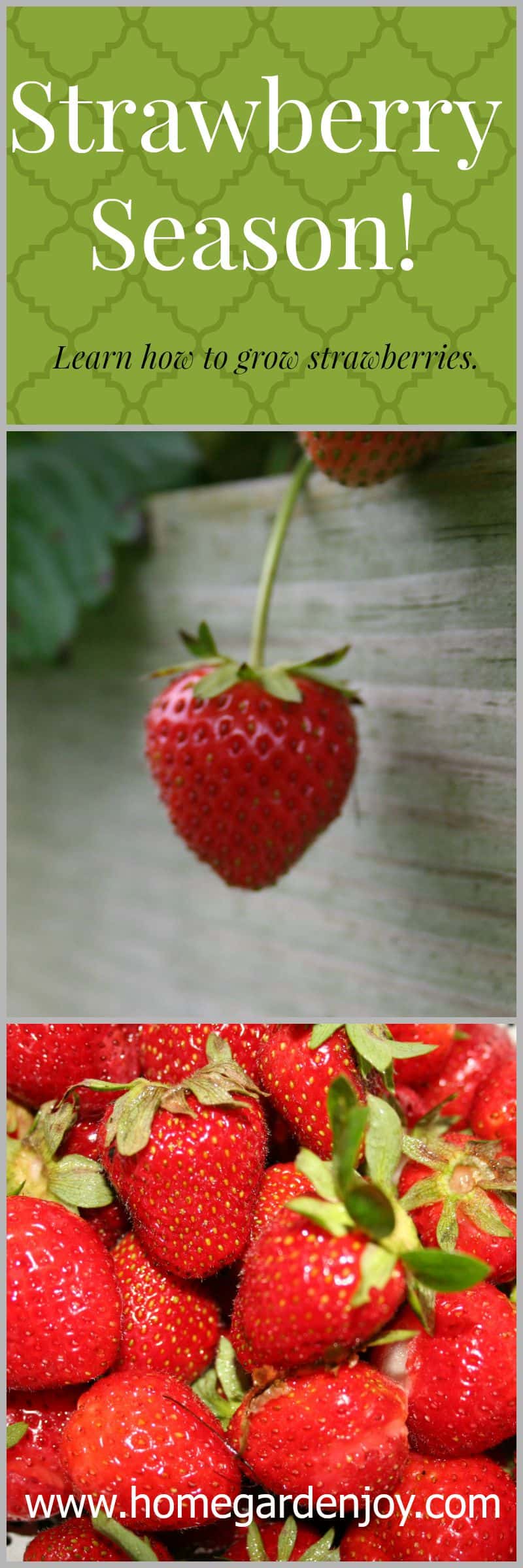
It’s strawberry season here at Seven Oaks, and the fresh strawberries have just started ripening this past week. I love nothing more than fresh strawberries picked from the plants, swiped on a shirttail to remove the dirt, and consumed immediately. There’s nothing sweeter than a fresh strawberry. Even the WORST fresh strawberry makes store ones pale by comparison. To say I’m an enthusiast is an understatement.
strawberry season

My own strawberry patch is in a raised bed approximately 8 feet by 4 feet. I planted “Everybearing” strawberry plants purchased six years ago. The mother plants have successfully sent out runners and rooted daughter plants, which I move every few years during the spring so that the bed can expand.
The soil consists of a mixture of compost from the local sawmill, manure and compost, some potting soil and as much additional compost as I can layer on. I find that strawberries are heavy feeders, and the more compost I can add, the better.
 

The three pests that plague my strawberries are, in order: Japanese beetles, crows, and squirrels. The Japanese beetles eat the leaves, and they do plenty of damage, but I’ve chosen not to use pesticides on my berries. The bed looks awful during June, but by August most of the damage to the leaves done by the chewing insects is overcome.

The birds are another matter entirely. They’re tough to outwit. Netting might help, but I haven’t invested in it yet. As soon as the berries are the perfect shade of ripeness, crows bite the ends off. I try to hide the berries under leaves, which seems to work. If they can’t see it, they don’t eat it.
As for the squirrels, well…the only squirrel smart enough to find my strawberry patch last year also found the ripening peaches on the tree near the vegetable garden. Alas, he met his maker when Whitey, one of our outdoor cats, pretended to be a white panther, stalked him and dispatched him to the after life.  So far, my strawberries have been fine.
How to Grow Strawberries
I’ve written several great links on how to grow strawberries. These articles will teach you how to grow your own strawberries in your home garden.

  • How to Grow Strawberries
  • Strawberries in the Home Garden

Strawberry Recipes
I don’t have any of my own original strawberry recipes to share today, so I thought I’d be an archivist and instead share three links I’ve found to a ton of great recipes to use your fresh strawberries. 

  • Southern Living shares 51 recipes for fresh strawberries. Their magazine is usually great when it comes to recipes. Some look absolutely mouth-watering!
  • Cooking Light is always one of my favorite recipe sources. Here they’ve listed 20 recipes for fresh strawberries.
  • Taste of Home is another magazine which published great recipes. Here is the link to their collection of strawberry recipes.

 

post signature

Filed Under: Growing Flowers

Previous Post: « How to Plant Tomatoes
Next Post: Growing Lemon Trees from Seeds »

Reader Interactions

Comments

  1. Swimray

    May 29, 2014 at

    I had my first strawberries from my plant. Last year squirrels, birds, and slugs got to them first, but no Japanese beetles. They don’t show up in my yard for some reason – someone suggested because of an abundance of shade in the neighborhood.
    Ray

Trackbacks

  1. Tucking Your Strawberry Plants in for the Winter says:
    October 20, 2015 at

    […] need special care and preparation in order to survive a cold winter. Here’s how to tuck your strawberries in for their long winter nap so that when they awaken in the spring, they’re raring to […]

Footer

a wheelbarrow with bag of soil, trowel, pots and plants

Understanding Fertilizer: A Complete Guide for Home Gardeners

Understanding fertilizer is an important skill for beginning gardeners. In this guide, I’ll walk you through the basics. By the end of this article, you’ll understand fertilizer, what it is and what it does, and how to use it appropriately in the garden. Introduction: Why We Use Fertilizer in the Garden . Plants absorb nutrients…

Read More

red lettuce, mexican tarragon, and chard

The Best Organic Fertilizers

If you’ve been looking for ways to help your garden truly thrive — not just survive — organic fertilizers might just become your new best friend. They’ve become a cornerstone of sustainable gardening and farming, and for good reason: they don’t just feed your plants, they actually improve the health of your soil over time….

Read More

water droplets in sunbeams over a raised bed vegetable garden

Irrigation Tips for Home Gardens: Drip vs. Soaker Hose

Watering is one of the most essential tasks in maintaining a healthy home garden, yet it is also one of the most misunderstood. Many gardeners rely on overhead sprinklers or hand-watering, both of which can waste water and fail to deliver moisture efficiently to plant roots. Two of the most effective alternatives are drip irrigation…

Read More

chive plants in bloom with lettuce

The 10 Easiest Herbs to Grow

Grow them in pots, containers, window boxes, raised beds, or tucked among your flowers. These are the 10 easiest herbs to grow in almost any temperate garden. They take up little space, are generally unfussy, and are used in lots of recipes. What Do I Need to Start an Herb Garden? You don’t need a…

Read More

  • About
  • Plant a Row for the Hungry
  • Awards
  • Privacy Policy

Let’s Connect!

  • Facebook
  • Instagram
  • Pinterest
  • Substack
  • YouTube

Copyright © 2026 Home Garden Joy on the Foodie Pro Theme