Perennial salvia offers gardeners with hot, dry yards a beautiful flowering plant that attracts bees and butterflies. Depending on the varieties you plant in your garden, perennial salvia may bloom spring, summer, fall or a combination of seasons.
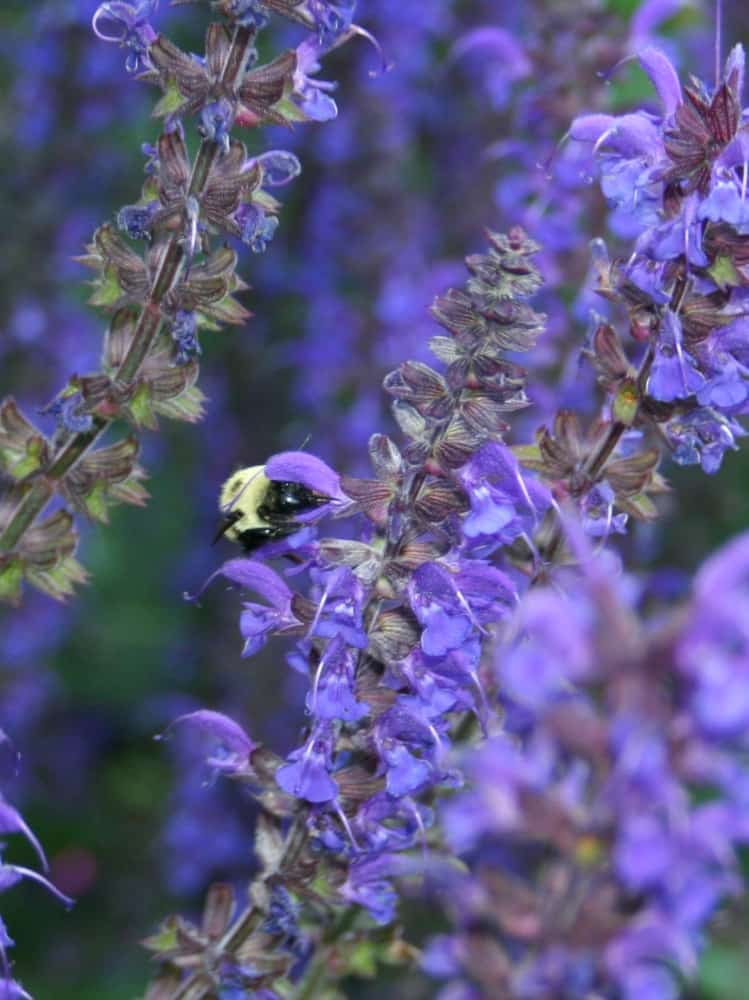
Bee on perennial salvia flower.
Growing Perennial Salvia
Perennial salvia, sometimes called sage, refers to a group of prolific, drought-tolerant plants. Within the salvia family, you’ll find annual salvia, perennial salvia, and biennial salvia. Culinary sage is in the salvia family, as is clary sage, a perennial grown for its aromatic flowers and leaves.
The perennial salvia varieties usually grow to a height of one to three feet tall, with a spread of about one to three feet as well. Colors include shades of blue, purple and white. The leaves are dark green and emerge from the center of the plant in spring, followed quickly by tall stems filled with small, beautifully colored flowers.
To grow salvia, you’ll need:
- Full sun to partial shade: In northern climates, they tend to do better in full sunlight. In my zone 6b garden, they thrive in both afternoon shade and full sun.
- Well-drained soil: Salvia can tolerate a wide range of soils. Add some compost to the soil before planting, and mulch after planting.
- When to plant: Spring is the best time of year to plant salvia. They usually bloom the first year if you plant mature plants purchased from a reputable garden center. I have grown some perennial salvia from seed, such as clary sage, and it takes longer to get growing.
- Water: They need an inch or more of water per week. Usually, that’s plenty in the temperate zones, but if there’s a long dry spell, water them.
- Seeding: Certain varieties of salvia will self-sow if they’re happy with their location. In my own garden, “volunteer” perennial salvia appears around the parent plants throughout the garden. You can leave them where they are or transplant them to a new spot in the garden.
Uses for Perennial Salvia
Salvia makes a great border plant or accent plant in the garden. You can add it to your front landscaping around shrubs, or use it in the flower garden.
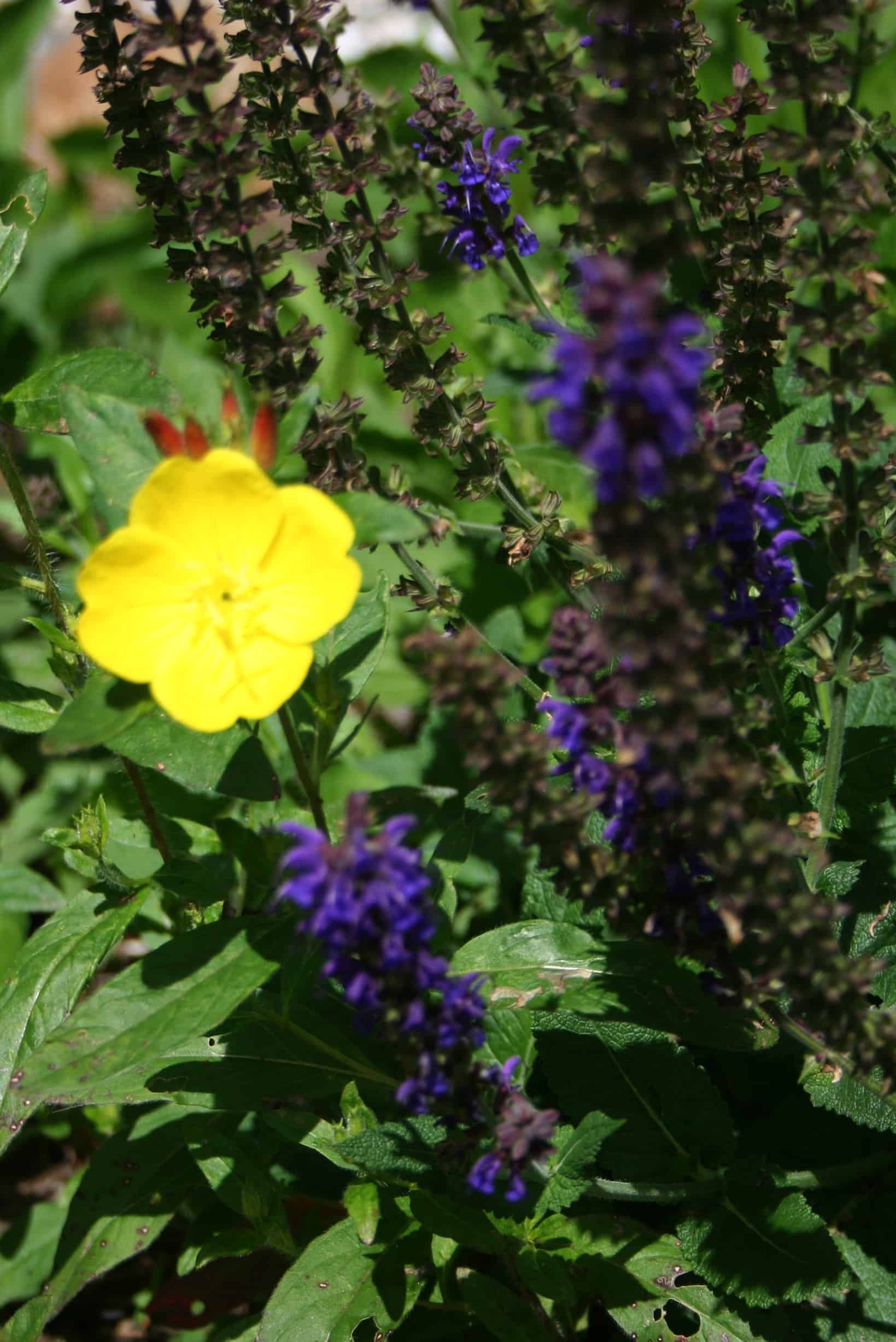
Salvia “May Night” and Oenethera (Buttercup)
I like to pair dark blue-purple salvia such as “May Night”, the perennial salvia pictured above, with bright yellow flowers. Oenethera, also known as buttercup, St. John’s Wort, yellow butterfly weed and similar flowers look great with dark purple salvia. If you have a garden that’s prone to drought, pair salvia with gaillardia, another sunny perennial that tolerates droughts well.
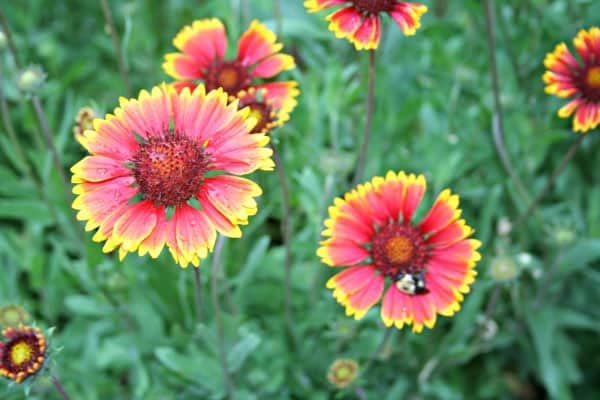
Gaillardia is also drought-tolerant and pairs well with salvia.
In my own garden, I use salvia in the landscape in several ways:
- Front landscape: I love it as a landscape plant and grow plants along the sidewalk leading to my front porch.
- Butterfly garden: It’s one of my favorite butterfly garden plants.
- Border: I’ve used salvia to edge the wall under my kitchen windows, along with gladiolus.
For more information about growing salvia, please see the following resources:
- Salvia – Clemson Cooperative Extension
- Salvia “May Night” Perennial of the Year
- Salvia – National Gardening Association
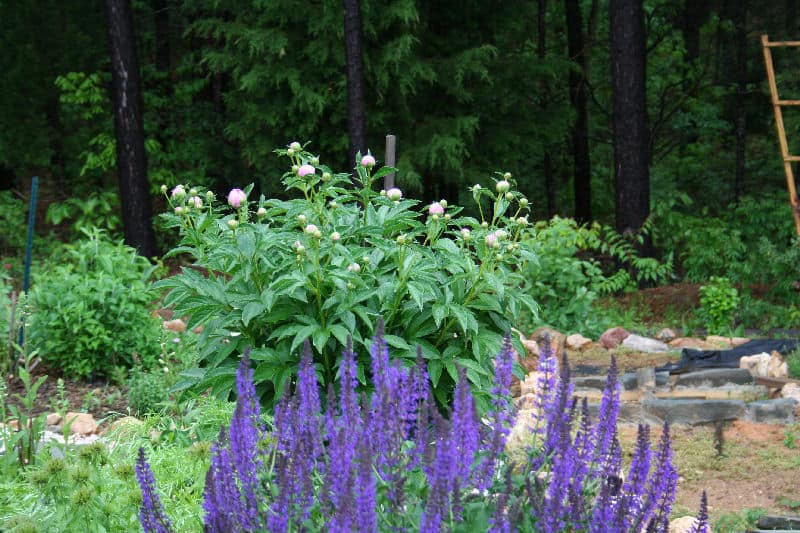
Salvia “May Night” blooming in spring. It’s paired here in my garden as a front border plant with a pink peony.