Is growing chives from seed possible? Not only is it possible, but it’s easy to grow chives from seed. Here’s all you need to know about growing this tasty, onion-flavored herb in almost any temperate gardening zone.
The following contains affiliate links. We are a participant int he Amazon Services LLC Associates Program, an affiliate advertising program designed to provide a means for us to earn fees by linking to Amazon.com and affiliated sites. Thanks so much for being a part of Home Garden Joy!
How to Grow Chives
Chives add wonderful flavor to many dishes. Imagine a baked potato with sour cream and diced chives and I bet your mouth is watering!
Types of Chives for the Home Garden
There are two types of chives commonly grown for culinary use:
- Common chives (Allium schoenoprasum): A. schoenoprasum, or common chives, is the herb most frequently grown and used for cooking. The leaves and flowers are edible. Common chives tastes a bit like green onion, and makes a wonderful accompaniment to any creamy flavor. It’s often used to season sour cream or to make herbal butter.
- Garlic chives (Allium tuberosum): A. tuberosum is often referred to as Chinese chive. The garlic chive has larger, flatter leaves and white flowers. All parts are edible: leaf, flower, and bulb. The bulb has an intense flavor, similar to garlic, but sharper. Garlic chives are not as cold-tolerant as common chives and should be protected in the winter by digging them up and growing them indoors or by replacing them each year.
Starting Chives from Seed
Both common chives and garlic chives are easy to start from seeds. Purchase seeds from any reputable seed company. Start chives from seed in late winter by sowing them in flats and keeping them cool until germination. Transfer to the garden in zones 6-7 in March; in colder zones, wait until the danger of frost is over. Keep them watered and moist until they become established.
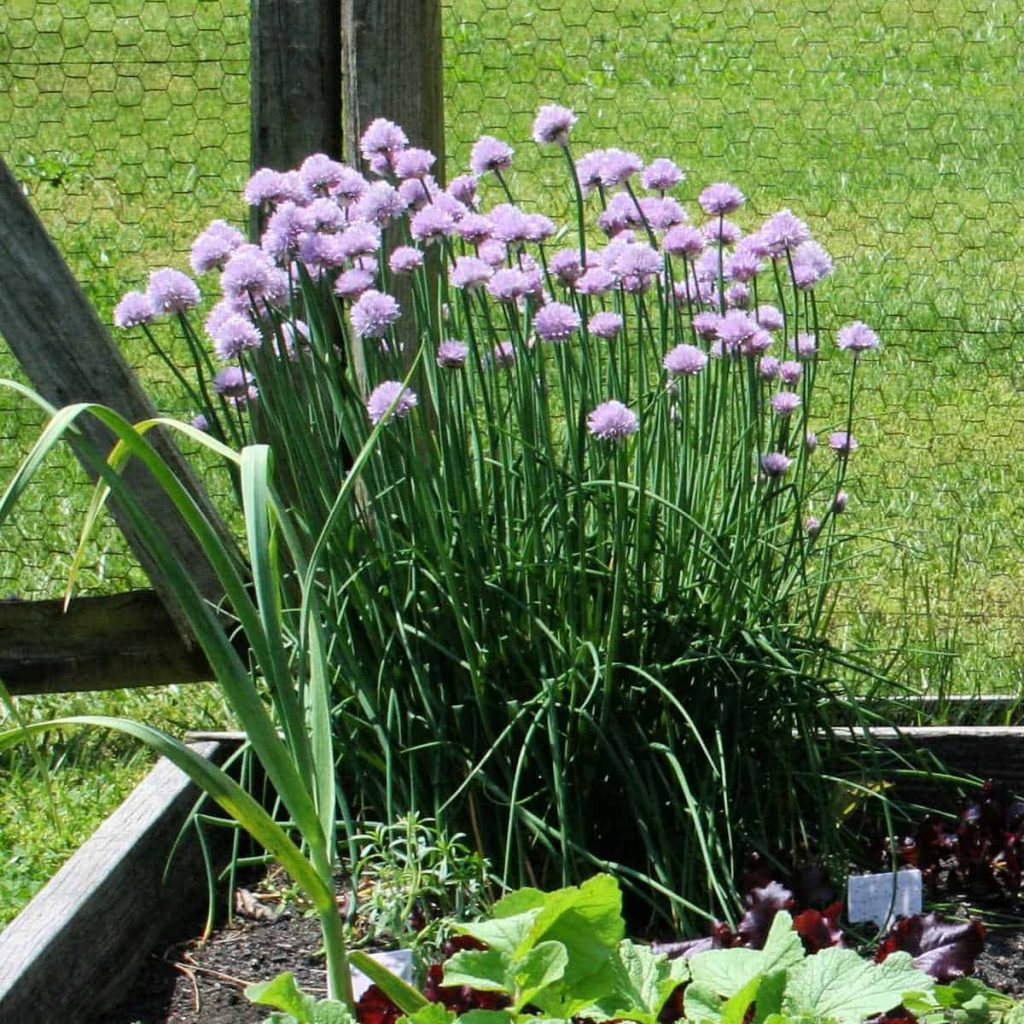
To start chive seeds directly in the garden, choose your location carefully, because common chives are perennial herbs. That means that once you have an established patch of chives, they will return each year. My own patch of chives grows well in a corner of a raised garden bed. I use the rest of the bed for radishes and lettuce in the spring, and then grow squash over the summer after the radish and lettuces are done.
Planting Chive Seeds
Plant chive seeds in rows as soon as the soil can be worked, typically by March in zones 6-7. Chives germinate in soil temperatures of 60-70 degrees F. They can take several weeks to germinate (sprout) so be a patient.
To plant chive seeds:
- Choose a site that gets full, bright sunshine
- Add compost or manure to the soil and dig it in to a depth
- Make a shallow trench or line in the soil
- Sprinkle chive seeds about two inches apart in the line or trench
- Place about 1/4 inch of soil over the seeds
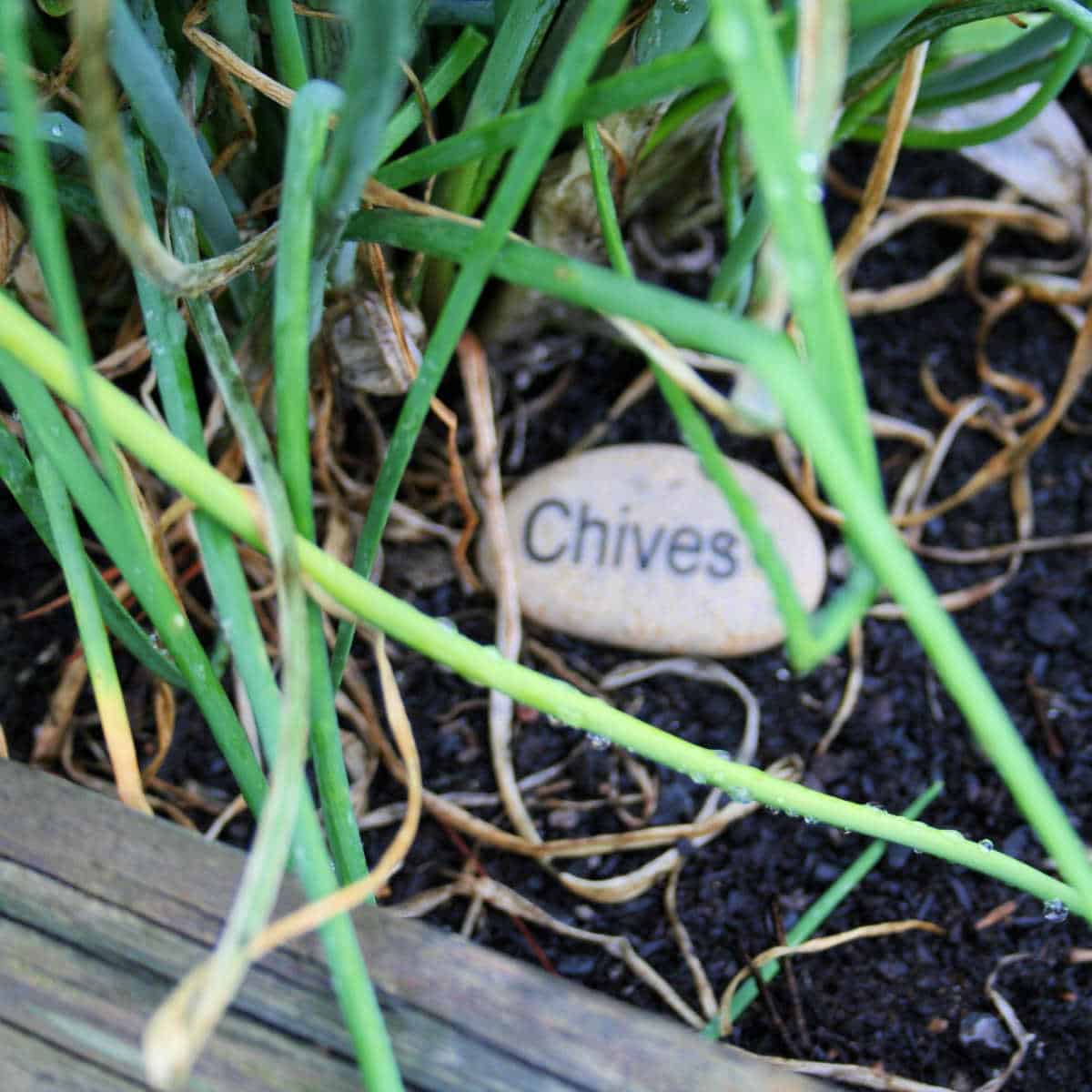
- Write the plant name on a plant marker or stake to make sure you don’t accidentally pull them up!
- Water the seeds and water them daily until they germinate (sprout)
You may want to thin the seedlings out after they germinate. Thinning means to pull up extra plants that are crowding out other plants. Chives need about 4-6 inches of space between plants. You can add the sprouts you pull out to thin the plants to salads or stir fries. Just wash the soil off of the roots and enjoy.
How to Use Chives
My favorite chive recipe utilizes both the stems and the flower heads. This recipe is from the book Recipes from the Herbalist’s Kitchen by Brittany Wood Nickerson. It’s a “must-have” cookbook if you love herbs the way I do. Feta, chive, and mint spread tastes wonderful on celery or crackers and offers a burst of flavor in every bite.
Growing Chives Year-Round
As I mentioned, chives are perennial herbs, especially common chives. They thrive in the cool, moist weather (zones 6 and 7) in the spring and again in the fall. During the summer, they may turn brown. Keep them watered and pick the leaves to enjoy as needed.
In the fall, after the first frost, the leaves will begin to die back. They will turn brown and shivel up. You can leave them on the plant during the winter. In the late winter or early spring, trim off the browned leaves with garden shears or just pull them off gently using your hands. Compost the brown leaves as needed.
I don’t bother to cover my outdoor chives plants in the wintertime here in zone 6B/7. If you live further north in zones 4 or 5, you may want to offer your common chives some winter protection using straw mulch, pine needs, or a cloche (cover). Or, you can dig them up, plant them in a pot or container, and bring them indoors.
And, if you want something easy to make with chives, try my recipe for chive oil or use them to add to your own fines herbs blend.
Growing chives from seed offers the kitchen gardener — someone who loves growing fruit, flowers, vegetables, and herbs — an easy and versatile plant for almost year-round enjoyment.