
Growing zucchini in raised beds ensures that this prolific vegetable has the best conditions to thrive. You can grow zucchini in pots or containers, but I prefer growing it in raised beds. This is a great vegetable to grow if you have a “black thumb” and kill plastic plants, because it’s hard to grow a bad zucchini plant! It’s also a great vegetable for children to grow because it grows quickly.
Let’s take a look at growing zuccuhini, especially in the raised bed vegetable garden.
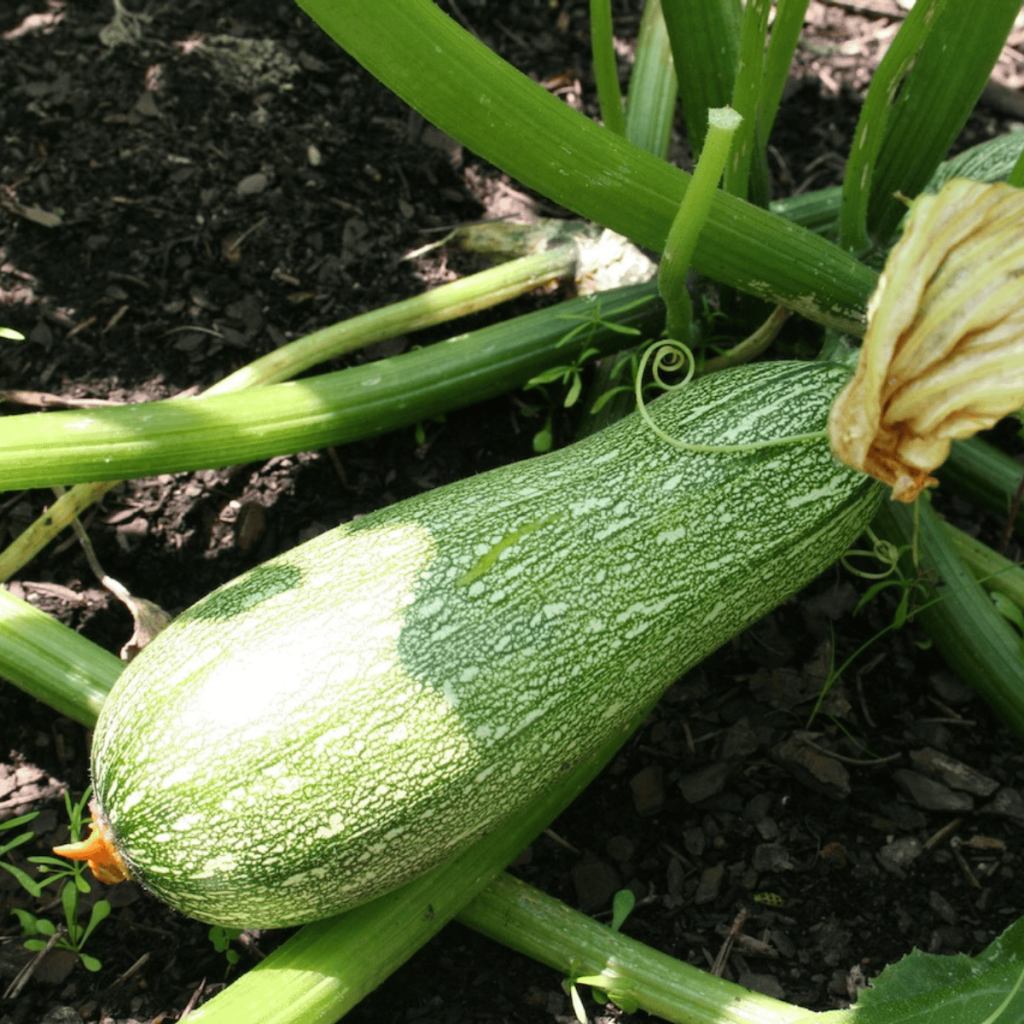
Zucchini: Plant Profile
Botanical Name: Cucurbita pepo
Light Requirements: Full sun (at least 6–8 hours of direct sunlight daily)
Soil Requirements: Well-draining, nutrient-rich soil with a pH of 6.0–7.5
Water Requirements: Keep soil consistently moist but not waterlogged; about 1–2 inches of water per week
Fertilizer Requirements: Apply a balanced fertilizer (such as 10-10-10) when seedlings emerge, then switch to a low-nitrogen formula once flowering begins
Growing from Seed
Zucchini is easy to grow from seed and thrives with direct planting in warm soil.
- Timing: Sow seeds outdoors after the last frost when soil temperature is at least 60°F (15°C).
- Spacing: Plant seeds 1 inch deep in hills or rows, spacing each plant about 2–3 feet apart to allow air circulation.
- Germination: Seeds typically sprout within 5–10 days.
Growing Zucchini in Raised Beds
Give your zucchini PLENTY of room to spread out. Wait until the danger of frost has passed for your USDA Hardiness Zone before planting zucchini seeds. These plants like hot weather, and can’t tolerate cold snaps or frosts.
Plant the seeds near the center of the bed. I create small hills for all the cucurbita plants (zucchini, squash, and cucumbers) and plant three seeds in each. You should see them germinate (sprout) within a few days, especially if the weather is warm and they are kept moist.
Once they germinate, they will grow rapidly. Look at the seed package for the zucchini variety that you purchased. There should be a notation on the package of “days to harvest.” This is calculated from the date you plant the seed to the date you can expect to pick your first zucchini. Typically, zucchini are ready to pick 45 – 55 days after planting the seeds.
That’s one of the reasons I love this vegetable when teaching kids to garden. It’s instant gratification. Not only do they sprout quickly, but kids can pick their very first home-grown vegetable within about a month and a half.
Zucchini Growing Problems
Squash Beetles
This, my friend, is a squash beetle:
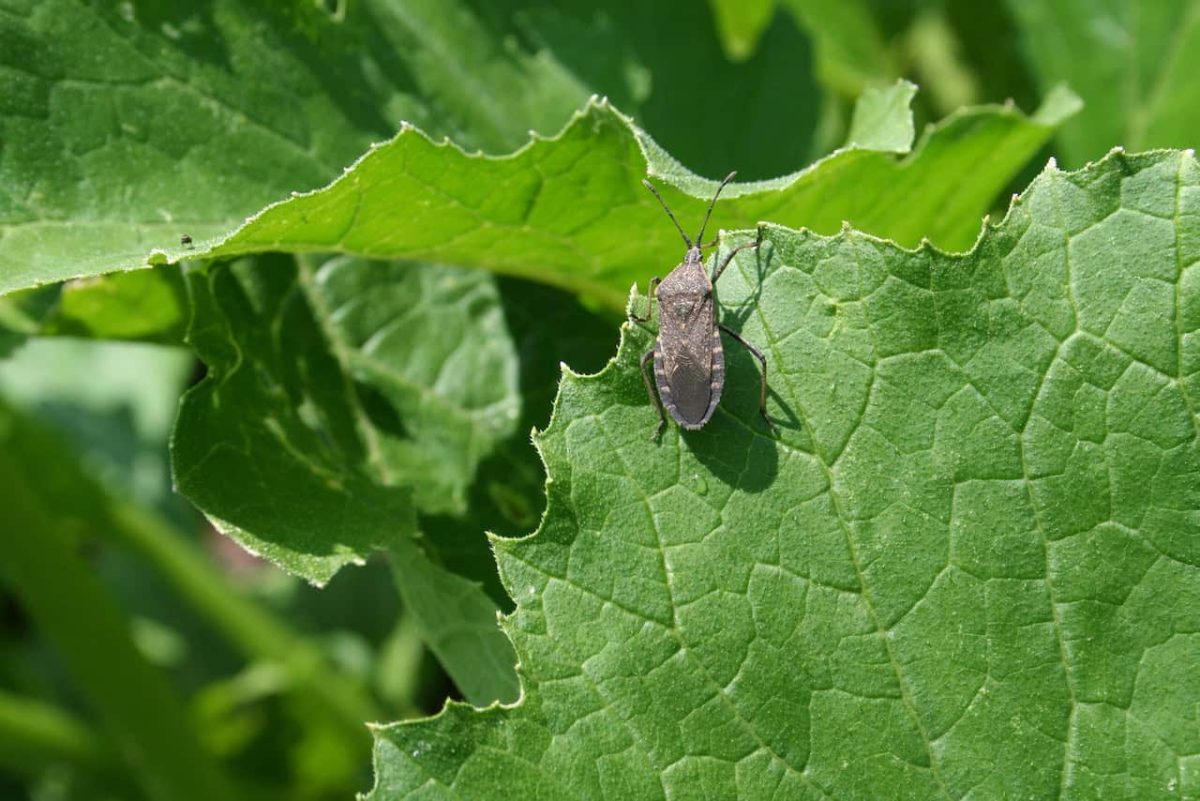
These insects are the biggest problem I’ve had growing zucchini in raised beds. They lay clusters of eggs on the underside of leaves, typically the lower leaves of the plant. When the eggs hatch into nymphs, they spread out. They suck the sap from the zucchini leaves and can spread diseases such as bacterial wilt.
To control squash beetles organically, you must pick the eggs or nymphs off by hand. Yes, I know – gross. But trust me, it’s the best way. I have in the past, before embracing organic gardening methods, used pesticides such as Seven brand insecticide. It works for a few days, then you have to re-apply it, adding more pesticides to the plants and garden. Why grow your own if you’re just coating everything with pesticide (at least that’s how I think)? Farms spray their crops. If I want to avoid such sprays, I have to find alternative methods. Here’s mine.
Take an empty coffee can or spaghetti sauce jar, with lid, and clean it out. Then, fill it about a quarter to halfway with water. Squirt liquid dish soap into the container and mix it with the water. Then, go into the garden and flick the nymphs and adult beetles into the mix. Put the lid on and leave it in the trash. The soap makes it impossible for them to escape (and there’s the lid for them to contend with) and they drown.
The eggs are a different matter. I scrape them off with a butter knife, tossing them into the soap water, too. I have tried using tape to pull them off but that can rip the leaves. If there are a lot of eggs on a leaf, I do remove the leaf and put that into the soapy water.
While this method is time-intensive, it does effectively get rid of small squash beetle infestations. You can also use a floating row cover over a raised bed to prevent insect infestations. A row cover is made from a permeable fabric that allows air, water, and light to penetrate the fabrici and reach the plants and soil but keeps bugs out. Add it only after the zucchini start to appear (after the flowers are pollinated) or you will exclude pollinating insects such as bees, too, and not get any vegetables.
For other insects that can cause zucchini growing problems, visit the University of Georgia Cooperative Extension.
Powdery Mildew
Powdery mildew on zucchini appears as white, powdery spots on the leaves, stems, and sometimes even the fruit. These spots start small but can quickly spread, covering large portions of the plant and giving it a dusty or flour-coated look. As the infection progresses, leaves may turn yellow, curl, and eventually dry out, reducing the plant’s ability to photosynthesize. Unlike many fungal diseases, powdery mildew thrives in warm, humid conditions with dry leaf surfaces, making it a common issue in mid-to-late summer.
What to Do with the Zucchini Harvest
I always love the memes about people dropping zucchini off on the neighbor’s porch at midnight because they make me laugh. Truly, when the zucchini harvest comes in, it’s a lot of vegetables!
So what can you do with zucchini?
- I cook it in butter with onions. My family loves it. Simply peel the zucchini, discarding the blossom and stem ends. Slice thinly. Slice an onion thinly too, removing the skin. Melt butter or olive oil in a saucepan. Saute the onions for a few minutes, then add the zucchini. Raise the heat to medium and cover the pan. Cook for 10 minutes, stirring occasionally. Add a little salt and pepper and serve. It’s a wonderful summer side dish.
What’s your favorite way to cook zucchini? Leave a comment!



[…] For raised beds, bush-type zucchini varieties are the best choice since they take up less space and don’t sprawl like vining types. Here are some great options: […]