
If you have a Christmas cactus that stays stubbornly green while everyone else’s plants are covered in flowers, take heart. Learning how to get Christmas cactus to bloom is less about secret tricks and more about understanding what the plant is waiting for. Once you give it the right cues, most healthy plants happily put on a show every holiday season, and many of them get better with age.
The good news is that you don’t need special equipment or a green thumb. You need a little patience, a dark corner, and a cool room. Let’s walk through exactly what your plant needs and when.
Key Takeaways
- To get your Christmas cactus to bloom, recreate its natural conditions by providing long periods of darkness and cooler nighttime temperatures.
- Start preparing in early fall by stopping fertilizer and ensuring the plant gets 12-14 hours of complete darkness each night.
- Water carefully, letting the soil dry between waterings, and return to regular watering once buds appear.
- Common reasons for a lack of blooms include light exposure at night, over-fertilization, and high temperatures.
- After blooming, give your cactus a rest, prune it, and start the care cycle again for better flowers next year.
Why Your Christmas Cactus Needs a Nudge
It helps to remember where these plants come from. Despite the name, a Christmas cactus isn’t a desert plant. It grows in the cool, misty mountains of Brazil, perched on tree branches under a canopy of leaves. In that natural home, the days grow shorter and the nights grow cooler as the seasons turn, and that change is the signal that tells the plant it’s time to set buds.
In our centrally heated, well-lit homes, those signals can get lost. Warm rooms, lamps that stay on until bedtime, and a steady supply of fertilizer all tell the plant that it’s still summer, so it keeps growing leaves instead of flowers. When you learn how to get Christmas cactus to bloom, what you’re really doing is recreating a little slice of autumn in the Brazilian mountains.
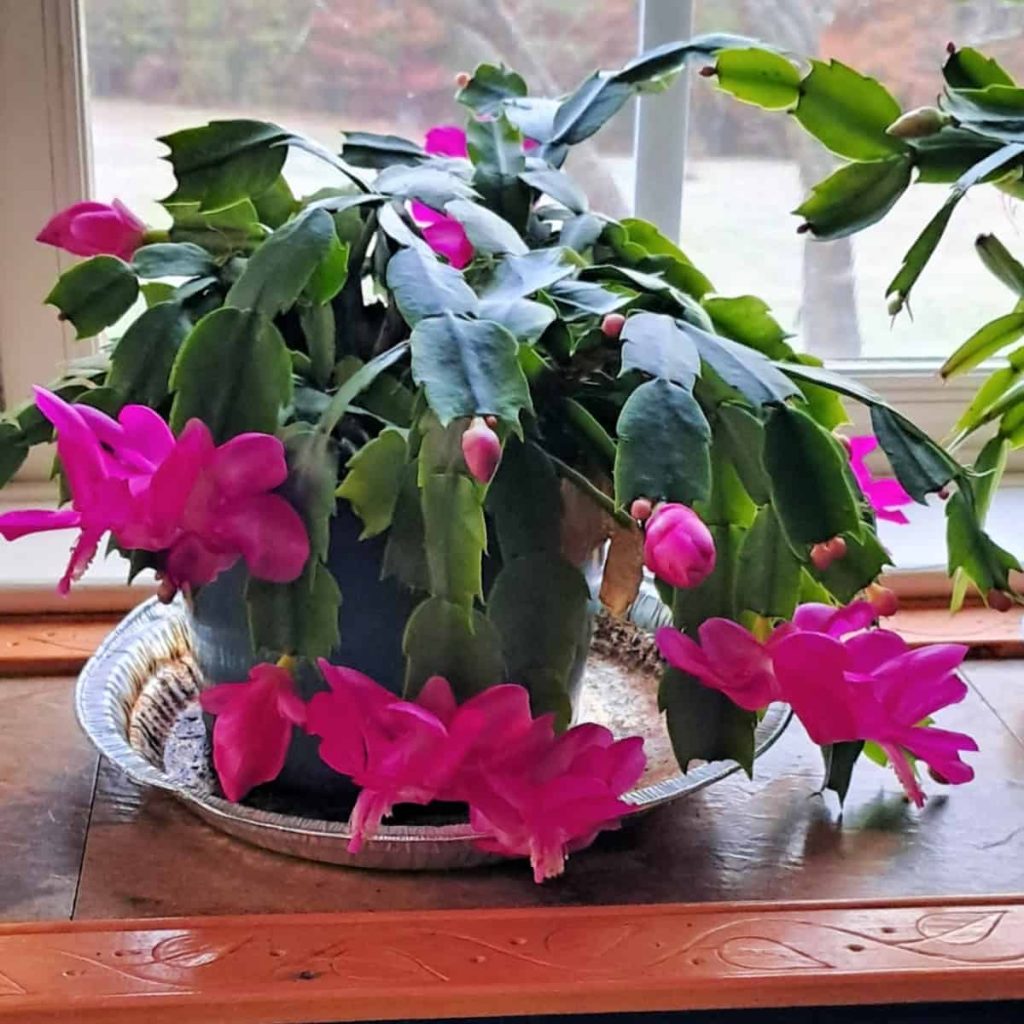
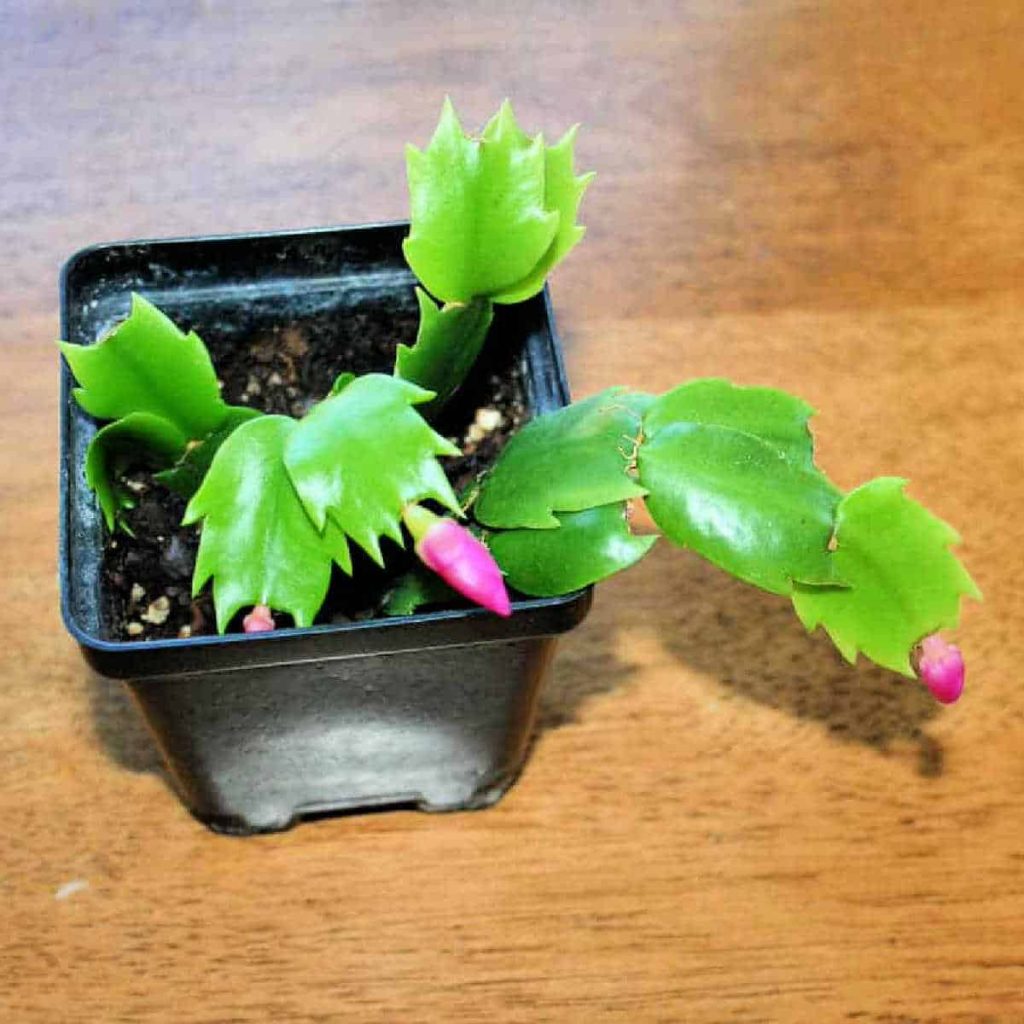
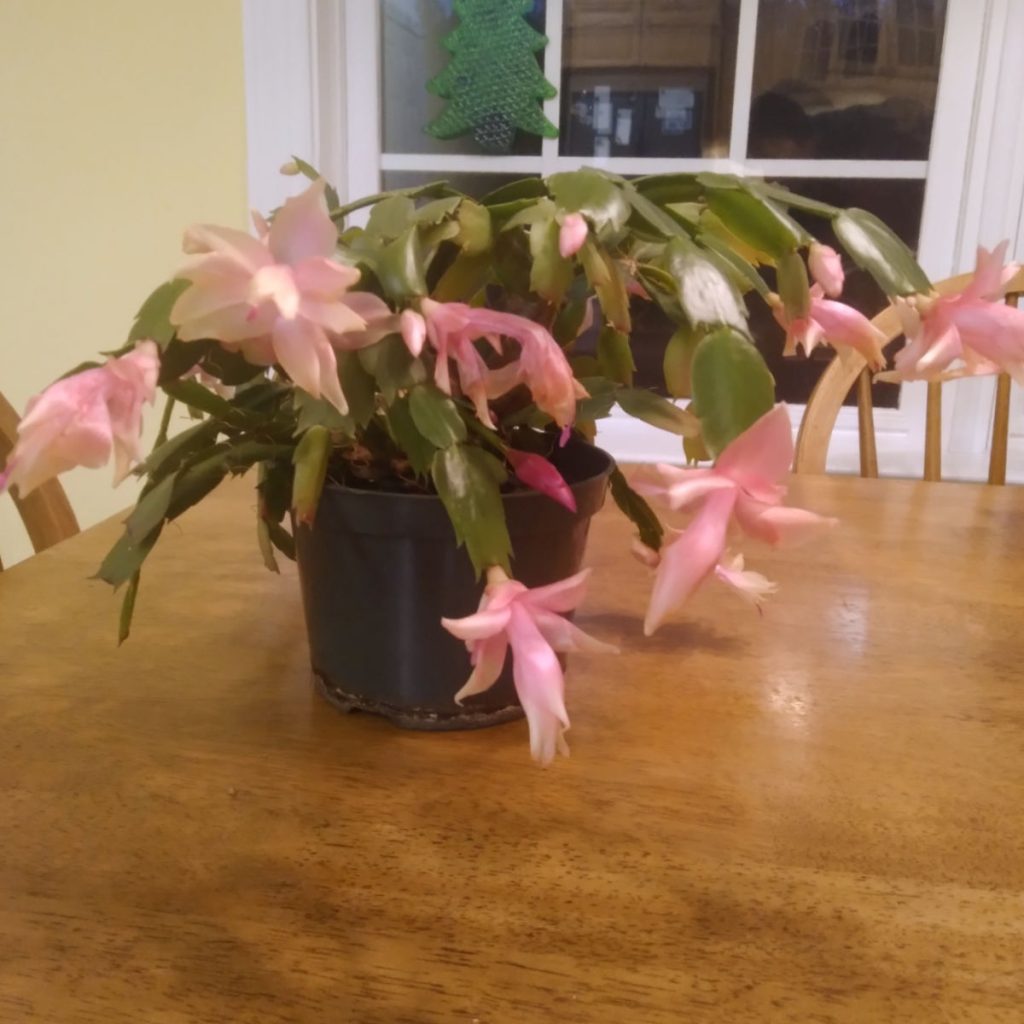
A quick note on names: many of the plants sold as Christmas cacti are actually Thanksgiving cacti, which bloom a little earlier and are a bit less fussy about daylength. The care in this article works for both, so don’t worry if you aren’t sure which one you have. If your plant has pointed, claw-like edges on its segments, you likely have a Thanksgiving cactus, and if the edges are rounded and scalloped, it’s a true Christmas cactus.
Start Preparing in Early Fall
Timing matters here, so mark your calendar. If you’d like your plant to bloom around Christmas, begin the bud-setting routine in late September or early October. For a Thanksgiving bloom, start a few weeks earlier. The plant needs roughly four to six weeks of the right conditions before you’ll see tiny buds appear at the tips of the stems, and the flowers open a few weeks after that.
Before you begin, there’s one thing to do with the fertilizer. Stop feeding your plant around the end of summer, or at least by early fall. A plant that’s being fed regularly puts its energy into leafy growth, and a little hunger is a helpful nudge toward flowering. You can pick the fertilizer back up after the blooms are finished.
Give It Long, Uninterrupted Nights
This is the part that makes the biggest difference. Your Christmas cactus wants twelve to fourteen hours of complete darkness each night, and the word that matters most there is complete. Even a short burst of light in the middle of the night can interrupt the process, so a lamp, a television glowing in the corner, or a hallway light that gets switched on at midnight can quietly keep the plant from setting buds.
The easiest solution is to move the plant to a room that isn’t used in the evenings, like a spare bedroom, a quiet corner of the dining room, or an enclosed porch that stays dark. If you don’t have a room like that, you can simply cover the plant each evening with a large cardboard box or a heavy, opaque cloth, and take it off in the morning. It feels a bit silly at first, but it works wonderfully, and it only takes a moment each day.
During the daytime, give the plant plenty of bright, indirect light. A spot near an east-facing window is ideal. The plant needs good light to build up the energy for flowering, so don’t leave it in a dim corner all day as well as all night.
Keep the Nights Cool
The second trigger is temperature. Christmas cacti set buds best when nighttime temperatures hover around fifty to fifty-five degrees Fahrenheit, which is about ten to thirteen degrees Celsius. Cool temperatures can even stand in partially for the darkness treatment, so if you have a naturally cool room, like an unheated porch or a chilly bedroom, you may find the plant blooms with very little fuss.
Daytime temperatures can be a little warmer, in the sixties, but try to keep a noticeable difference between day and night. The plant doesn’t need freezing weather, though, so don’t let it drop below about forty-five degrees, and if you’ve had your plant outdoors for the summer, bring it inside well before the first frost. Cold, drafty windows can cause trouble, too, so keep the leaves from touching the glass on a frosty night.
Water Carefully While Buds Form
Watering during this stage is a balancing act. Some growers like to ease off on water slightly in early fall, letting the soil dry a bit more between waterings, because a touch of dryness can encourage budding. That said, you never want the plant to become bone dry or to droop. Water thoroughly whenever the top inch of soil feels dry, let the excess drain away, and never leave the pot sitting in a saucer of water.
Once you see buds forming, return to a steady, consistent watering routine. Buds are sensitive, and swings between too wet and too dry are one of the most common reasons they fall off the plant.
Common Reasons a Christmas Cactus Won’t Bloom
If you’ve been doing everything right and your plant still isn’t flowering, it’s worth checking a few common culprits. The first and most frequent is light at night. Think about every room light, streetlight, or screen that might reach the plant after dark, because even a small amount can be enough to keep the plant in growing mode.
The second is too much fertilizer, especially a formula high in nitrogen, which encourages lush green growth at the expense of flowers. The third is warmth. A plant sitting near a heating vent or in a toasty room often has no reason to believe that winter is coming. Frequent moving can also be a problem, since the plant dislikes being shuffled from spot to spot while it’s trying to set buds. And finally, a plant that simply didn’t get enough bright light over the summer may not have the energy to flower.
If you recognize one of these, don’t despair. Fix the problem, give the plant another year of good care, and you’ll often be rewarded with blooms the following season.
What to Do When the Buds Appear
The first tiny buds are a cause for celebration. Once you spot them, you can relax the darkness routine, but resist the urge to fuss. Pick a spot in bright, indirect light and leave the plant there. Turning it, carrying it to another room, or setting it near a drafty window can cause the buds to drop, which is one of the most disappointing things that can happen after all your hard work.
Keep the watering steady and the temperature comfortable, away from heating vents, radiators, and cold glass. If you bought a plant in bud from a store, expect a few buds to drop as it adjusts to your home. That’s completely normal, and the rest will go on to open.
When the flowers finally open, you can help them last longer by keeping the plant in a slightly cooler spot, somewhere around sixty to sixty-five degrees, with bright, indirect light. The main display usually lasts for several weeks, and many plants send out a few more flowers afterward.
After the Flowers Fade
Once the last bloom has dropped, your plant has earned a rest. For a few weeks, water a little less, skip the fertilizer, and keep the plant in a cool, bright place. When new growth appears in late winter or early spring, you can resume regular watering and begin feeding again with a half-strength fertilizer.
This is also a good time to prune. Gently twist off one or two segments from the ends of the stems. It might feel like you’re cutting back your hard-won growth, but each pruned stem usually branches into two or more, which means more tips and therefore more flowers next year. You can even pot up the pruned segments to start new plants for friends and family.
A Simple Calendar to Follow
If it helps to see the whole year at a glance, here’s the rhythm in a nutshell. In spring and summer, water regularly, feed lightly, and keep the plant in bright, indirect light, perhaps on a shady porch once the nights are warm. In early fall, stop fertilizing, bring the plant indoors before frost, and begin giving it long, dark nights and cool temperatures. By late October or November, you should spot tiny buds. From then until the flowers fade, keep conditions steady and leave the plant where it is. After blooming, give it a rest, prune it, and start the cycle again.
Enjoy the Show
Knowing how to get Christmas cactus to bloom is really about respecting the plant’s natural rhythm. Give it cooler nights, long stretches of darkness, a break from fertilizer, and steady care once the buds appear, and you’ll likely find yourself with a plant covered in flowers just in time for the holidays. Be patient with it, especially the first year you try, and remember that these long-lived plants only get more generous as they mature. With a little attention each fall, your Christmas cactus can become a cherished tradition, blooming faithfully for many years to come.
Tips to Get Christmas Cactus to Bloom
My dad was a champion at getting his huge collection of Christmas cactus to bloom on cue, and he always had beautiful flower Christmas cacti between Thanksgiving and Christmas. Here’s what he taught me about getting Christmas cactus to bloom:
- Use a light table or an indoor plant light. We place ours in the basement where it is a steady and cool 60-65 degrees.
- Place your lights on a timer.
- Set the timer so that your plants have about 10-12 hours of light or less.
- The cool temperatures and longer periods of darkness get your plant to bloom.
- Do this for several weeks, timing the changes to begin in September so that the plants set flowers for the holidays.
- Mist and use pebble trays filled with water to improve humidity.
- Don’t transfer Christmas cactus to a radically different environment after they have buds. The shock of moving from a cool 60 degree basement to a warm 72 degree house can make them lose their buds.
- Keep the house cool to preserve the buds, and gradually get the plant used to warmer temperatures.
Christmas cactus are a beautiful flowering houseplant that creates a delightful burst of color near the holidays. If you received one as a gift last year, use these tips to get your Christmas cactus to bloom again this year.
This post was originally published in November 2014. It was heavily updated, edited, and republished November 2026 with new information, updated text, and new pictures.




[…] How to Get Your Christmas Cactus to Bloom […]