• Skip to primary navigation
  • Skip to main content
  • Skip to footer
Home Garden Joy
  • Home
  • Gardening
    • Butterfly Gardens
    • Home Garden Tips
    • Seed Starting
    • Compost and Fertilizer
    • Raised Bed Gardening
    • Tools & Equipment
    • Pests & Problems
  • Plants
    • Plant Profiles
    • House Plants
    • Vegetables
    • Fruit
    • Herbs
    • Growing Flowers
  • Garden to Table
    • Easy Recipes
    • Canning and Food Preservation
  • Seasonal Living
    • Home for the Holidays
    • Birds and Wildlife
    • Vintage Finds
  • Shop
    • Books for Christian Herbalists
    • Herbalism Classes
    • Books by Jeanne Grunert
  • About
    • Privacy Policy

Choosing Fig Trees for My Virginia Garden

March 20, 2014 by Jeanne

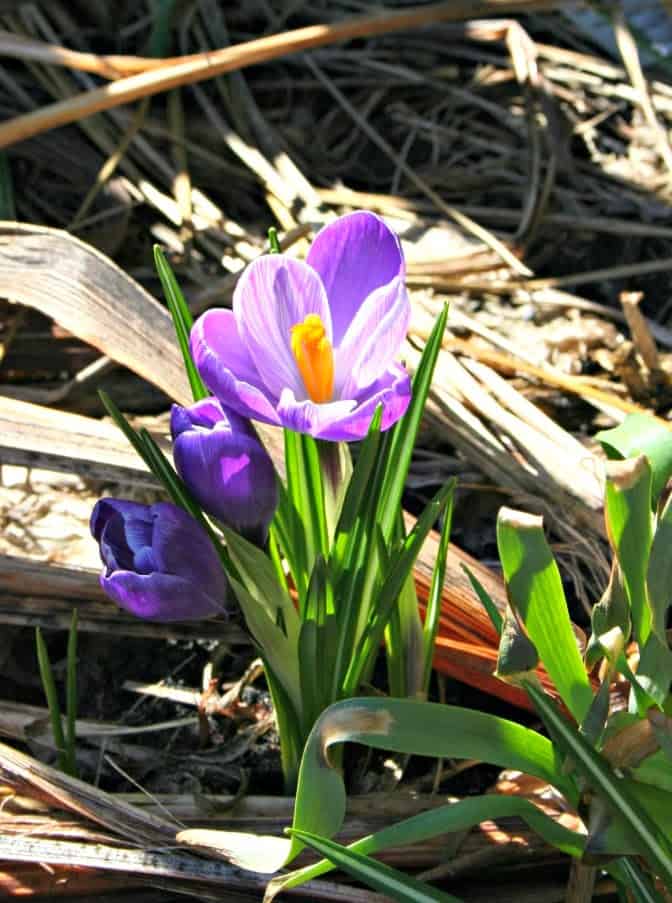
Happy first day of spring! At least the crocus are blooming. We have purple (left) and yellow crocus blooming in the garden today, including the crocus planted around the trees in the orchard. I walked the orchard today, considering my options for adding additional fruit trees, especially figs. I did a lot of research this morning and decided that yes, adding figs to our garden is possible. Here’s what I learned.
.
.
Can You Grow Fig Trees in Virginia?
YES! I grew up on Long Island (zone 6) and in the Italian neighborhoods in Queens, you’d often see a gnarled old fig tree standing alone in the front yard. In the winter, the family would carefully cut back the branches, wrap the trunk with burlap or a blue tarp, and lash it tight with rope. A bucket would be stuck over the end of the tree. It was such a common sight that I didn’t think anything of it until a friend from out of state asked me, “What the heck is that?!” I had to explain the annual fall ritual of protecting Italian fig trees from the elements.
Figs are not only possible, they seem to do well in Virginia. Our Piedmont region can be tricky, as witnessed by this winter’s unrelenting cold and damp, but generally speaking we are around the same latitude as the fig’s natural habitat. That’s the good news. The bad news is that is the temperatures drop into the single digits, most figs can’t survive. Here in south central Virginia, we do occasionally get a spate of arctic weather. I may need to learn how to wrap up my fig trees after all.
.
.
But careful research into growing figs in Virginia tells me that might not be necessary if I can find a warm microclimate on the property, especially a southern exposure near a wall. I’m seriously thinking about ripping out the rhododendrons (my husband’s pet plants) along the southern wall of the house. One of them is doing great; it’s lush, and blooms freely each spring, but the leaves are a sickly yellow this year and I suspect it’s not taking up nutrients well thanks to a soil imbalance. I hate fussing with landscape shrubs. It’s not my style. The other rhododendron we planted at the same time is really looking bad. It’s about a third of the size of the other one and has skimpy growth. Now if I rip up that rhododendron and plant a fig there, it’s got the perfect micro climate. A hot, dry area with full sun next to the house, which can radiate heat during the winter months and cool autumn evenings. Even better, the dryer vent is near that area, so during the winter the air tends to warm up around there a few degrees when I do the laundry.
.
.
I’m thinking fig tree.
.
.
Types of Figs

Now which tree to plant? My research indicates that the Brown Turkey fig is probably best. It seems hardy, the fruit is said to be good for fresh eating and preserving, and it doesn’t grow huge. I like that. On the other hand, I’m totally in love with Italian Honey figs. These are green fruits with an amazing sweet center. When I worked in Manhattan at the financial services firm, one of the guys brought in a huge container of these figs. He had an ancient tree growing in his front yard in Astoria, Queens (see what I mean about every Italian family having a fig tree in Queens? It’s true). Each fall, the tree produced abundant fruit, and he’d bring buckets of it into the office. I couldn’t get enough of the Italian honey figs and fell in love with fresh figs thanks to Anthony’s gift to the office. 

.
.
Even though I like Italian honey figs, I’ll need to research them more to see if growing one in central Virginia is possible. Thomas Jefferson supposedly grew figs at Monticello, and even though I didn’t see the tree when I last visited there in 2009, there’s a tree on the property that’s a descendant of the figs he planted. I’d like to find out what variety is growing there; the climate near Charlottesville tends to be cooler than our own, and wetter thanks to the mountains, so any fig growing there is likely to do well here.
.
.
In addition to researching fig trees, I’m also looking into adding nut trees to the property. Hazelnut, almond and walnut trees are all under consideration.
.
.
Spring is a great time to make all these plans, and do the research if you’re thinking of adding fruit trees to your property. With the rising cost of food, and the ever-growing concerns over pesticides, it makes sense to grow your own!
post signature

Filed Under: Growing Fruit

Previous Post: « Crock Pot Ham and Vegetable Soup Recipe
Next Post: How to Force Forsythia Flowers – Bring a Little Spring Indoors Today »

Reader Interactions

Comments

  1. Anonymous

    August 11, 2014 at

    Hi! I had a fig tree — brown turkey, as far as I know — do beautifully until this last winter, which I was absolutely sure had killed it. For the first time I had not protected it from winter weather, and of course the winter was 100-year cold. So I went back to Mt. Vernon (3/4 mile from where I live) and purchased another. (The Estate sells plants propagated from those on the Mt. Vernon property.) I planted it a couple of feet from the ‘corpse’ — and of course two weeks later the #&(&(S# root sent up new shoots. LOTS of new shoots. And the new tree is doing nicely. I will protect all of them over the winter — then harvest the year old shoots from the old rootstock and root them — and have a small fig orchard and be drowning in figs this time two summers from now . . . .

  2. Eric Claunch

    August 19, 2016 at

    I just visited Monticello and looked up the varieties of figs Thomas Jefferson planted on the property. There are three I found:
    – Green Ischia Fig
    – Marseilles Fig (his favorite)
    – Angelique Fig

    • Jeanne

      August 20, 2016 at

      Very interesting! Thanks for sharing it Eric.

  3. William Mosler

    September 16, 2016 at

    Ii live in Salem VA. s.w. and have great success with brown turkey and especially with Chicago, which I believe to be the most cold hardiness of them all. I have bought them at Lowe’s at the end of the season and planted them in the ground in the fall and put lots of leaves around them and then when winter came I would put leaves on top.Every spring the ground would be flat with no signs of life.Then they would grow and in a few month’s they would be 5 feet tall and growing.Wow.

    • Jeanne

      September 16, 2016 at

      That’s really good to know! Thanks for sharing the information, William.

Trackbacks

  1. Growing Figs in My Backyard - an Update - Home Garden Joy says:
    October 3, 2018 at

    […] took me several years before I chose the Chicago Hardy fig tree. I chose it because of its cold resistance. I did not want to fuss with wrapping up my trees to […]

  2. Growing Fig Trees in Virginia - Fig Trees Are Here! - says:
    March 1, 2019 at

    […] to fresh figs in our future…maybe our far future, but, with luck, love and God’s providence, figs! […]

Footer

a red knockout rose

June Gardening Tips: Everything You Need to Do in Your Garden This Month

I’m sharing these June gardening tips for gardening zone 7B. However, you can easily adapt them to your gardening zone. June is one of those months that feels like there’s so much to do in the garden you don’t know where to start. Fortunately, nature gives you extra-long days and plenty of sunshine! Whether you…

Read More

watering can with plants

Growing Ginger in the Home Garden

Growing ginger is fun. I was surprised to learn that I could grow ginger in Zone 7B, central Virginia. I attended a lecture by Ann Codrington of Nisani Farms several years ago. She discussed growing both ginger and turmeric. Her farm is in Maryland, but I discovered that both plants can be grown in both…

Read More

borage flower

Companion Planting with Herbs: Your Secret Weapon for a Healthier, Happier Garden

Every summer, without fail, I plant basil at the end of the raised beds. These are the beds filled with Roma tomatoes, the ones we harvest by the bushel to make our salt-free organic tomato sauce. My tomatoes thrive. “Did you know that basil repels aphids?” an organic gardener friend mentioned to me casually one…

Read More

a vintage folk art weather house which accurately predicts the weather

The Folk Art Weather House

I’ve loved this little folk art weather house all my life. It still makes me smile. What gardener doesn’t need to know the weather? I grew up with many German relatives. Thank-you notes were written to “Oncle Ludwig” and “Tante Marie.” During visits to their homes, I was fascinated by the little folk art German…

Read More

  • About
  • Plant a Row for the Hungry
  • Awards
  • Privacy Policy

Let’s Connect!

  • Facebook
  • Instagram
  • Pinterest
  • Substack
  • YouTube

Copyright © 2026 Home Garden Joy on the Foodie Pro Theme