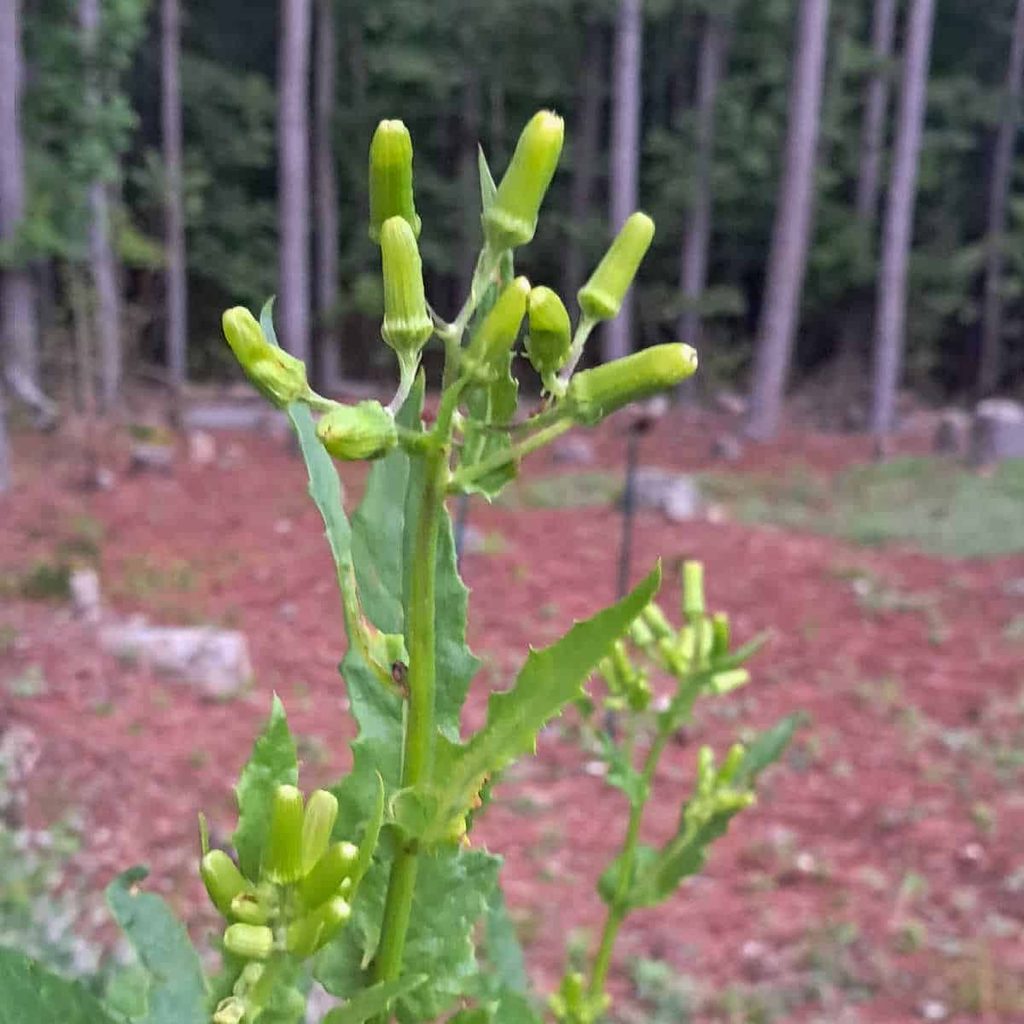
I was walking my dog along the wood’s edge right near where we cleared land to build our greenhouse when I did a double take. There, like Jack’s magical beanstalk, had grown overnight this gem: American burnweed.
Also known as fireweed or American burn weed, it grows rapidly – and I mean, rapidly. Like I didn’t see it the day before, but it seems to have shot up a foot overnight.
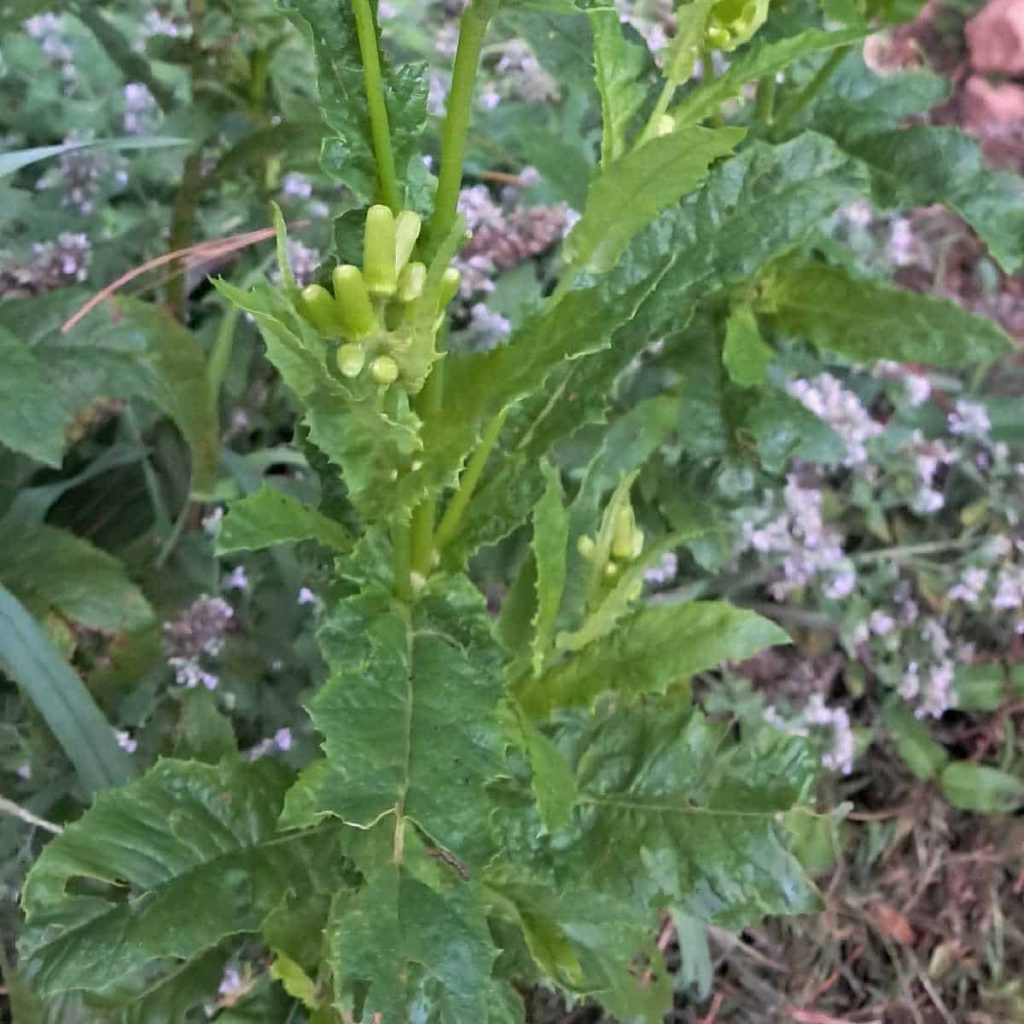
According to Virginia Tech, burnweed is indeed a fast-grower and can reach up to nine feet tall! The specimen next to my compost pile was already four feet tall, and I suspect the only thing holding it back was that it was competing with the gigantic patch of volunteer catnip that somehow managed to see itself (that’s the plant growing behind it in my photos with the white flowers).
So what is American burnweed? Is it harmful? Why doesn’t the usual lawncare pre-emergent take care of it, and what do you do about it when it shows up in August?
This post contains affiliate links.
Know Your Weeds – Plant Profile: American Burnweed
Botanical name: Erechtites hieracifolia
Type: Annual in the daisy family producing prolific seeds from its panicles
Time: Usually appears in late spring, but flowers are the most notable features, and these appear in August – September. The capsule-like seed heads open to feature fluffy white flowers that produce plenty of seeds.
Growth habit: It loves disturbed ground (hence why it was growing where it was in my yard – we cleared the area in the spring to break ground for a greenhouse). It also loves pastures, and by extension, lawns.
How to Recognize Burnweed
First, the leaves are pointed and alternate on the stems. The stems do not have hairs or thorns. The flower buds appear in clusters at the tip and have an almost bullet-like appearance (see my pictures). When they open, the fluff spins off in the wind a bit like dandelion seeds. I find them pretty and love seeing the floss floating across the cerulean of an autumn sky.
Is American Burnweed Harmful?
No, it is not harmful to plants, animals, or people. Although a few anecdotal comments on social media indicate people have developed a rash after handling it, the most likely explanation is that poison ivy was tucked among the plant’s leaves and someone tried to pull it out.
What American burnweed does in the ecosystem is actually quite helpful! It’s a haven for several pollinators, and provides late-season nectar for butterflies such as the common buckeye, summer azures (those tiny blue butterflies I love so much), and others. Bumblebees love it and wasps pollinate it. And while I don’t think deer eat it, it’s food for butterflies, and that’s enough for me. When few other plants are blooming, and the garden is winding down, burnweed fills a gap that butterflies exploit for a short few weeks before the frost.
How Can I Get Rid of American Burnweed?
I’m on several acres, and a few patches on the edge of the woods of American burnweed is something I enjoy. But if you’ve got a suburban lawn, and burnweed has taken up residence, here’s what the experts recommend to get rid of it.
You can pull it up. When it’s small, it’s super easy to pull the plants. I pull them all the time from my gravel driveway with ease. If the plants are in your lawn, mowing will knock them back to size and over time, weaken them. This will also prevent them from developing flowers and seeds and keep the weeds from spreading. The Cobrahead weeding tool also helps dig them out.
If the plants are too large to pull, the extension office recommends a broadleaf herbicide. I do not like nor do I recommend herbicides. You can easily find the information on the cooperative extension site if you do choose to purchase and use an herbicide.
Burnweed, the Herald of Fall
When burnweed appears, I know it’s truly fall. Sure, it’s still hot and sticky here in central Virginia, and it probably will be until mid to late October. But burnweed reminds me that fall is just around the corner. It’s time to wrap up the garden and complete the harvest season.