Just when you think you’re free and clear, Mother Nature throws you a curve ball. Tonight a frost is forecast for the south central Virginia and eastern Piedmont area – my part of the world. And of course, all the tender annuals such as impatiens are planted, along with the tomatoes, eggplant and cucumbers. The only tender vegetable still in trays are my peppers.
I’ve pulled all the planter pots of impatiens and the tray of peppers, plus a curly willow I’m starting from a cutting, into the garage. It’s in the high 50s inside the garage and won’t get much colder than that, plus they will be protected from the frost. Outside in the vegetable garden, we made frames with garden stakes and places plastic bags over the tomatoes using the stakes to keep the plastic away from the plants themselves. It would be better to use newspaper, blankets or sheets, but I don’t have any on hand. So these plus some old windows I use as cold frames are what I have on hand.
If you can, use newspaper, blankets or old sheets to protect plants from a frost.
Please see the following sites for expert tips:
- Aggie Horticulture
- Protecting Plants from Cold Temperatures
- University of Florida – Protecting Plants from Cold
- Tomato Dirt (says plastic is okay to use overnight, such as in this case)
- Collection of tips (and some clever ideas) on this blog
The cucumbers and tiny tomato seedlings are covered by large recycled glass windows which creates a cold frame underneath. A friend of ours is a contractor and removed these from a school gymnasium he was renovating. He thought that they would fit perfect over our raised beds, and he was right – they make miniature cold frames.
Frost harms plants by turning water inside the leaf cells into ice crystals. This kills the leaves, which stunts of kills the plants. Tonight’s frost is expected from 3 am to 7 am – just four hours – and the temperatures will warm up quickly, so I am not worried about losing some of the tougher vegetable plants. As you can see from the pictures, the cold weather vegetables I have left uncovered: the lettuce, radishes, chard, and broccoli rabe.
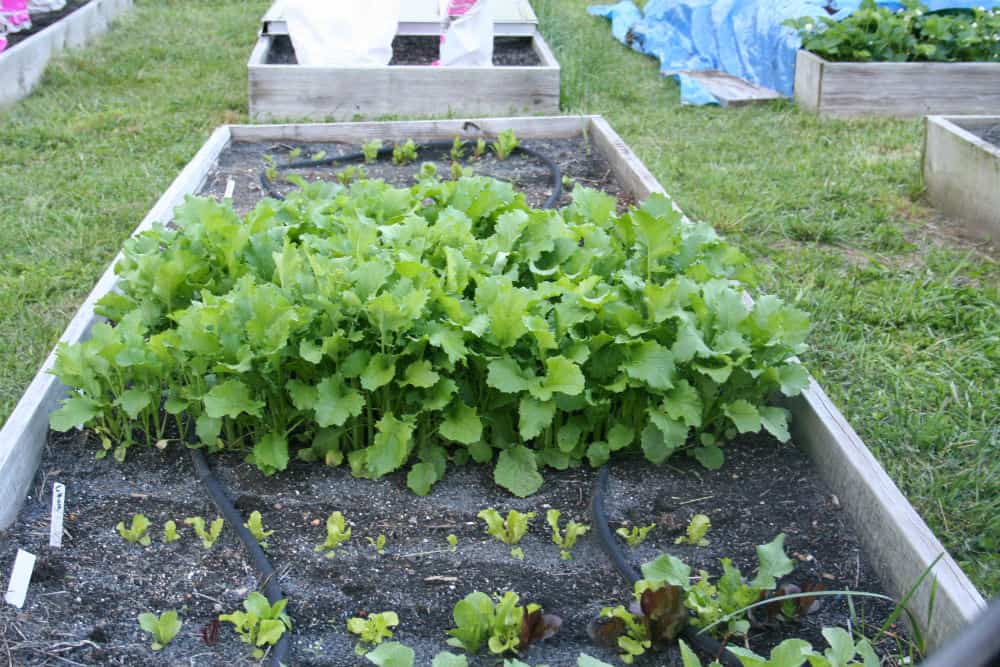 |
| You guys will have to fend for yourselves! Radish, lettuce, broccoli rabe, chard. |
We don’t have enough covers for the other beds. Onions, asparagus, beets, garlic and potatoes will have to stay outside and we will hope for the best. The potatoes already withstood one frost; they lost their leaves, but returned, and I am betting they’ll do the same. As for the other seedlings, not much I can do about them.
I hope the peony blossoms, so heavy and tight still on the bushes, survive. I hope the irises aren’t harmed and my rose bud isn’t either. I’ve taken pictures tonight, so I will at least have the memory if they don’t withstand the frost.
Tomorrow, all covers will be removed by 8 am and hopefully that will be the one and only night when I’ll have to scramble to cover all the plants. Good luck if you live locally and may your plants thrive!
[…] date in the spring of the last average frost. It’s not a hard and fast date; we’ve had late frosts, and they can hard to deal with, but not impossible. This date varies according to the gardening […]