• Skip to primary navigation
  • Skip to main content
  • Skip to footer
Home Garden Joy
  • Home
  • How to Garden
    • Garden Pests
    • Plant Diseases
    • Raised Bed Gardening
    • Seed Starting
    • Tools & Equipment
  • Plants
    • Plant Profiles
    • Vegetables
    • Fruit
    • Herbs
  • Recipes
    • Canning and Food Preservation
  • About
    • Plant a Row for the Hungry – Central Virginia
    • Books & Classes
      • Herbalism Classes
      • Books for Christian Herbalists
      • Privacy Policy

Tips for Growing Rhododendrons

May 2, 2012 by Jeanne

Rhododendrons and azaleas are two of my favorite foundation plants, and I love the variety of colors I can grow here in south central Virginia. We planted two rhododendrons in full sun along a hot southern facing portion of the foundation of our home, which was not a great idea. It’s probably too hot for them there. They tend to like dappled sunlight. Think of a forest; rhododendrons are under story plants. They grow under the canopy of big deciduous trees.  One time John and I were hiking in June in the western part of Pennsylvania. We hiked a trail through a thick forest and it suddenly opened up to a breathtaking sight – Mountain Laurel and rhododendrons in full bloom along the trail. I’ll never forget the golden sunlight filtering through the tall tulip trees, oaks and maples, and the hum of the bees on the flowers.

My article today for Mainline Gardening, an online gardening community, focuses on growing rhododendrons. There are two links at the end of the article with more information. They are kind of hidden in the text. One will take you to the American Rhododendron Society and the other two a short video on rhodies on the Penn State Cooperative Extension website.

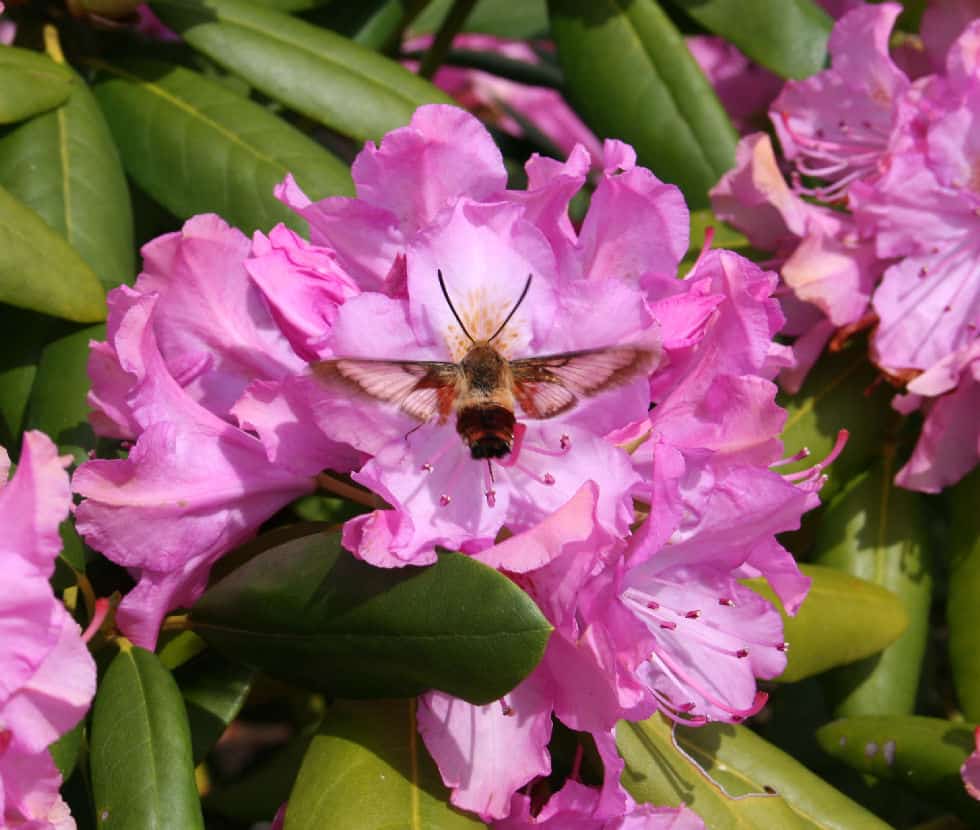
The picture shown here is one I took yesterday. I saw this odd looking insect and started snapping away. He looks like a bee but has antennae like a moth, and wings like a moth.  He obligingly posed for this photo. Anyone know what his real name is? We keep calling him the hummingbird moth.

Filed Under: Growing Flowers

Previous Post: « Harvesting the Carrots
Next Post: Soaker Hoses for the Vegetable Garden »

Footer

raised bed garden

How to Prepare Raised Beds for Spring Planting

The snow and ice have finally melted. In the mornings when I walk my dog through our farm, I can hear a rooster crowing on a neighboring farm. Cardinals have begun singing in the dawn. It’s spring, folks. And while the calendar reminds me we can still feel winter’s icy breath, spring planting is just…

Read More

two loaves of bread in the oven

Swedish Tea Bread

I first made Swedish tea bread for my 50th birthday. Three of my friends have birthdays in the same month and invited me to their family group birthday celebration (they are all relatives). I shaped the bread into braided rings and decorated it with sliced almonds. It was a hit, and I have made it…

Read More

a shovel with compost on it

How to Start Composting in Winter

Have you thought about starting a compost pile, but you’re wondering how to start composting in winter? I mean, after all, here in Virginia we just had three solid weeks of absolutely tundra-like temperatures. I had a sheet of ice for a lawn, and the raised bed garden was completely covered in a thick layer…

Read More

tomato seedlings

Seed Starting Indoors in February: Best Vegetables for Zones 4–8

February brings a special kind of excitement for gardeners across the northern United States. While snow may still be hanging around, February is the perfect opportunity to get your hands dirty indoors. It gives you an excuse to go to your favorite garden center – you need to stock up on seeds, right? It’s definitely…

Read More

  • About
  • Plant a Row for the Hungry
  • My Books on Amazon
  • Awards
  • Privacy Policy

Let’s Connect!

  • Facebook
  • Instagram
  • Pinterest
  • Threads
  • YouTube

Copyright © 2026 Home Garden Joy on the Foodie Pro Theme