Today, my friends, you can call forth your inner science nerd. Today, we are discussing the exciting, the stupendous, the wonderful world of SOIL! That’s soil for a container vegetable garden, and in case you were wondering – yes, it does matter what you use.
Ready? Let’s dish the dirt on soil.
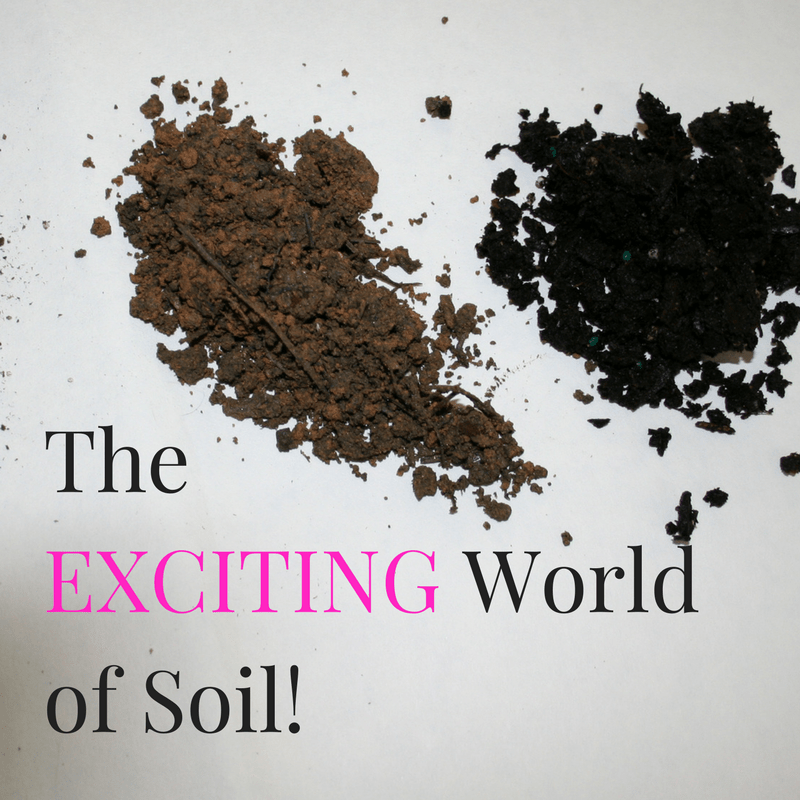
The Right Soil for a Container Vegetable Garden
I decided to write an entire article on soil for a container vegetable gardenssimply because this is one of the most frequently asked questions I get when I lecture on the topic.
Soil – not dirt, which is what you vacuum from your carpets – soil is an absolute miracle. The soil in your yard right now took millions of years to form. Wind, water, and erosion breaks down
Wind, water, and erosion breaks down rocks into tiny particles. Bacteria, fungi, and insects break down carbon-based matter, such as leaves and grass, into nutritious particles called hummus.
And it all mixes together in a gorgeous brown stuff we call SOIL.
Now here’s the secret to a great container vegetable garden:
Go to your local garden center. Choose a bagged potting soil that includes a slow release fertilizer. Buy the bag. DONE. You now have soil for a container vegetable garden.
“Wait,” you ask, “is that IT? You’re supposed to be some kind of expert on this stuff, Jeanne…and that’s what you do?”
Yes, that’s what I do. And here’s why.
Types of Soil
Most people starting a container vegetable garden want to use the soil in their yard. After all, it’s free and plentiful. You just dig it up, fill your pot or container, and you’re all set.
Unfortunately, the soil in your yard may be far from ideal. An ideal mixture of soil, nutrients, and particles to provide aeration and drainage is the best mixture for your containers.
Soil consists of particles. Particle size matters to your plants. Fine particles cling together when wet, making it hard for the plant’s roots to penetrate into the soil and take up the nutrients they need. Larger particles may be so coarse that water drains through too quickly, and the plant cannot take up the nutrients it needs.
The picture below shows three examples of very different types of soil mixtures:
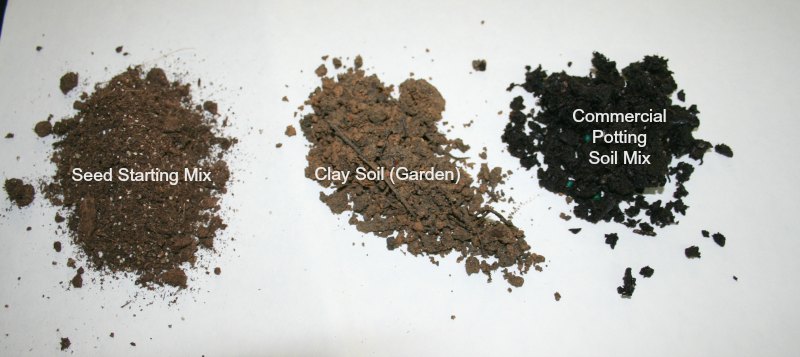
- Seed starting mix is a commercial mixture ideal for the germination of seeds. It doesn’t work well for a container vegetable garden. It is light and fluffy thanks to the small, fine particles, peat moss, and plenty of vermiculite (the white grains in the soil).
- Clay garden soil doesn’t work well for container gardens, either. It’s fine particle size means that the soil particles stick together. That’s how bricks are made. This handful was dug up from my own yard. I tested the pH with my handheld pH meter and it’s around 4.2. Most vegetables need a pH between 5.5 and 6.5, so they’d struggle to get the nutrients they need out of this soil. (There are many types of soil, by the way. I just used clay as an example because that is what I have in my Virginia garden. You may live near the ocean, in which case you probably have a sandy soil. Some lucky people have loam. For more on soil, see Dishing the Dirt on Soil: Garden Soil Basics)
- Potting soil from the garden center. This is what I consider to be the ideal mix for a container vegetable garden. It’s the right texture – not too light and not too packed. It contains peat moss, a natural compost, along with vermiculite for drainage and tiny green grains of fertilizer.
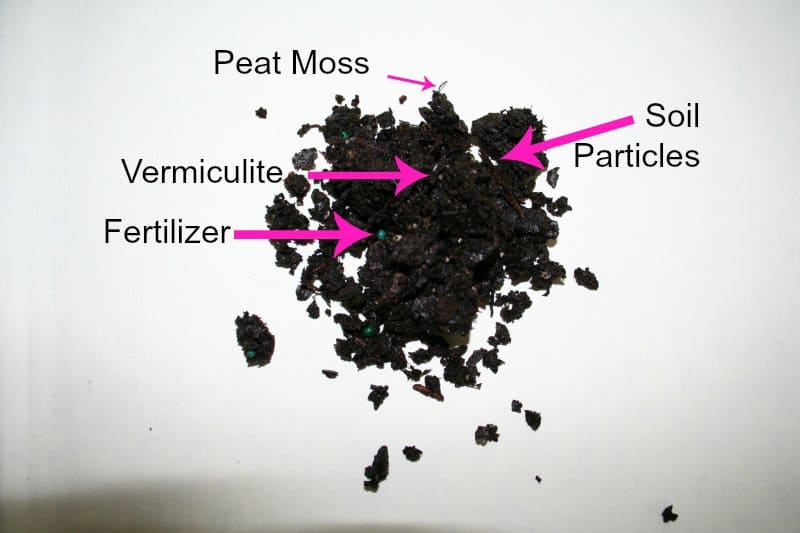
Bagged potting soil with the ingredients identified.
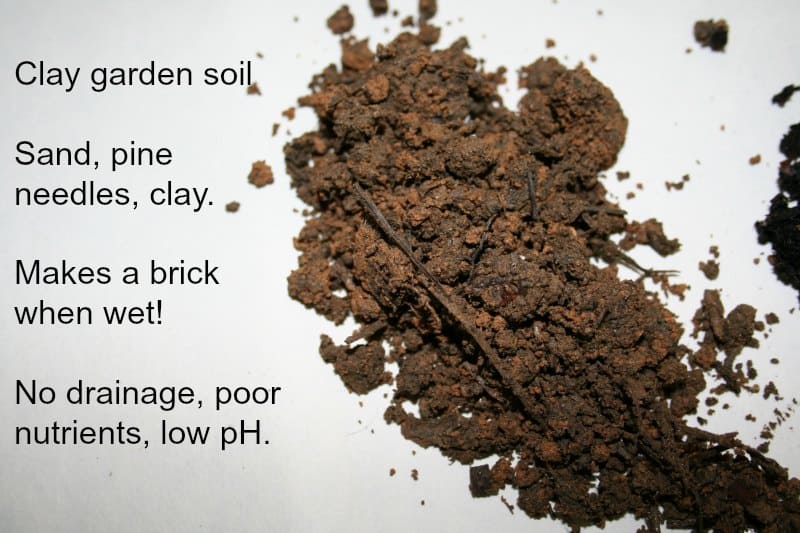
Soil from my garden. Yours may be better or worse, sandy or loam. If it looks like this, though, it’s not great for vegetables and containers.
Don’t Be Penny Wise and Pound Foolish
Some people try to skimp and avoid buying potting soil. “Why should I buy it?” they ask, “when I have a backyard full of soil?”
That’s like an Olympic athelete eating only junk food. Eventually, the athelete won’t have enough nutrients to build muscle, strength, and stamina.
Your plants need the right balance of nutrients and soil for nourishment and to sustain healthy growth and development. Good vegetables come from healthy plants, and healthy plants grow from great soil. Don’t skimp on your soil!
So when starting your container vegetable garden, the best soil in my opinion for container vegetable garden is bagged potting soil. Pick your brand, buy it local, and start your garden.
Happy gardening. Keep growing!
[…] one mistakes I see among backyard gardeners. They spray the hose on the leaves of the plant and the soil remains dry. Always aim water at the soil, where the roots of the plants are buried. That’s […]