One of the many things I love about living in the country is learning about the wildlife that surrounds us. Reptiles have become my friends since moving to the country. Turtles, frogs, toads, snakes, skinks and salamanders are abundant in the woods surrounding our home, and we often encounter them in the wild. A few, however, are gifts from the cats, including two toads that found their way onto the porch, the cats’ lair, and back into the garden to safety.
Toads I Have Known
At night, we hear the toads and frogs singing in the woods. The chorus of voices changes with the seasons, deepening into bullfrog chants or piercing shrieks as temperatures rise and fall. Some of the many species we have seen (alive and well) include Fowler’s toads, the big, lumpy, clay earth colored toads I learned to love as a child, catching them near the sump in Floral Park and bringing home buckets of them to my dad’s garden.
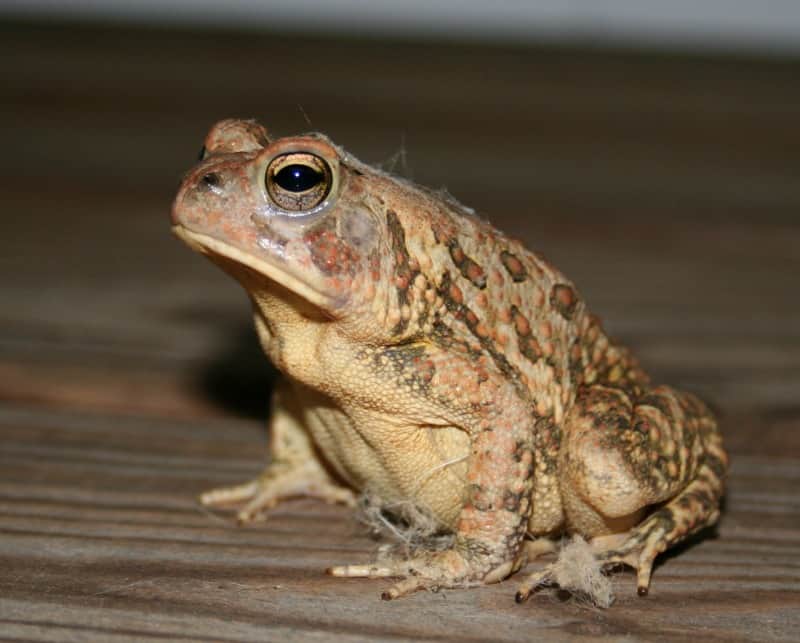
Fowler’s toad. He has some dog hair and cobwebs clinging to him. He escaped into the garden.
I love the description of Fowler’s toad: “Like all toads, Fowler’s toads have dry, warty skin…” Oh yes, they do! Beautiful warts (look at my picture, above), all bumpy and earth colored. His natural coloring is perfect for our clay soils. In New York, our toads were more gray and brown, earth colors, a chiaroscuro that kept him safe from all except this little girl with keen eyes (me).
He’s a good guy in the garden, this Mr. Toad. He eats insects but leaves earthworms alone. He gently burrows into muddy soil to keep cool during the day. I often find him hiding among the lush leaves of squash and cucumber plants during the heat of the summer sun.
Another toad encountered this week is the simple wood frog. Unfortunately, I don’t have a picture of him. I thought he was dead. I found him on the porch humped up against the cat house with Shy Boy poking him with a padded foot. I gently shooed away Shy Boy and got the shovel we use for removing egregious cat contributions, an old coal shovel from my in-laws. I went to scoop up the wood frog and poof! He bounded away in two enormous leaps, the equivalent of a human leaping a skyscraper. He bounced his way through the wooden slats of the porch railing and away into the garden, much to Shy Boy the cat’s disappointment.
The wood frog has a smoother, streamlined appearance than the warty, squat Fowler’s toad. Their call at night sounds like a squawk or a duck quacking, and we heard them quacking away at each other during the breeding season. They love moist woods and moist pastures, both of which were abundant the morning I met my wood frog. Heavy rains and dews provided him with the moisture he needed, and he must have been ‘playing dead’ for the cat when I inadvertently scared him with the shovel. He scared me too, also inadvertently.
Toads and frogs are wondrous creatures. They move from water to land, land to water, blending seamlessly into the earth or the woodlands or the waterways. Quietly consuming insects or lustily greeting mates, they are part of this land, part of our farm, and friends in the garden.
Happy gardening. Keep growing!