
I’ve succesfully encouraged amaryllis rebloom, or getting amaryllis bulb to flower again. It takes a little management of light and watering schedules, but in the end, it is worth it. The flowers are fragrant and gorgeous!
Last Christmas, I chronicled the progress of my amaryllis bulb kit from the day I bought it in November until the day it bloom approximately 10 to 12 weeks later. Usually my amaryllis dies after it blooms and I throw it out. This year, however, I decided to experiment with it and try to get it to bloom again.
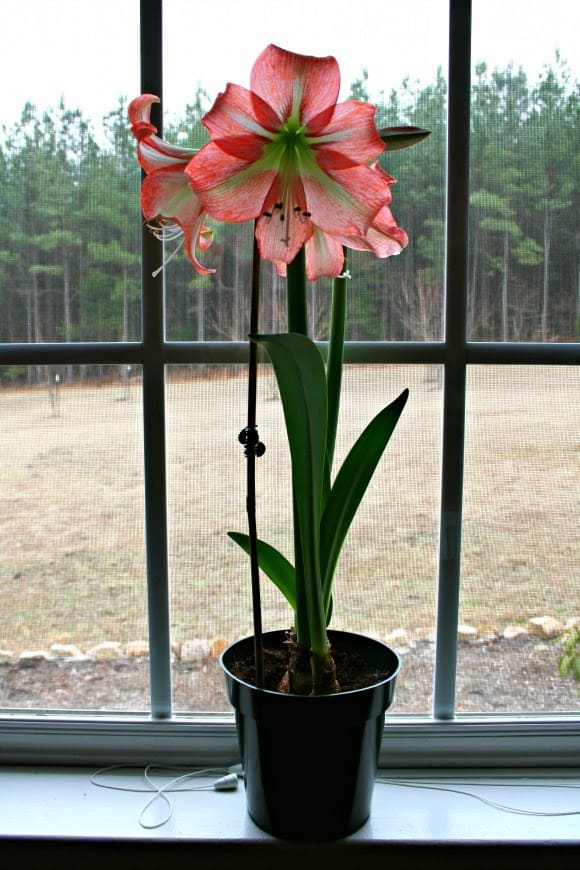
Amaryllis Rebloom
Amaryllis plants, with their striking, trumpet-shaped flowers and vibrant colors, are a popular choice for both indoor and outdoor gardening. While they are relatively easy to care for, one of the most rewarding aspects of growing amaryllis is getting them to rebloom. Amaryllis can be coaxed into producing another round of beautiful blooms with a little attention and care. In this article, we’ll explore the steps to encourage your amaryllis to rebloom.
Timing Amaryllis Blooms
Amaryllis bulbs typically bloom once a year, but the timing can vary depending on the variety and growing conditions. To get your amaryllis to rebloom, you need to understand its natural growth cycle. After the initial blooming, amaryllis plants require a period of rest and rejuvenation, usually during late summer and early fall. During this time, the plant focuses on building up energy in its bulb, which it will use to produce new flowers.
Prune and Deadhead
Once your amaryllis has finished blooming, it’s important to remove the spent flowers to prevent seed production, which can drain the plant’s energy. This is called dead heaading. Cut the faded flowers off just above the bulb, being careful not to damage the leaves. Do not cut off the leaves, just the dead flowers. Continue to water and fertilize the plant as you normally would.
Light Requirements
During the rest period, place your amaryllis in a spot with bright, indirect sunlight. This can be outdoors in a shaded area or inside near a window with filtered light. If you bring plants outdoors in the summer, be sure to follow the instructions for bringing house plants indoors for winter before the first frost. You can your amaryllis to get plenty of light to grow strong and healthy foliage. The goal is to provide enough light to encourage leaf growth but not so much that it triggers premature flowering.
Adjust Watering and Fertilizing
Reduce watering and stop fertilizing during the rest period. Water sparingly, just enough to prevent the soil from completely drying out. After a few weeks, you will notice the leaves beginning to yellow and eventually die back. This is a sign that the plant is entering dormancy. It’s important not to rush this phase, as it allows the bulb to store energy for flowering.
Let the Bulb Rest
Once the leaves have withered completely, it’s time to prepare your amaryllis for its dormant period. Carefully lift the bulb out of its pot and remove any excess soil. Allow the bulb to air-dry for a few days, and then store it in a cool, dark place, such as a basement or garage. The temperature should ideally be around 50-55°F (10-13°C).
Re-Pot the Bulb
After 8-10 weeks of dormancy, it’s time to wake your amaryllis from its slumber. Re-pot the bulb in fresh, well-draining soil, leaving about one-third of the bulb above the soil surface. Water lightly to encourage root growth, and gradually reintroduce it to light. Initially, keep it in a low-light area, and then move it to a brighter spot as you see new growth emerging.
Resume Regular Care
Once the leaves have reached a few inches in height, you can return to your regular care routine. Provide bright, indirect sunlight, keep the soil consistently moist but not waterlogged, and start fertilizing again with a balanced, water-soluble fertilizer.
Patience and Enjoyment
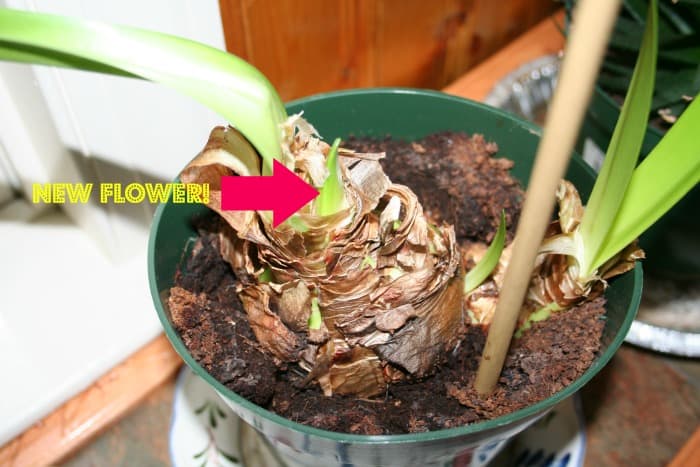
It may take several weeks for your amaryllis to produce flower stalks and eventually bloom. Be patient and continue to care for it with diligence. As the plant starts to flower, you’ll be rewarded with a stunning display of colorful blossoms.
Amazon Affiliate Links and Disclosure: As an Amazon Associate, I earn from qualifying purchases. Thank for your supporting Home Garden Joy!


It’s very exciting for me to see the new flower appear with amaryllis rebloom. I’ll probably have to move the amaryllis back upstairs to my office where it can get a lot more sun from the south-western exposure, but in the meantime, I’m the proud mama of a new amaryllis!




[…] can also get an existing amaryllis to bloom again. It’s not hard but it does require a bit of […]