• Skip to primary navigation
  • Skip to main content
  • Skip to footer
Home Garden Joy
  • Home
  • How to Garden
    • Garden Pests
    • Plant Diseases
    • Raised Bed Gardening
    • Seed Starting
    • Tools & Equipment
  • Plants
    • Plant Profiles
    • Vegetables
    • Fruit
    • Herbs
  • Recipes
    • Canning and Food Preservation
  • Books & Classes
    • Books by Jeanne Grunert
    • Books for Christian Herbalists
    • Herbalism Classes
  • About
    • Privacy Policy

What Causes Tomato Nose?

September 13, 2016 by Jeanne

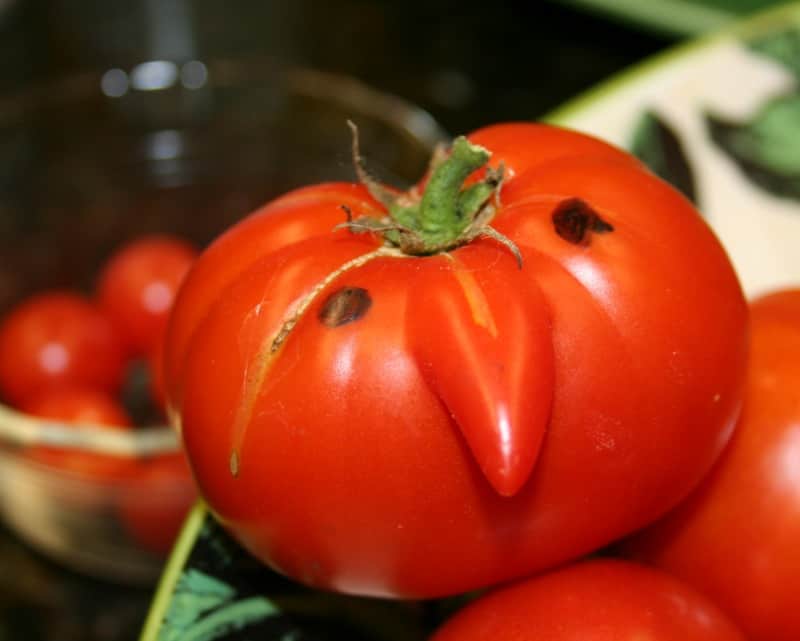
Tomato nose. Yeah, this guy.

I’ve spotted a few tomatoes with “noses” over the years, but never stopped to ask what causes a tomato with a nose?  Tomato nose (or horn) is actually a genetic defect that, according to some sources, affects 1 out of every 1,000 plants. Tomatoes with this appearance are safe to eat. Here’s why tomatoes grow horns or noses.

What Causes Tomato Nose?

As a tomato grows from a single, fertilized cell, some cells divide and become the locules. A “nose” grows from a locule that divides incorrectly. The average tomato has five locules. When cells divide incorrectly, they produce an extra locule, which creates the “horn” or nose.

High Temperatures Increase Likelihood of Faulty Cell Division

What is so interesting to me is that extended high temperatures over 90 degrees, particularly warm evening temperatures, can increase the likelihood of the deformity. We had an awful ‘heat dome’ over the past few weeks that kept temps into the 80s overnight. I think that may have increased the chance of my wonky tomato face. It may affect only a few tomatoes.

Some say that heirloom varieties are more likely to be affected. This plant is either a “Celebrity” or “Supersonic” tomato variety. These are supposed to be better able to withstand southern heat.

I don’t mind. Tomato nose is fun. My husband occasionally draws faces on them and leaves them in the kitchen for me to find in the morning. It still makes me laugh after all these years.
 

tomato-face

Can You Eat Tomatoes with Tomato Nose or Horns?

The big question remains: can you eat a tomato with a deformity like this?

Answer: Absolutely!

The wonky genetics doesn’t compromise the taste.

Now there are many other tomato diseases that create odd-looking tomatoes that look or taste bad. But as far as tomato problems go, I will take this one any day.
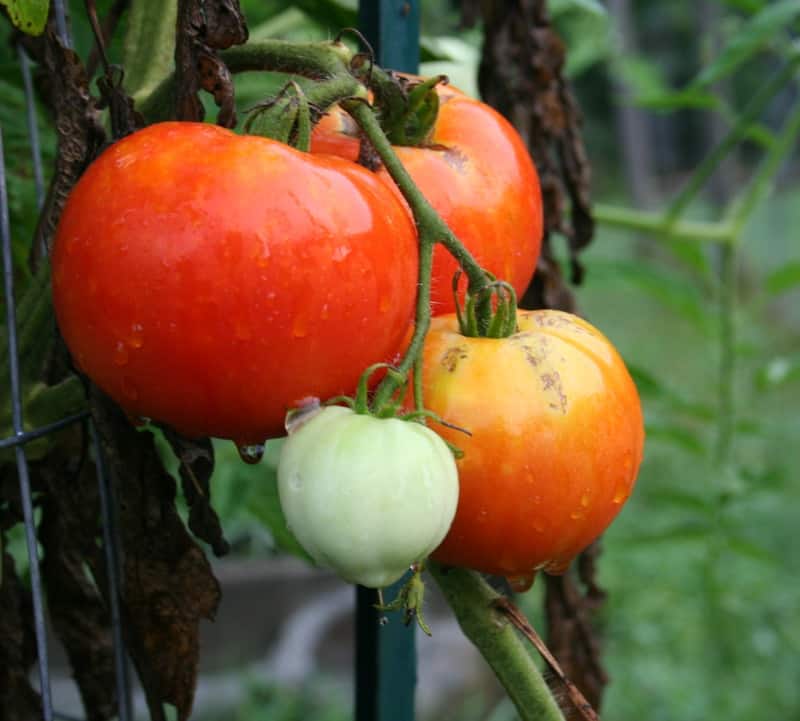
crack in a tomato
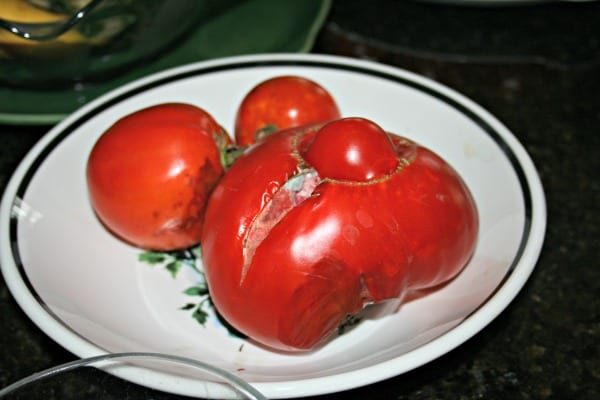
Another tomato with a locule gone bad…
tomato
These tomatoes are fine. Same plant, just earlier in the summer before the heat descended.

 More Tomato Growing Tips

  • How to Plant Tomatoes
  • Choosing Garden Seeds
  • Growing Tomatoes
  • Tomato Plant Problems: Tomatoes with Cracks


Filed Under: Vegetable Gardening

Previous Post: « Fall Garden Update and Dealing with Drought
Next Post: Ways to Extend the Growing Season »

Footer

a wheelbarrow with bag of soil, trowel, pots and plants

Understanding Fertilizer: A Complete Guide for Home Gardeners

Understanding fertilizer is an important skill for beginning gardeners. In this guide, I’ll walk you through the basics. By the end of this article, you’ll understand fertilizer, what it is and what it does, and how to use it appropriately in the garden. Introduction: Why We Use Fertilizer in the Garden . Plants absorb nutrients…

Read More

red lettuce, mexican tarragon, and chard

The Best Organic Fertilizers

If you’ve been looking for ways to help your garden truly thrive — not just survive — organic fertilizers might just become your new best friend. They’ve become a cornerstone of sustainable gardening and farming, and for good reason: they don’t just feed your plants, they actually improve the health of your soil over time….

Read More

water droplets in sunbeams over a raised bed vegetable garden

Irrigation Tips for Home Gardens: Drip vs. Soaker Hose

Watering is one of the most essential tasks in maintaining a healthy home garden, yet it is also one of the most misunderstood. Many gardeners rely on overhead sprinklers or hand-watering, both of which can waste water and fail to deliver moisture efficiently to plant roots. Two of the most effective alternatives are drip irrigation…

Read More

chive plants in bloom with lettuce

The 10 Easiest Herbs to Grow

Grow them in pots, containers, window boxes, raised beds, or tucked among your flowers. These are the 10 easiest herbs to grow in almost any temperate garden. They take up little space, are generally unfussy, and are used in lots of recipes. What Do I Need to Start an Herb Garden? You don’t need a…

Read More

  • About
  • Plant a Row for the Hungry
  • Awards
  • Privacy Policy

Let’s Connect!

  • Facebook
  • Instagram
  • Pinterest
  • Substack
  • YouTube

Copyright © 2026 Home Garden Joy on the Foodie Pro Theme