This year, our big project is the perennial garden clean up. We have a stretch of steep hillside in the perennial garden that became an overgrown mess. Here’s why it became a mess and how we’re tackling it, day by day.
Perennial Garden Clean Up
As longtime readers will recall, we laid out the foundation for our perennial garden in March 2008. I used rocks to outline paths and I bought garden kits. We bought several “sunny perennial garden kits” from a catalog. The kits came with a planting diagram, and for a while, the garden looked lovely.
Then, a few things happened.
Friends gave me plants, especially my friend, the amazing horticulturist and wildflower expert Cynthia Wood. Cynthia’s irises and daylilies are a big part of my garden now. This one just blows me away with the color every spring:
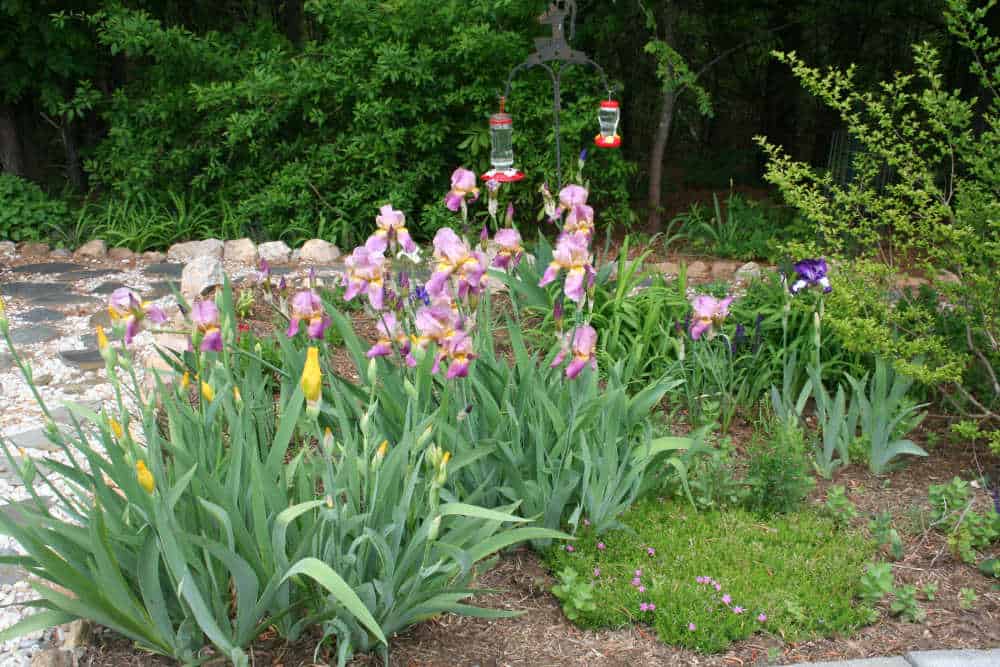
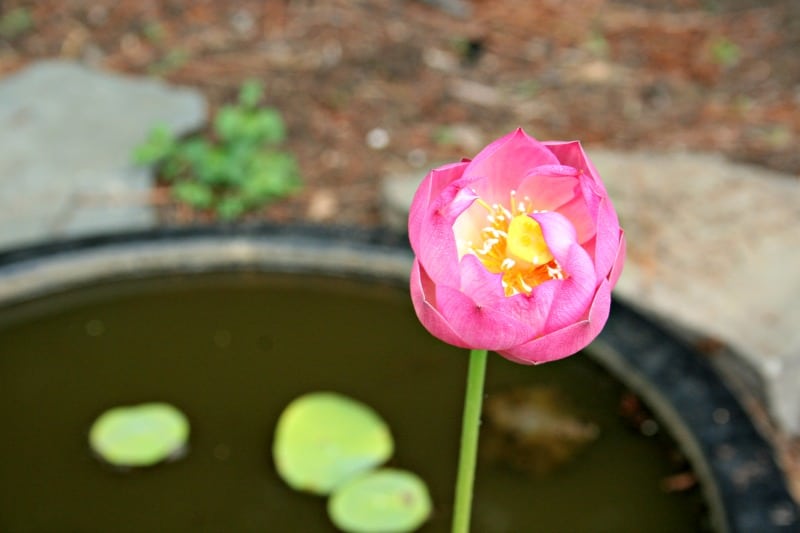
Patty Gulick, a neighbor, also gave me many lovely plants including iris. Joan Melcher, a friend from church, dug a huge amount of iris, lilacs, and kerria for us, too. Pat Lust, a friend from the Master Gardeners, also bequeathed me with perovskia (Russian sage, a plant that was on my wishlist) and new daylilies. And of course, Liz Dunn, another master gardener, and a friend gave me water plants, which of course meant I had to put in a little pond!
And yes, some of the plants just gave us more, like the butterfly bushes, while others died quietly along the way.
Over time, those lovely little flower beds became a mess of random plants. Some took over various areas – I think John and I dug more daylilies than I can count this year and replanted them around the farm. In other spots, various weeds dominated with a voracious appetite for conquering still more ground.
What Kind of Weed Is This? The Horribly Invasive Kind, of Course
We had many weeds colonizing different areas of the garden:
- Chickweed, a spring weed that grows in dense mats, produces thousands of seeds, and does die back with the warm weather. In the meantime, it strangles whatever it finds.
- Clover, clover, everywhere.
- Grass, some seed from the lawn that washed into the garden but others what looked like fescue and hay grasses. I’m guessing animals picked up the seeds from the cattle fields across the road and deposited the seeds on our land, or they’re just seeds leftover from when this was a hay field.
- Brambles, which grow everywhere they can.
- Sumac trees, the same as brambles, which take over anything they can find.
- Bermuda grass, crabgrass, and wiregrass, all of which have to be completely dug up because they spread by runners.
- Plantain and other assorted weeds.
- Dandelions and dandelion lookalikes.
I don’t count the wild violets as weeds. I leave them alone and enjoy their purple carpet in the spring.
Last year, we experienced abundant rainfall throughout the summer months, which hampered our weeding time. I also took on a large, full-time freelance gig which kept me working 10 hour days some days of the week. That, plus the heat, all made the weeds shout, “Hurray!” and those of us tasked with weeding feel faint.
Starting Fresh: Clearing the Gound, Spraying, Mulching
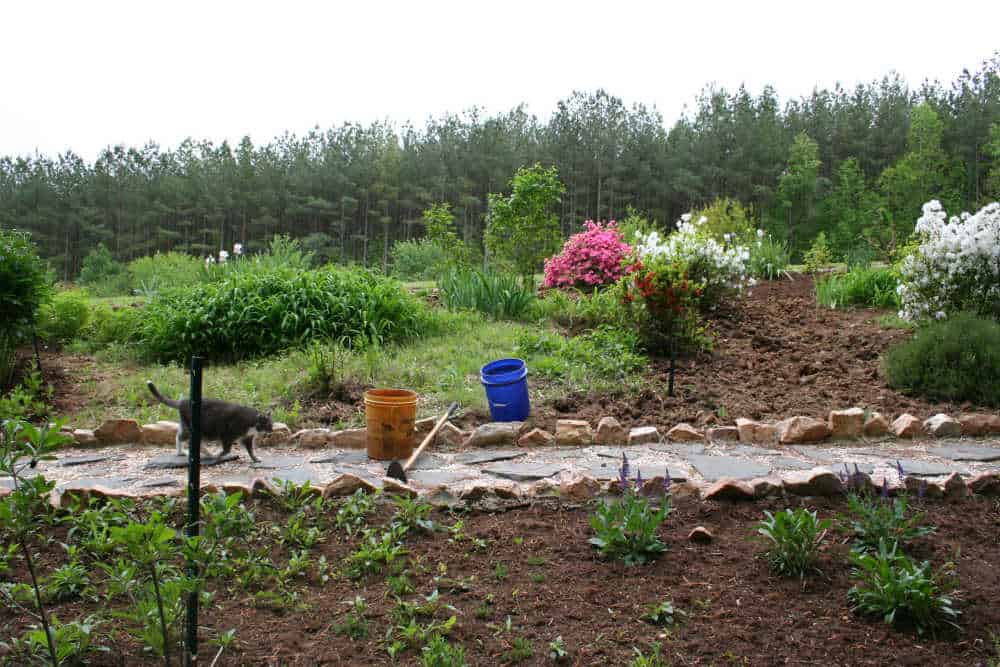
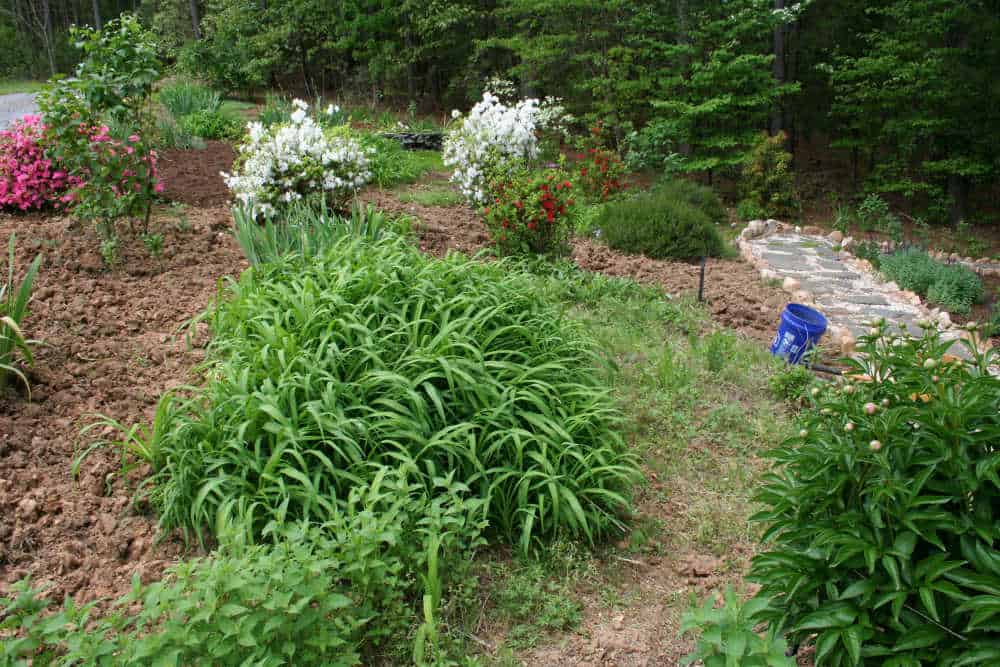
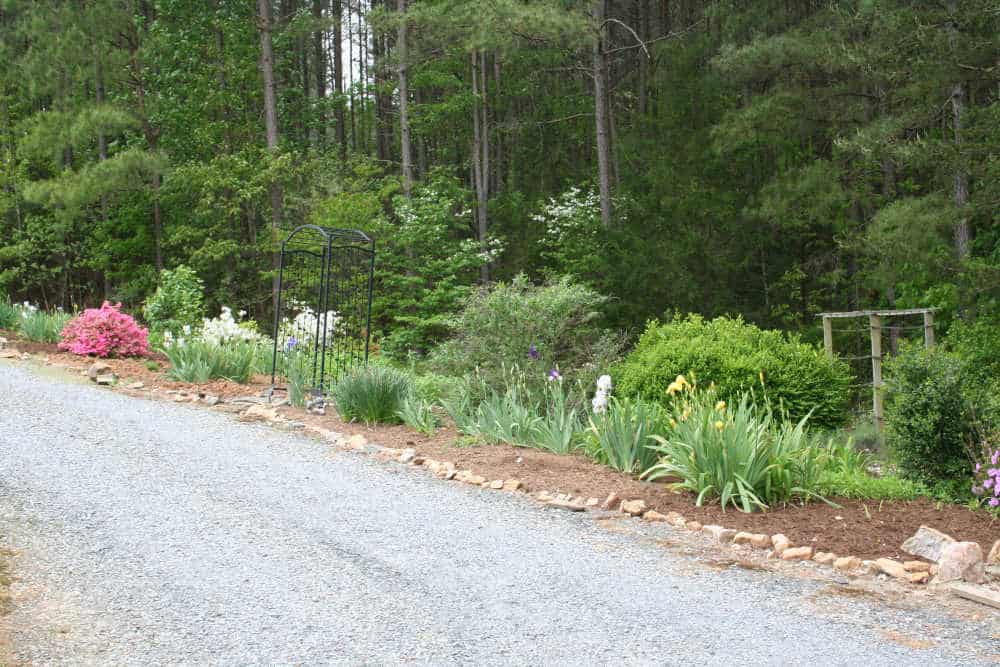
I hate using chemical herbicides, but there’s no other choice when you have this much ground to cover. We dug up all of the weeds with pick axes, hoes, and shovels, and then used a commercial herbicide to clear the area. Lastly, a thick layer of mulch over the area suppresses weeds for another year. It also makes it more manageable so that I can weed it by hand.
Future Plans for the Perennial Garden
We decided after much consideration to leave the perennial garden mulched, with plenty of space between the plants, until we decide when and if we wish to plant again. The kits were great to get us started, and they did indeed fill in the area, but now that we are more knowledgeable about what grows well in south central Virginia, as well as know which plants we like and which we don’t, we can take our time thinking about what to plant and not rush to fill in all the space.
It took us about 10-15 hours to do the entire job by hand. We looked into hiring someone, but they were too busy, and we couldn’t find a friend with a rototiller. Maybe that’s for the best. We’ve started looking into buying a rototiller since we plan to expand the gardens (very exciting plans in the works that include many copses of oaks and other trees! Hardwood and native trees to replace the loblolly pines!).
Perhaps more importantly, it gave us time to enjoy the garden. The irises bloomed, and the lilacs sent their perfume to brighten our mornings. Butterflies and hummingbirds, curious about our work, zoomed in for a closeup. The cats all helped. I got to know my garden again, and that was worth every back-breaking day with a pickaxe, shovel, and bucket. Our perennial garden clean up was worth every back-breaking second.