I’ve been harvesting gourmet lettuce and micro greens almost daily. The seeds cost me a whopping $2 or so – I purchased several 25 cent seed packets for Romaine lettuce and spinach at the dollar store, and the other $1 or so went towards a package of mixed micro greens.
“Greens” is a misnomer because among the various lettuces is a gorgeous ruby-red leafed variety that has a beautiful crisp, slightly tangy flavor. The lettuce was slow to start but has been growing robustly over the past several weeks, probably thanks to the soaker hoses we added to each of the garden beds.
Cut Leaves of Gourmet Lettuce and Micro Greens – Don’t Pull It OUt
I don’t pull up my lettuce plants when I harvest the greens. I have a special pair of very sharp scissors in the kitchen. I simply take a metal bowl out to the garden and my scissors, snip the leaves I need for my meal, and leave the plants in the ground.
Bolting from Heat
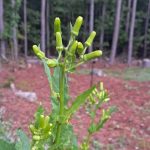
Depending on how hot it gets here over the next several weeks, I may get another harvest of lettuce or it may bolt and go to seed. One type of lettuce from among the varieties in the mixed greens package has already bolted. Bolting means the lettuce plant produces a long stalk with a flower on the end. The purpose is to produce seeds. Once you see that long central core, stem or flower, the lettuce is past its prime and generally speaking, unpalatable. It tastes bitter. It’s best to just pull up the plant and compost it.
Cleaning Lettuce
Once the lettuce is harvested, I either rinse it under the garden hose or very, very carefully rinse it immediately in the sink. Earwigs are plentiful among the lettuce. If you have never seen an earwig, it is a revolting little insect – harmless, I think, but disgusting nonetheless, with pincers and beetle-like features.
It’s just one of those creepy things that I hate seeing in my salad. A quick rinse with cool water chases them out. That’s why I like rinsing the greens outside – I can chase the insects back into nature where they belong, and not into my kitchen!
Light Dressing for Micro Greeens
I dress the salad simply with extra virgin olive oil and a splash of either lemon juice or cider vinegar, salt and pepper. That’s it. The luscious baby greens and fresh-from-the garden organic lettuce is delicious on its own. Italian vinegar, made with fresh herbs, adds wonderful flavor.
Remember how in January I promised to show you how gardening and growing your own vegetables saves money? Here’s how it looks so far with the lettuce crop (and I have more plants growing out there than I have harvested so far):
Seeds – Cost
Seeds to grow your own edible greens are inexpensive.
- Romaine lettuce – two packages of 25 cent seeds from the dollar store (.50)
- Spinach – for salads – one package of 25 cent seeds from the dollar store (.25)
- Mixed baby gourmet lettuce greens – $1.79 ($1.79)
Total expense for seeds: $2.54 for seeds.
I am not counting the investment in the soaker hose, although if you are interested, a 25 foot soaker hose from a big box store cost about $9. I think we had a coupon and saved a few dollars.
I used no special fertilizer other than good old fashioned garden compost. The lettuce was grown completely organically with no pesticides or chemical fertilizers of any kind used on or near the plants.
I have harvested to date the equivalent of:
Estimated Cost if Purchased at the Store
- Two large bags of gourmet mixed organic salad greens. Kroger (our local supermarket) sells organic salad greens by the bag for about $2.99 each. Estimated value: $5.98
- Two heads of Romaine lettuce. I can’t find a price for organic Romaine. Wal-Mart had heads of Romaine lettuce for sale for $1.79. They were slightly bigger than mine and fuller. They were conventionally grown. I will estimate my two heads of lettuce harvested to date at just $1.79. (But note, I have six more growing in the garden!)
Total estimated value of foods grown at home: $7.77
$7.77 minus $2.54 for seeds = $5.23
I spent very little time on the lettuce bed. I weeded it once, just a quick pass-by with my weeding bucket and a quick pick up of some weeds. The hardest part of growing lettuce is simply remembering to turn on the hoses and water it when we haven’t had rain for a few days.
Post updated March 2023 with new information, revised links and images.