
I can’t imagine not growing sage in my herb garden every year. Sage (Salvia officinalis) is one of my favorite culinary herbs.
Sage flavors stuffing for chicken or turkey, and it can even be added to risotto to enhance the flavor. The aroma acts as a natural air freshener. Perhaps best of all, it’s a lovely plant with tall purple flowers, so it can be grown as both an ornamental and a culinary herb.
What more can you want from a plant?
Growing sage isn’t difficult. In my Zone 6B (Virginia Piedmont Region) garden, sage acts as a perennial and returns each year, regrowing from its roots. It is hardy and easily started from seed.
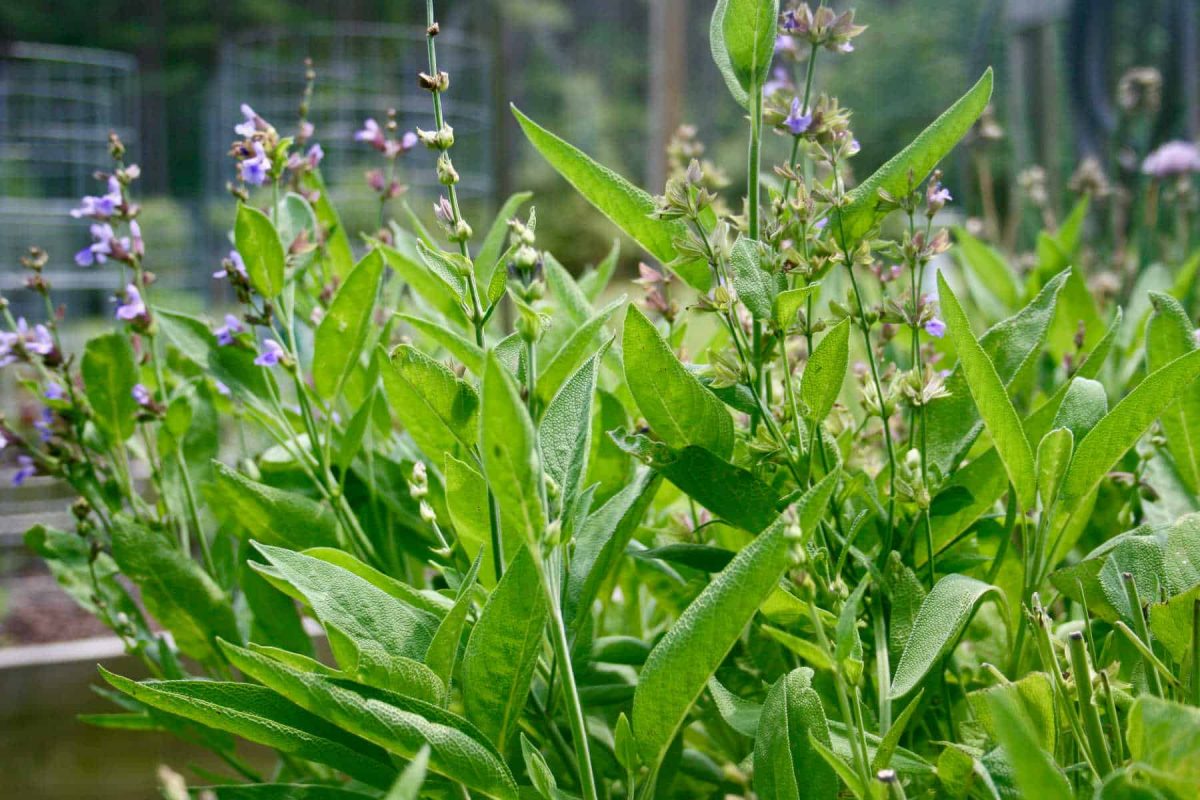
Sage (Salvia officinalis)
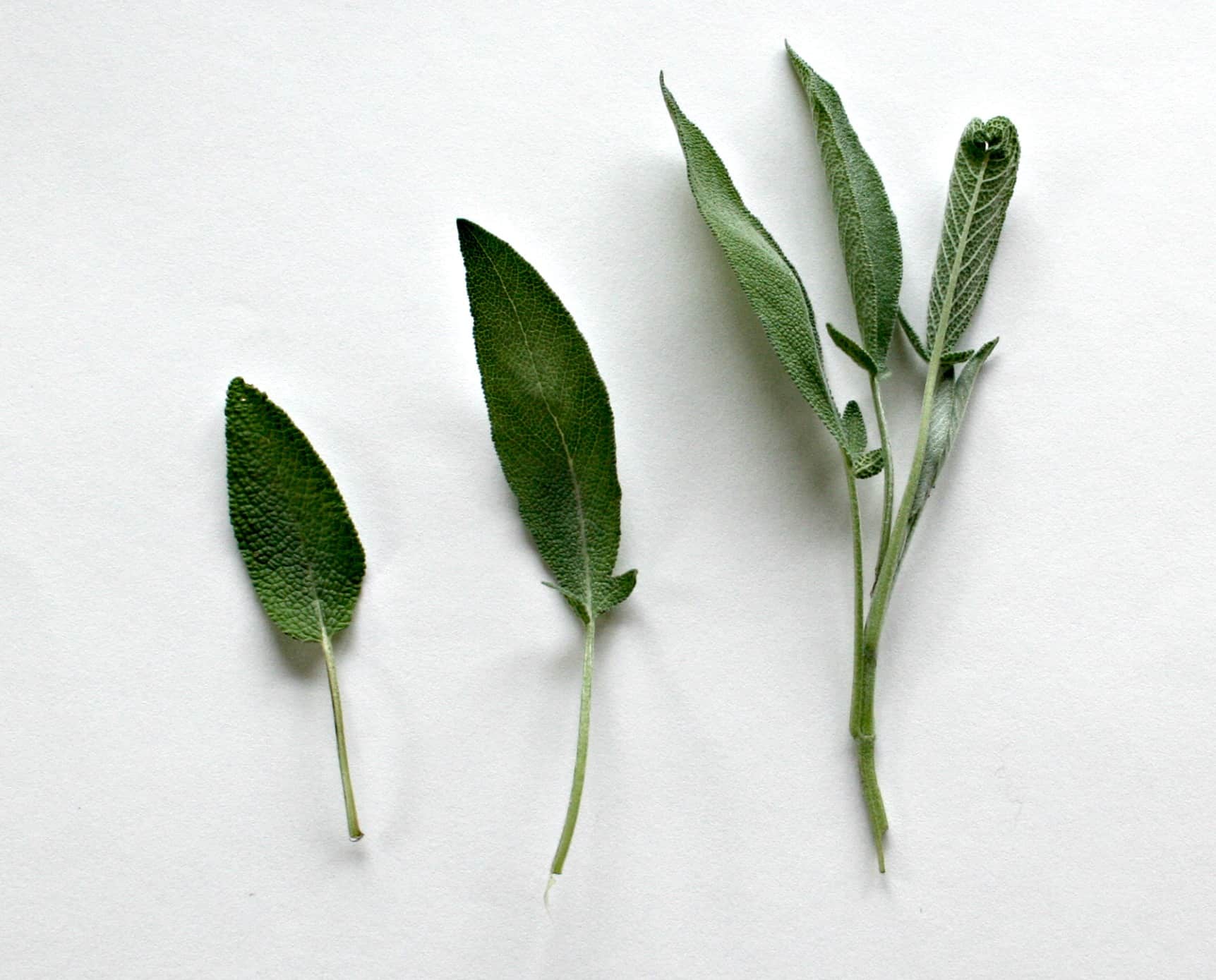
Sage (Salvia officinalis) is one of my favorite herbs. It’s a beautiful plant in the garden. The long, oval, green-gray leaves feel soft and velvety to the touch. When it blooms, it sends up tall spikes of purple flowers that the bees love. It makes a great ornamental plant.
Growing Sage in the Backyard Garden – It’s Easy!
What about soil? Fertilizer? Compost? Bugs?
No worries. Sage doesn’t care.
Growing sage in the backyard garden is easy. It grows in dry, poor soils, and as far as I can tell, resists nearly every pest, disease or problem that my garden can throw at it.
I have transplanted sage in my garden several times, and each time, it looks like it’s going to die but it doesn’t. It’s like a Lazarus plant – it comes back from the dead.
Now you know why I love it so much.
How to Grow Sage
Where Can You Grow Sage?
Sage does well from garden zones 3 through 11 in the United States. It can also be grown indoors in a windowsill garden.
Starting Sage
Sage grows best from plants or layered cuttings although you can start it indoors from seeds about 10 to 12 weeks before the first frost date for your region.
Light Requirements
Sage needs full sun but can grow in partial shade, too. If growing sage indoors, place the pot near a bright, sunny windowsill.
Water Requirements
Sage is drought-tolerant once it is established. New transplants should be kept well-watered until the plant develops a strong root system. After that, sage planted in the outdoor garden should simply be watered during periods of extreme heat or drought.
Ongoing Care and Maintenance
Pinch or prune the tips of the sage plant each spring before it begins leafing out again to encourage a branching, bush form. Otherwise, sage grows straight up and sometimes flops over. It propagates by layering, like a forsythia, so branches on the ground may put down roots and grow new plants.
I have several Salvia officinalis, or common culinary sage, growing throughout my garden. The picture above shows it in the perennial garden. I plant mine as a border plant and include it in the butterfly and hummingbird garden. Because it is so drought tolerant, I don’t worry about growing sage in the hot sun. It seems to like it.
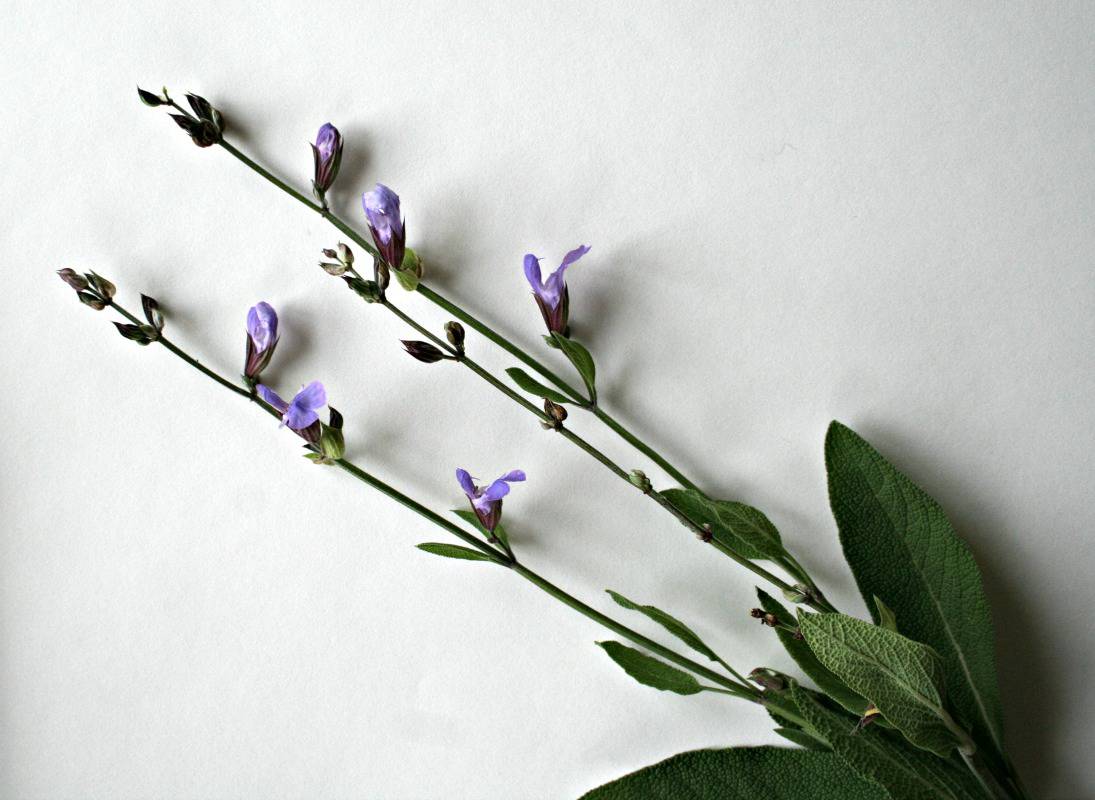
The flowers are small but offer a lovely purple color in the garden:
Uses for Sage Herb
There are many uses for sage. The leaves are used fresh or dried for cooking, teas, and throat gargles. One delicious recipe to try is my Italian herb vinegar recipe that includes fresh sage. I have also made pineapple-sage jelly, an herbal jelly that tastes wonderful on crackers.
Drying Sage
Dehydrator Method of Drying Sage
The leaves should be picked in the morning when the oils are at their strongest. Pick the leaves off of the stem and place on a dehydrator rack. Dehydrate for one hour or until the leaves crumble. Crumble the leaves and place into glass spice jars. Label and store.
Solar Method of Drying Sage
You can use any general method of drying herbs without a dehydrator to dry garden sage for later use. Snip the stems and hang them upside down to dry in the sun. A paper bag may be placed over the herbs to keep them free of dust, insects, and dirt.
Car Dehydrator
Another method I learned at a lecture given by the Piedmont Herbal Society is what they dubbed the “car method.” Put the sage inside a paper bag and place the closed bag on the dashboard of your car. Park the car in the sun with windows rolled up and let your car act as a solar dehydrator!
If you don’t mind your car smelling like sage, it’s an easy way to dry sage without a dehydrator.
Recommended Products
The following are affiliate links. We are a participant in the Amazon Services LLC Associates Program, an affiliate advertising program designed to provide a means for us to earn fees by linking to Amazon.com and affiliated sites. Thank you for being a part of Home Garden Joy!
If you’re shopping for a dehydrator, here are two models I like.
Magic Mill Commercial Food Dehydrator Machine
This is the simple no-frills dehydrator that I use:
Presto 06300 Dehydro Electric Food Dehydrator, Standard
Do you need sage seeds? This is a nice kit for a culinary herb garden.
[…] found that’s just about right for most herbs, but some stronger culinary herbs such as sage need a pinch less, and some of my herbs need a pinch […]