Broccoli rabe, also called rabe or rapini, is one of my favorite leafy green vegetables. It is easy to grow in zones 5- 7 in the spring and fall. If you have extra, you can freeze broccoli rabe easily. Here’s how to freeze broccoli rabe and store it for use all year long.
Storing Fresh Broccoli Rabe or Rapini: Summary
- Yes, you can freeze broccoli rabe – but it must be blanched first
- Blanching cleaned rabe takes about 2-3 minutes per batch
- Blanching means immersing fresh garden vegetables in boiling water for a short time, then dunking them in ice water
- Once blanched, rabe can be drained and frozen in freezer-safe bags
- Frozen rabe keeps for 6-12 months
Freezing Broccoli Rabe
Freezing broccoli rabe requires a simple processed called blanching. Blanching means immersing fresh vegetables into boiling hot water for 1-2 minutes, then immediately submerging them into ice water. By halting this activity, you will help your frozen broccoli rabe taste better and last longer in the freezer.
Blanching is easy to do but can be time-consuming if you are processing a lot of broccoli rabe.
How to Freeze Broccoli Rabe
Step 1 – Harvest and Clean the Rabe
Harvest the entire plant, pulling it out of the garden bed and shaking soil from the roots. Rinse outdoors in cold water.
Using garden shears, snip off the roots and discard.
Step 2 – Check and Discard Discolored Leaves
Check the underside of the leaves for insect eggs. I found many clusters of white and gray eggs I could not identify on the rabe.
Discard any insect-infested leaves or yellowed leaves. You can compost yellowed leaves, but put insects into the trash.
Step 3 – Chop the Stems
Next, bring your rabe into the kitchen. Chop the rabe and discard thick stems into the compost pile.
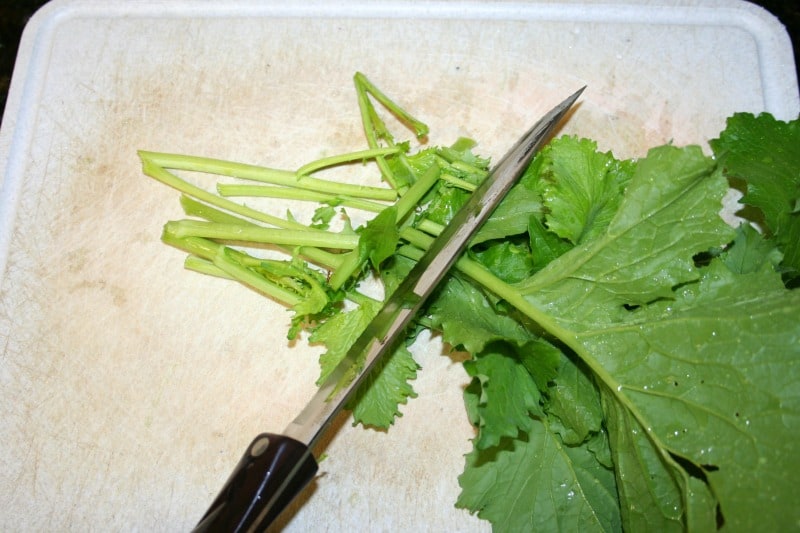
Step 4 – The Blanching Process
Now on to the blanching process. Fill a large bowl with ice water and set it aside. Put a large pot filled halfway with water on the stove and bring it to a rolling boil. Have a colander handy for draining the vegetables.
When the water is boiling, carefully add the chopped, cleaned broccoli rabe, using a spoon to stir and push it down. Time this carefully; boil it for just two minutes.
At the end of two minutes, immediately remove the pot from the stove. Drain carefully (don’t burn yourself) in the colander placed in the sink. Then place the vegetables into the ice water for 30 seconds then lift the colander out to drain the water in the sink. Let it drain.
Step 5 – Dry and Freeze
Allow the blanched rabe time to drip dry or gently pat with a clean cloth or paper towel. Place inside freezer bags. Press the bags to release as much air as possible before zipping or closing them. Freeze your rabe immediately. It will keep for 6 – 12 months.
Using Frozen Broccoli Rabe
You can use frozen broccoli rabe like spinach or other leafy green vegetables. It keeps in the freezer for up to six months, a little longer if you are lucky. Remove the frozen vegetables from the bag and place in a microwave safe bowl. Add 2 tablespoons of water, cover and microwave on high for 4-6 minutes depending on the strength of your microwave.
Alternatively, you can cook frozen rabe on the stove top. Bring 1-2 cups of water to a boil. Add frozen vegetables and return to a boil. Cook for 3-5 minutes, drain and serve.