These landscaping ideas for a hill or slope offer homeowners with steep areas in their yard a few ideas for plantings that look beautiful and prevent erosion.
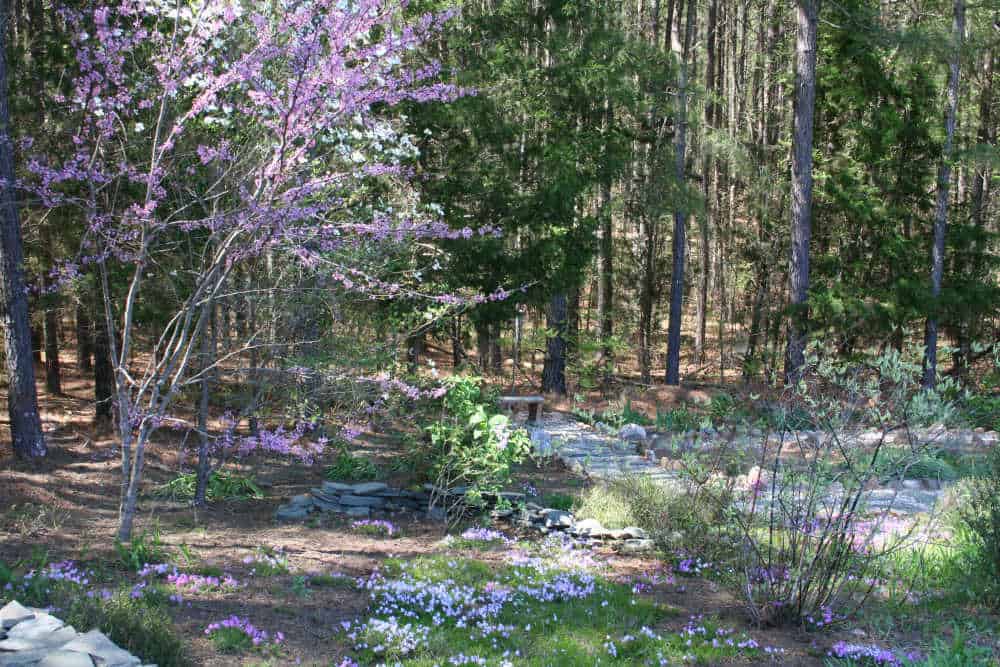
Easy and Pretty Landscaping Ideas for a Hill or Slope
Many backyard gardens are set on a slope. Hills, slopes, and uneven terrain make it challenging to add a garden for relaxation or play.
I’ve told the story before of how I ended up designing and planting a formal garden (it was also featured in a 2017 issue of Virginia Gardener magazine). We have a very steep slope next to the drive and my husband did not want to mow it. He asked me to plant ” a few flowers.” What started as a few perennials ended up a formal garden with slate paths, a rose and lavender garden, butterfly garden, and a meditation area.
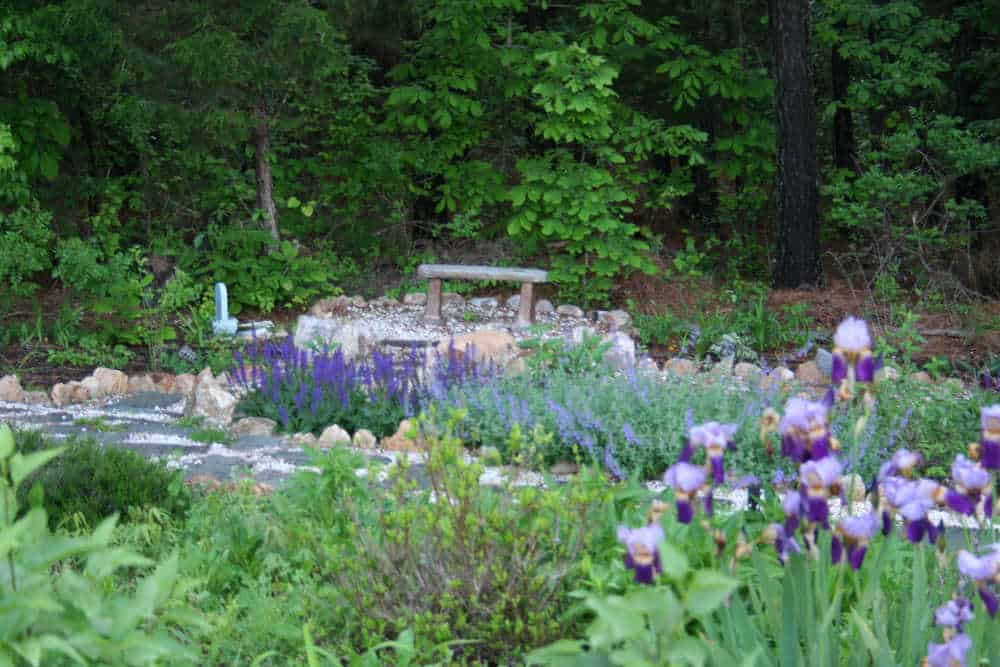
The sloping hillside above was one of the last areas we planted. We wanted the edge of the formal garden to blend seamlessly into the woods beyond. Eventually, we may expand the garden, but for now, this transitional area accomplished several goals:
- Add color and beauty to an area difficult to mow/plant/tend
- Prevent soil erosion
- Easy care and maintenance
A Simple Stone Wall to Prevent Erosion
We had slates leftover from the pathways. My husband piled them up in a natural curve, three to four slates per level. The soft curve of the wall follows the contour of the land and gives the wall a natural look. The small areas between the slates allow for drainage, but the slats also prevent erosion.
Use Native Plants for Garden Designs
Like all good landscaping ideas for a hill or slope, the design here is deceptively simple.
We used native plants on the hillside. These include:
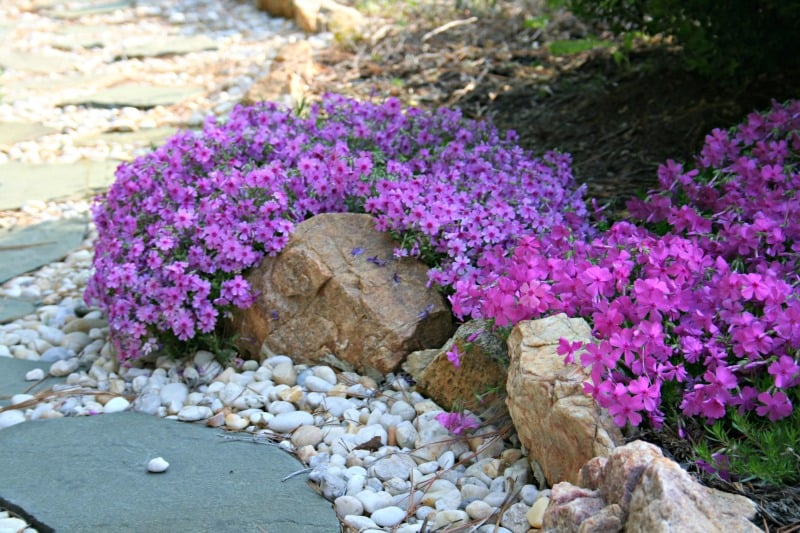
- Phlox divaricata – phlox, which. makes a great blooming groundcover.
- Cornus florida – dogwood, which grows abundantly on our farm as an understory tree. This white one was there when we cleared the land, and we asked the builder to keep all of the deciduous trees. We are gradually working them into the landscape.
- Cercis canadensis – Eastern redbud. I love this tree! In the spring in Virginia, the roadways, forests, and everywhere you look are just covered with these beautiful blooming trees. We planted this one intentionally from an Arbor Day Society cutting, but we do have wild ones growing along our driveway.
- Other shrubs on the forest edge include Syringa vulgaris, or lilac, and Cornus sericea, or Red Twig Dogwood.
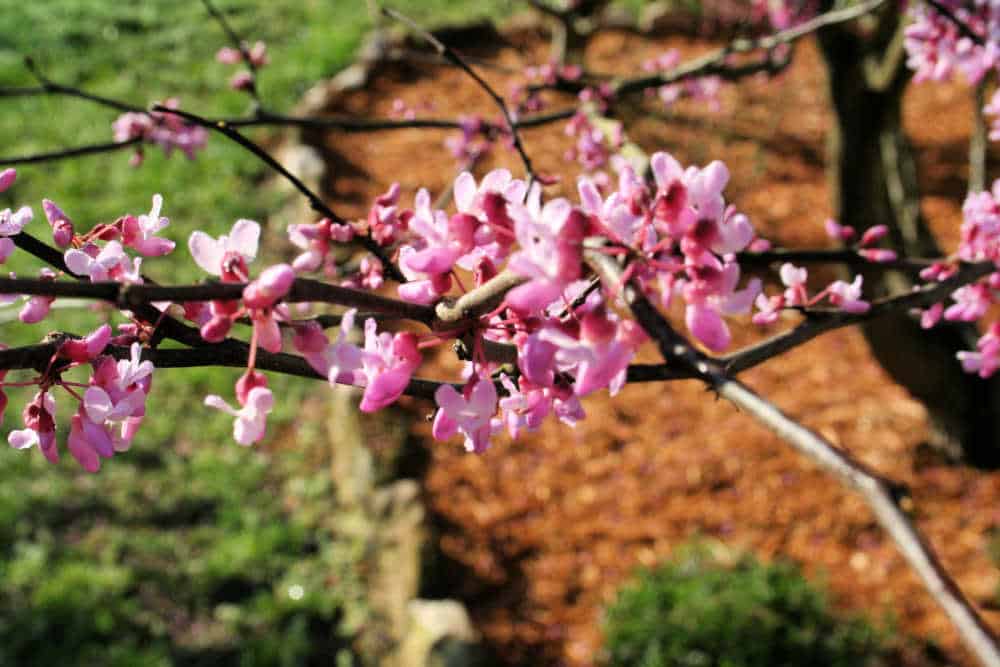
When you’re looking for landscaping ideas for a hill or a slope, think about plants for low, medium, and high levels. In my garden, the phlox takes care of the lower level or ground; the red twig dogwood and lilacs, the medium height area; and the lovely redbud and dogwood for the higher-level blooms.
Of course, this area blooms in April and May. That’s when it is at its peak. June through September, it is a cool bower with lush green colors and shade. I like to sit on the bench tucked into the corner of the garden and enjoy watching the birds or the butterflies in the butterfly garden immediately in front of me.
Simple Garden Design Is Better
This is a really simple landscaping idea for a tough area. Often, I flip through gardening magazines or scroll through Pinterest and see really elaborate gardens or gardens designed with lots of high-maintenance plants. Well, those plants won’t survive a Virginia summer, especially since I can’t water this area – the hose doesn’t reach! I need tough plants that are already acclimated to my climate.
That’s why I love the native plants for hillsides like this. Not only are they more likely to thrive in my soil and climate, but they look right at home as if the woods fade into formal paths beyond. It was a happy accident, I admit. I’m not very good at garden design. But I’m pleased with this lovely hillside garden, and I hope you can use some of the ideas for your own garden, too.