• Skip to primary navigation
  • Skip to main content
  • Skip to footer
Home Garden Joy
  • Home
  • How to Garden
    • Garden Pests
    • Plant Diseases
    • Raised Bed Gardening
    • Seed Starting
    • Tools & Equipment
  • Plants
    • Plant Profiles
    • Vegetables
    • Fruit
    • Herbs
  • Recipes
    • Canning and Food Preservation
  • Books & Classes
    • Books by Jeanne Grunert
    • Books for Christian Herbalists
    • Herbalism Classes
  • About
    • Privacy Policy

How to Propagate a Christmas Cactus

December 12, 2018 by Jeanne

Learning how to propagate a Christmas cactus is easy and fun. I’ve put together this article plus a video to show you how!

A quick note: In North America, and especially the United States, most people refer to this plant as “Christmas cactus.” There is also a variety called ‘Thanksgiving cactus’. The leaves are slightly different, as is the blooming time (November vs. December for most areas of North America.) Because so many people refer to all of these plants as “Christmas cactus” that is the term I will use. However, my pictures may reflect either the Thanksgiving bloomer or the Christmas one. Let’s just call them “Holiday” cacti!

How to Propagate Christmas Cactus

Christmas cactus (Schlumbergera bridgesii) offers house plant lovers a long-lived plant that blooms profusely every year.  Propagation by cutting enables the Christmas cactus owner to spread the holiday joy by growing multiple cuttings easily. Within a year of starting two little segments that had fallen off of the parent plant, I had blooms. Talk about a happy plant!

If you’d prefer the instructions to propagate Christmas cactus as a video, I’ve created a little video, here, that walks you through the steps:

Steps to Propagate a Christmas Cactus or Thanksgiving Cactus

 You’ll need a healthy, mature plant like these to start with plus a clean pot and some bagged potting soil (house plant soil from the garden center). You will also need a clear plastic bag. The kind that you get when you buy produce at the grocery store is fine. Other things you will need are an X-acto knife or a sharp pair of scissors.

9 Easy Steps to Propagate a Christmas Cactus

  1. Fill the pot with clean soil.
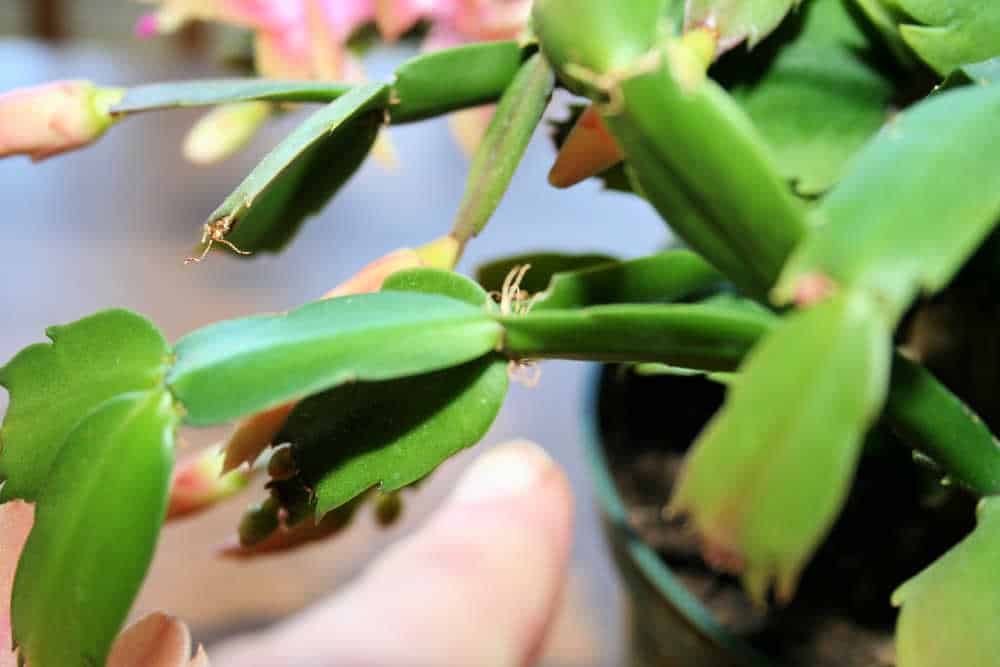
  2. Find a segment on the parent plant that has at least 2-3 jointed “leaves”. A bit of roots are great to have, but not necessary. The aerial root parts look like fine white hairs (my pictures below show you what I mean).
  3. Use the knife or scissors to cut the segment off. 
  4. Place the segment on a paper towel for a few hours. Let it dry out a bit.
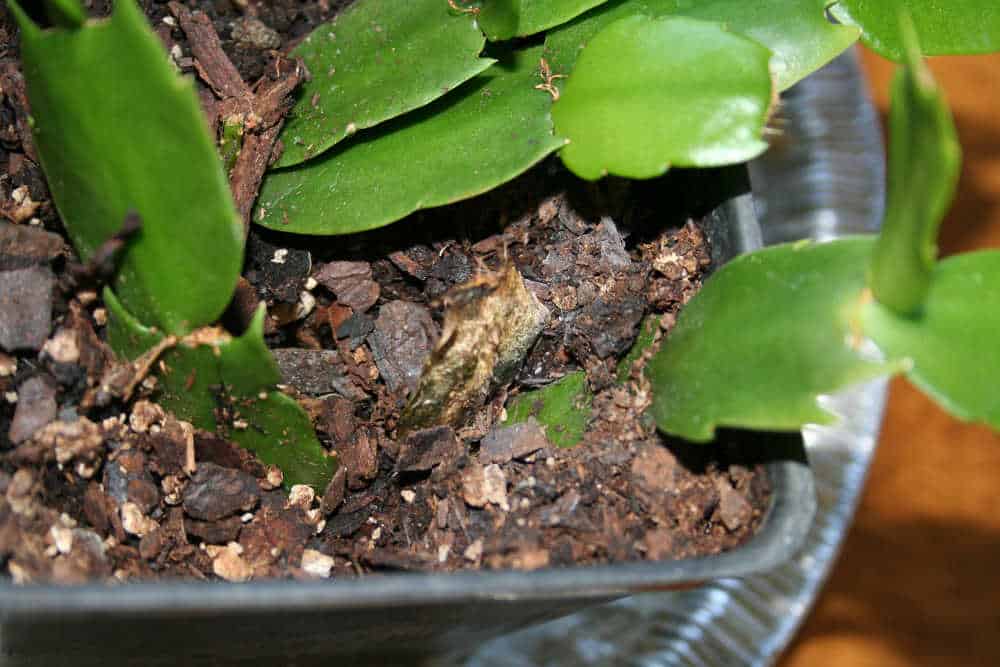
  5. Insert the cut end of the segment – the part with the little root hairs – into the soil. I used a pencil and made a dip about 1/4 inch into the soil and buried the segment halfway up the first flat leaf. There is a picture below of the rooted plant which shows you how deeply I buried the segment.
  6. Water the cutting well. Place the plastic bag over it to make a little tent.
  7. Place the bagged pot in a brightly lit place.
  8. Check daily to make sure it remains moist but not sopping wet.
  9. You’ll know your plant has rooted when you see the tips starting to grow. They turn red first then grow a new segment.

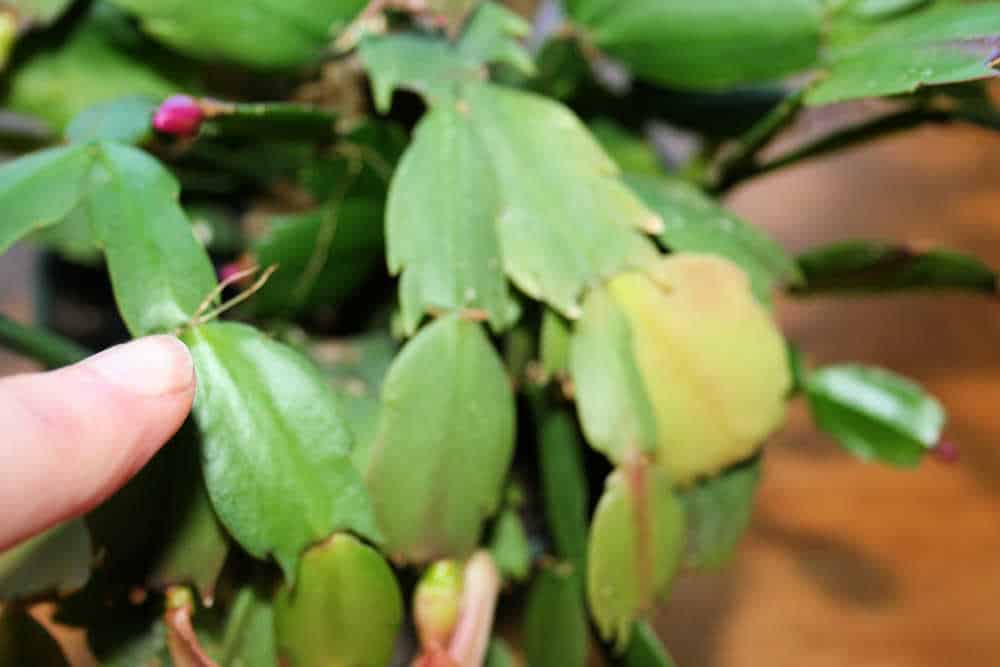
A healthy holiday cactus – wouldn’t you want another one of these beauties?
A segment with a bit of aerial root developing. This is a great piece to use to propagate the plant. 
Christmas cactus
Another view of a segment ready for propagation.
The segment has rooted and is now growing!
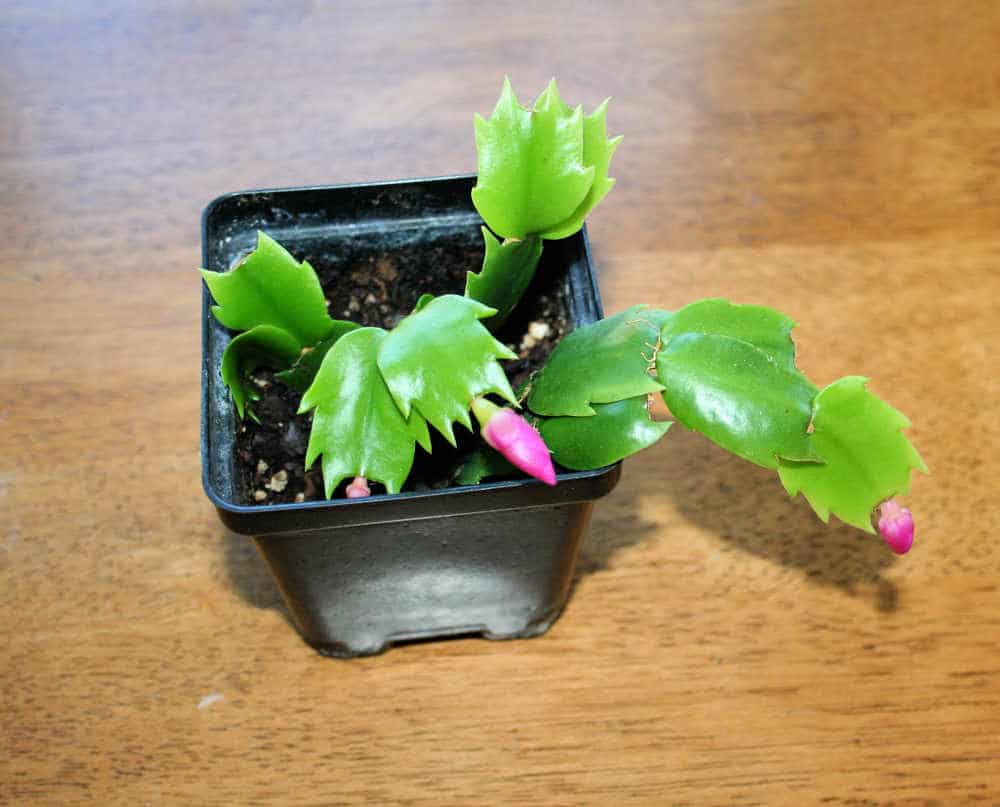
One year later, the little segment has grown into a mature plant and has buds ready to bloom. 

Filed Under: House Plants, Thanksgiving & Christmas

Previous Post: « Great Gardening Book Recommendations for Cozy Winter Reading
Next Post: About the Mistletoe Plant – A Unique Plant with a Curious History »

Reader Interactions

Trackbacks

  1. Christmas Cactus Care - Home Garden Joy says:
    July 8, 2019 at

    […] year-round. Flower colors include white, pink, magenta, red and peach colors, and they are easily propagated by taking a cutting and using some root hormone and potting soil. New plants should be the same […]

Footer

red lettuce, mexican tarragon, and chard

The Best Organic Fertilizers

If you’ve been looking for ways to help your garden truly thrive — not just survive — organic fertilizers might just become your new best friend. They’ve become a cornerstone of sustainable gardening and farming, and for good reason: they don’t just feed your plants, they actually improve the health of your soil over time….

Read More

water droplets in sunbeams over a raised bed vegetable garden

Irrigation Tips for Home Gardens: Drip vs. Soaker Hose

Watering is one of the most essential tasks in maintaining a healthy home garden, yet it is also one of the most misunderstood. Many gardeners rely on overhead sprinklers or hand-watering, both of which can waste water and fail to deliver moisture efficiently to plant roots. Two of the most effective alternatives are drip irrigation…

Read More

chive plants in bloom with lettuce

The 10 Easiest Herbs to Grow

Grow them in pots, containers, window boxes, raised beds, or tucked among your flowers. These are the 10 easiest herbs to grow in almost any temperate garden. They take up little space, are generally unfussy, and are used in lots of recipes. What Do I Need to Start an Herb Garden? You don’t need a…

Read More

oatmeal muffins in the tin, just out of the oven

Easy Oatmeal Muffin Recipe

This easy oatmeal muffin recipe makes a tasty breakfast, tea-time treat, or snack. It’s a plain, unassuming, honest muffin: no dripping sweetness, no sugary topping. The freshly cooked old-fashioned oatmeal keeps the batter moist. If you do not overbake them (as I have done in the past), they retain this moist, fluffy texture. No, they…

Read More

  • About
  • Plant a Row for the Hungry
  • Awards
  • Privacy Policy

Let’s Connect!

  • Facebook
  • Instagram
  • Pinterest
  • Substack
  • YouTube

Copyright © 2026 Home Garden Joy on the Foodie Pro Theme