
Storing sweet potatoes correctly is essential to keeping them fresh. Otherwise, they can go rotten quickly. The technique of properly preparing sweet potatoes for storage is called “curing.” When you cure and store sweet potatoes the right way, you’ll enjoy flavorful, long‑lasting harvests throughout the winter months.
Sweet potatoes are naturally sweet, nutrient‑dense, and versatile. But to make the most of your homegrown crop, you need to understand how curing works and why proper storage matters. With the right steps, storing sweet potatoes becomes simple and highly effective.
What Is Curing and Why Does It Matter?
Curing is the process of preparing foods for long‑term storage. Just as meats can be smoke‑cured to preserve them, sweet potatoes need their own curing period to ensure they store well.
Freshly dug sweet potatoes often have small scratches or blemishes on their skins. If you skip curing, these minor injuries can invite mold and rot. Curing allows the skins to heal and toughen, creating the ideal conditions for storing sweet potatoes for months.
Sorting Sweet Potatoes for Storage
I sort the sweet potatoes by size. Larger ones are canned or saved for my maple-flavored baked sweet potato dish. Medium-sized sweet potatoes are about the size of a Russet potato, or baking potato. These are excellent served as a side dish and baked plain. I put those into a second basket. Into the third basket go the slips, or starter pieces. These will be overwintered and used to begin next year’s garden.
How to Cure Sweet Potatoes Before Storage
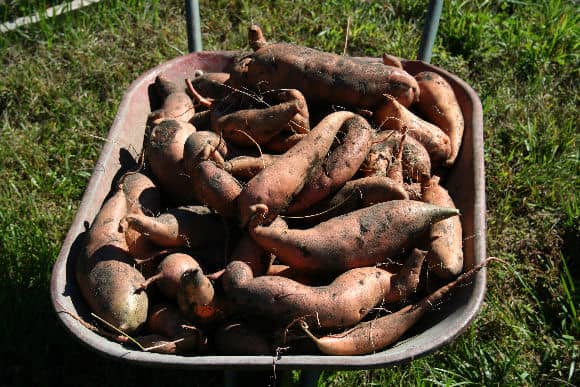
Once you’ve harvested your sweet potatoes—without washing them—let them dry in the sun for a few hours. After that, they’re ready for the curing stage.
Follow these steps:
- Brush off loose soil with a cloth, but do not wash the tubers.
- Place the sweet potatoes in a warm, dark location. A garage works well because daytime temperatures often reach the ideal curing range.
- Maintain temperatures around 80°F with low humidity.
- Leave the sweet potatoes undisturbed for 7–10 days.
After the curing period, inspect each tuber. Any showing signs of mold or rot should be discarded. The healthy, fully cured sweet potatoes are now ready for long‑term storage.
Storing Sweet Potatoes for Maximum Freshness
Once cured, sweet potatoes need a cool, dry environment to stay fresh. A traditional root cellar is perfect—but most of us don’t have one anymore.
A basement or cool storage room works just as well. For example, simple wooden pantry shelves and large baskets can create an excellent storage setup. Keep sweet potatoes in breathable containers such as:
- Wooden crates
- Wicker baskets
- Mesh produce bags
Store them alongside other long‑keeping vegetables like onions, garlic, and regular potatoes, but avoid stacking them too tightly. Good airflow is essential for preventing moisture buildup.
Sweet potatoes should be stored around 55 to 60 degrees F, and at a normal humidity. If it gets too moist, they may begin to rot; too dry, and they’ll shrivel up. I’ve had both happen, and it’s not pretty. Checking your stored vegetables weekly helps prevent a single rotten potato from spreading contamination throughout the basket. Simply find a little time on the weekend to go through your stored vegetables, and use any that appear iffy as soon as possible, or discard them.
Final Thoughts on Storing Sweet Potatoes
If you want to store sweet potatoes even longer, consider canning them. If you have a pressure canner, you can preserve sweet potatoes in Mason jars through pressure canning. A pressure canner is essential to properly can sweet potatoes. They are a low-acid food, and the pH is not low enough to prevent botulism from developing. Pressure canning keeps the heat high enough and long enough to kill the spores if done correctly. The National Center for Food Preservation, at the University of Georgia, has instructions to follow to properly can sweet potatoes.
With proper curing and storage, sweet potatoes can last for many months, giving you a steady supply of homegrown goodness all winter. By mastering the process of storing sweet potatoes, you’ll protect your harvest and enjoy richer flavor and better texture in every meal.





[…] Curing and Storing Sweet Potatoes […]